NEC Laboratories Europe, 69115 Heidelberg, Germany.
Department of Electrical Engineering and Information Technology, University of Naples Federico II, 80138 Naples, Italy.
Sensors (Basel). 2019 Jan 16;19(2):351. doi: 10.3390/s19020351.
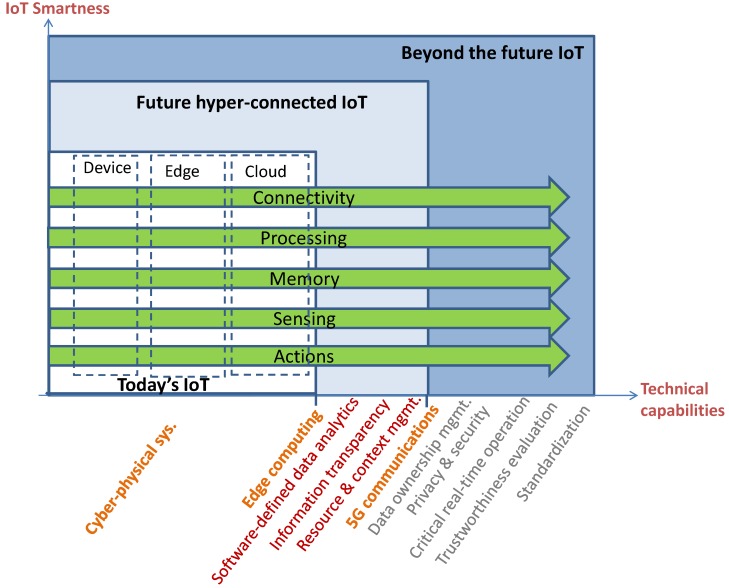
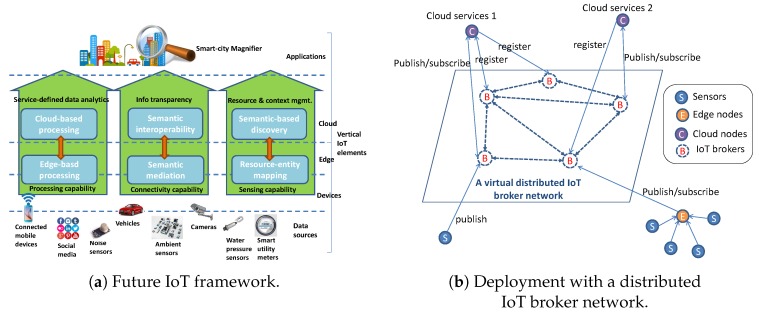
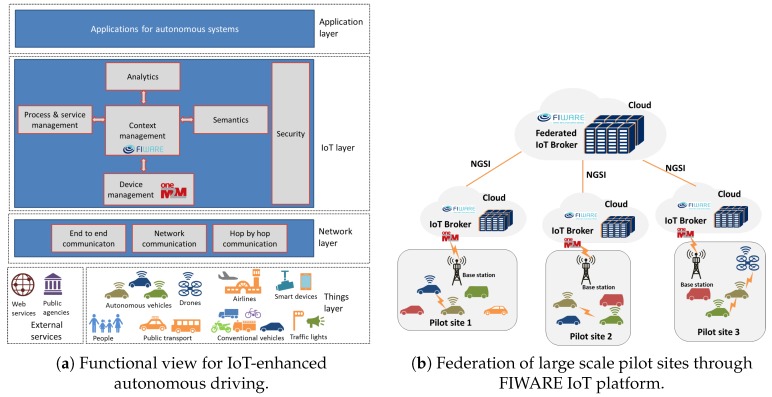
All of the objects in the real world are envisioned to be connected and/or represented, through an infrastructure layer, in the virtual world of the Internet, becoming Things with status information. Services are then using the available data from this Internet-of-Things (IoT) for various social and economical benefits which explain its extreme broad usage in very heterogeneous fields. Domain administrations of diverse areas of application developed and deployed their own IoT systems and services following disparate standards and architecture approaches that created a fragmentation of things, infrastructures and services in vertical IoT silos. Coordination and cooperation among IoT systems are the keys to build "smarter" IoT services boosting the benefits magnitude. This article analyses the technical trends of the future IoT world based on the current limitations of the IoT systems and the capability requirements. We propose a in which "things" are connected to multiple interdependent services and describe how this framework enables the development of future applications. Moreover, we discuss the major limitations in today's IoT and highlight the required capabilities in the future. We illustrate this global vision with the help of two concrete instances of the hyper-connected IoT in smart cities and autonomous driving scenarios. Finally, we analyse the trends in the number of connected "things" and point out open issues and future challenges. The proposed hyper-connected IoT framework is meant to scale the benefits of IoT from local to global.
所有现实世界中的物体都被设想通过基础设施层连接和/或表示,在互联网的虚拟世界中成为具有状态信息的“物”。然后,服务将使用来自这个物联网 (IoT) 的可用数据来实现各种社会和经济利益,这解释了它在非常异构的领域中极其广泛的使用。不同应用领域的域管理员开发并部署了自己的物联网系统和服务,采用了不同的标准和架构方法,这导致了物联网竖井中“物”、基础设施和服务的碎片化。物联网系统之间的协调与合作是构建“更智能”物联网服务以提高效益的关键。本文基于物联网系统的当前限制和功能要求,分析未来物联网世界的技术趋势。我们提出了一个“物”连接到多个相互依赖的服务的框架,并描述了这个框架如何能够为未来的应用程序开发提供支持。此外,我们讨论了当今物联网中的主要限制,并强调了未来所需的功能。我们通过智慧城市和自动驾驶场景中两个超连接物联网的具体实例来说明这个全局视图。最后,我们分析了连接“物”的数量的趋势,并指出了存在的问题和未来的挑战。所提出的超连接物联网框架旨在将物联网的效益从局部扩展到全球。