Department of Chemistry and Konstanz Research School Chemical Biology (KoRS-CB), University of Konstanz, Universitätsstraße 10, 78457 Konstanz, Germany.
Faculty of Chemistry and Chemical Biology, TU Dortmund University, Otto-Hahn-Straße 4a, 44227 Dortmund, Germany.
Int J Mol Sci. 2019 Jan 16;20(2):373. doi: 10.3390/ijms20020373.
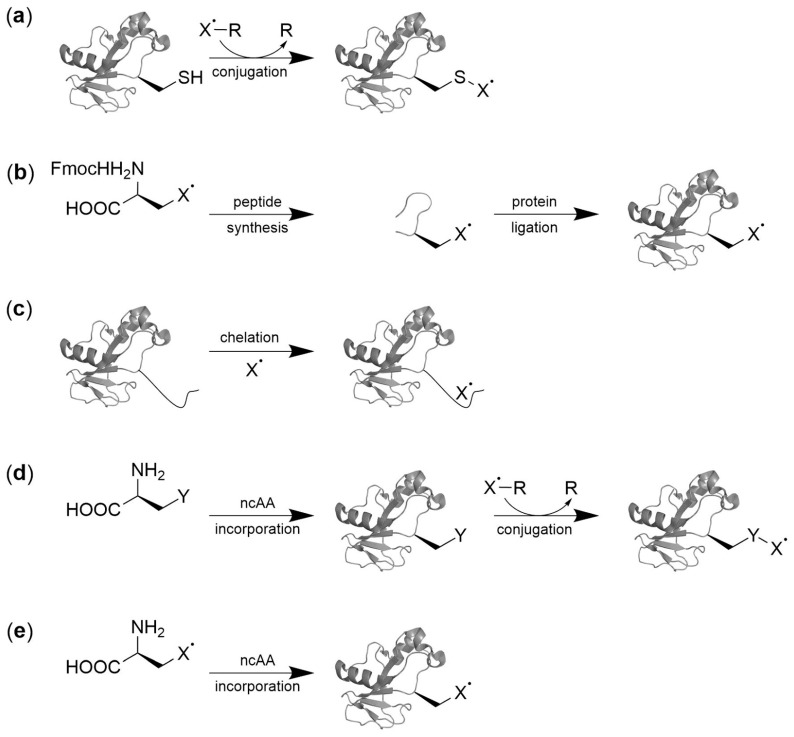
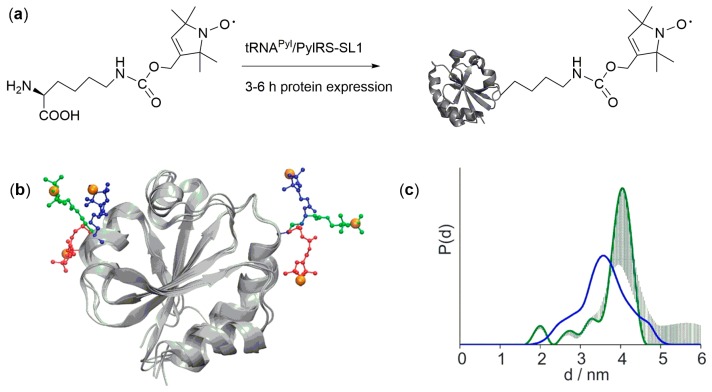
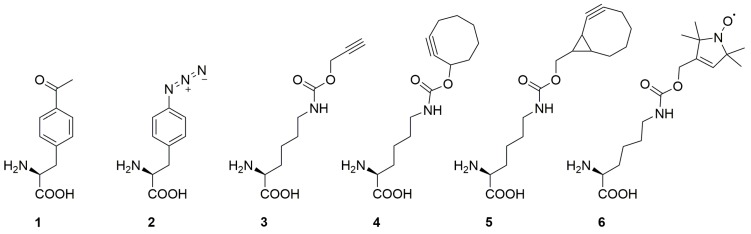
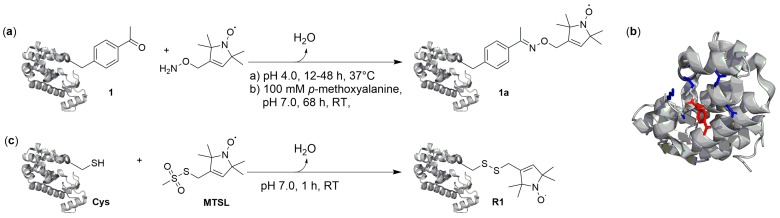
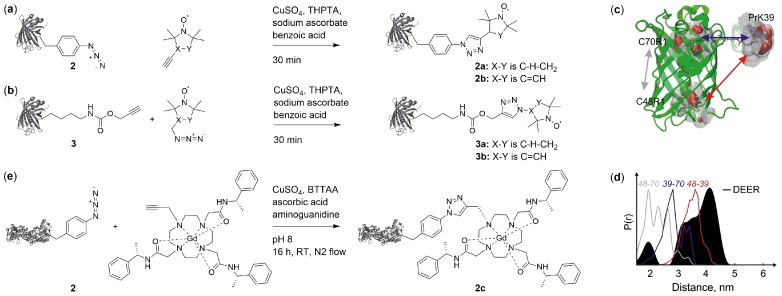
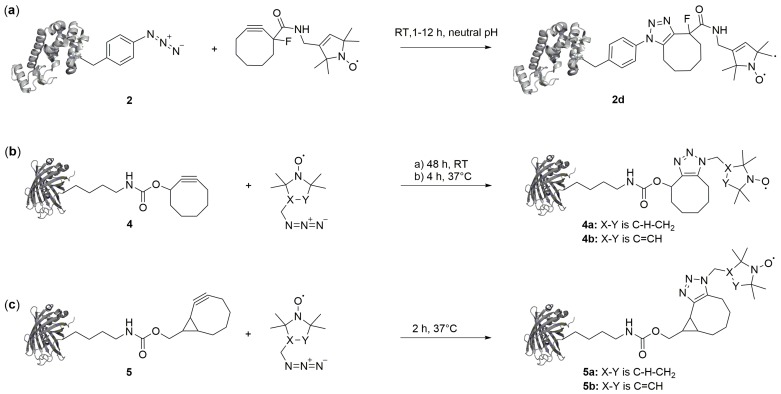
Site-directed spin labeling (SDSL) in combination with electron paramagnetic resonance (EPR) spectroscopy enables studies of the structure, dynamics, and interactions of proteins in the noncrystalline state. The scope and analytical value of SDSL⁻EPR experiments crucially depends on the employed labeling strategy, with key aspects being labeling chemoselectivity and biocompatibility, as well as stability and spectroscopic properties of the resulting label. The use of genetically encoded noncanonical amino acids (ncAA) is an emerging strategy for SDSL that holds great promise for providing excellent chemoselectivity and potential for experiments in complex biological environments such as living cells. We here give a focused overview of recent advancements in this field and discuss their potentials and challenges for advancing SDSL⁻EPR studies.
定点自旋标记(SDSL)与电子顺磁共振(EPR)光谱学相结合,可用于研究非晶态蛋白质的结构、动态和相互作用。SDSL-EPR 实验的范围和分析价值取决于所采用的标记策略,关键方面包括标记的化学选择性和生物相容性,以及所得标记的稳定性和光谱特性。利用遗传编码的非规范氨基酸(ncAA)进行 SDSL 是一种新兴策略,为提供优异的化学选择性和在复杂生物环境(如活细胞)中进行实验的潜力提供了巨大的希望。在这里,我们重点介绍了该领域的最新进展,并讨论了它们在推进 SDSL-EPR 研究方面的潜力和挑战。