Ma Ka-Wai, Ma Wenbo
Department of Plant Pathology and Microbiology, University of California, Riverside, CA, 92521, USA.
Center for Plant Cell Biology, University of California, Riverside, CA, 92521, USA.
Plant Mol Biol. 2016 Aug;91(6):713-25. doi: 10.1007/s11103-016-0452-0. Epub 2016 Feb 15.
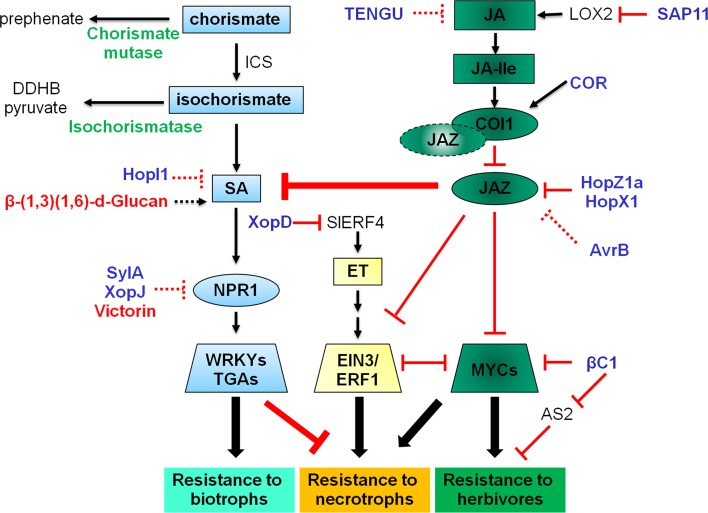
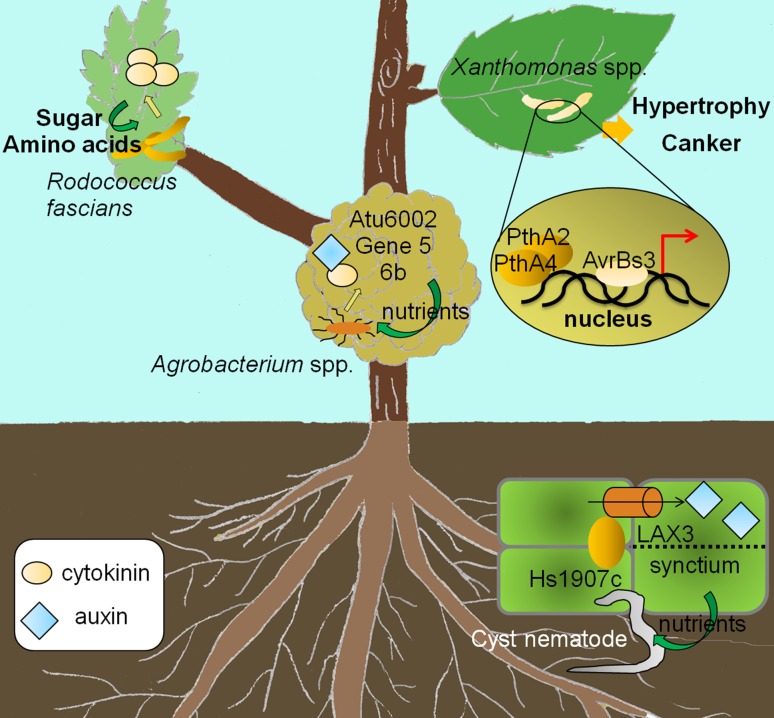
Plants are constantly threatened by potential pathogens. In order to optimize the output of defense against pathogens with distinct lifestyles, plants depend on hormonal networks to fine-tune specific responses and regulate growth-defense tradeoffs. To counteract, pathogens have evolved various strategies to disturb hormonal homeostasis and facilitate infection. Many pathogens synthesize plant hormones; more importantly, toxins and effectors are produced to manipulate hormonal crosstalk. Accumulating evidence has shown that pathogens exert extensive effects on plant hormone pathways not only to defeat immunity, but also modify habitat structure, optimize nutrient acquisition, and facilitate pathogen dissemination. In this review, we summarize mechanisms by which a wide array of pathogens gain benefits from manipulating plant hormone pathways.
植物不断受到潜在病原体的威胁。为了优化针对具有不同生活方式的病原体的防御输出,植物依靠激素网络来微调特定反应并调节生长与防御之间的权衡。作为应对,病原体进化出了各种策略来扰乱激素稳态并促进感染。许多病原体能合成植物激素;更重要的是,它们会产生毒素和效应子来操纵激素信号转导途径。越来越多的证据表明,病原体对植物激素途径产生广泛影响,不仅是为了战胜免疫反应,还为了改变生境结构、优化养分获取并促进病原体传播。在这篇综述中,我们总结了多种病原体通过操纵植物激素途径获益的机制。