Department of Veterinary Medicine, University of Cambridge, Cambridge CB3 0ES, UK.
Department of Biochemistry, University of Cambridge, Cambridge CB3 0ES, UK.
Toxins (Basel). 2019 Jan 17;11(1):53. doi: 10.3390/toxins11010053.
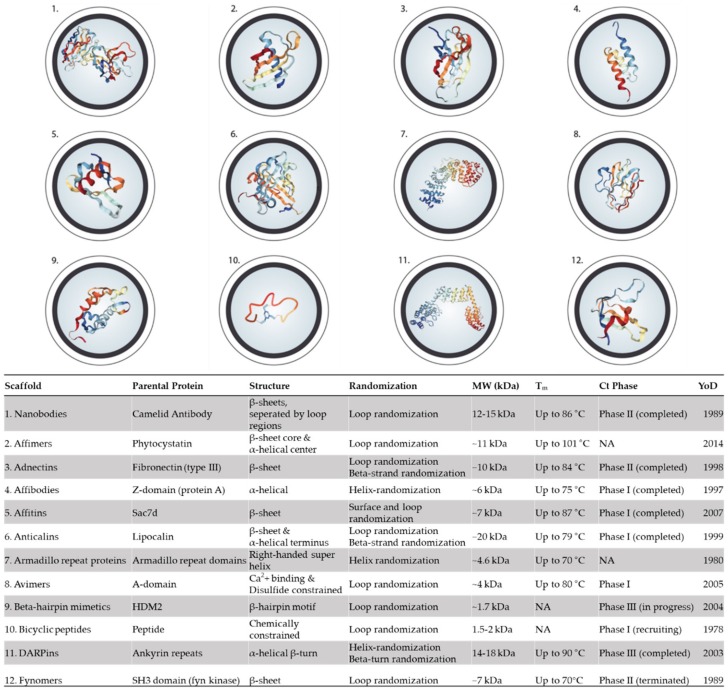
Animal toxins present a major threat to human health worldwide, predominantly through snakebite envenomings, which are responsible for over 100,000 deaths each year. To date, the only available treatment against snakebite envenoming is plasma-derived antivenom. However, despite being key to limiting morbidity and mortality among snakebite victims, current antivenoms suffer from several drawbacks, such as immunogenicity and high cost of production. Consequently, avenues for improving envenoming therapy, such as the discovery of toxin-sequestering monoclonal antibodies against medically important target toxins through phage display selection, are being explored. However, alternative binding protein scaffolds that exhibit certain advantages compared to the well-known immunoglobulin G scaffold, including high stability under harsh conditions and low cost of production, may pose as possible low-cost alternatives to antibody-based therapeutics. There is now a plethora of alternative binding protein scaffolds, ranging from antibody derivatives (e.g., nanobodies), through rationally designed derivatives of other human proteins (e.g., DARPins), to derivatives of non-human proteins (e.g., affibodies), all exhibiting different biochemical and pharmacokinetic profiles. Undeniably, the high level of engineerability and potentially low cost of production, associated with many alternative protein scaffolds, present an exciting possibility for the future of snakebite therapeutics and merit thorough investigation. In this review, a comprehensive overview of the different types of binding protein scaffolds is provided together with a discussion on their relevance as potential modalities for use as next-generation antivenoms.
动物毒素对全球人类健康构成重大威胁,主要通过蛇咬伤引起,每年导致超过 10 万人死亡。迄今为止,对抗蛇咬伤的唯一可用治疗方法是血浆衍生的抗蛇毒血清。然而,尽管抗蛇毒血清是限制蛇咬伤患者发病率和死亡率的关键,但目前的抗蛇毒血清存在一些缺点,如免疫原性和生产成本高。因此,正在探索通过噬菌体展示选择发现针对医学上重要靶毒素的毒素结合单克隆抗体等方法来改善蛇咬伤治疗。然而,与知名的免疫球蛋白 G 支架相比,某些具有优势的替代结合蛋白支架,包括在恶劣条件下的高稳定性和低成本的生产,可能成为抗体疗法的低成本替代品。现在有大量的替代结合蛋白支架,从抗体衍生物(例如纳米抗体),到其他人类蛋白的合理设计衍生物(例如 DARPin),再到非人类蛋白的衍生物(例如 affibodies),所有这些都表现出不同的生化和药代动力学特征。不可否认,许多替代蛋白支架的高度可设计性和潜在的低成本生产,为蛇咬伤治疗的未来带来了令人兴奋的可能性,值得深入研究。在这篇综述中,提供了不同类型结合蛋白支架的全面概述,并讨论了它们作为下一代抗蛇毒血清的潜在模式的相关性。