Gladstone Institute of Data Science and Biotechnology, San Francisco, CA 94158;
Department of Epidemiology & Biostatistics, University of California, San Francisco, CA 94158.
Proc Natl Acad Sci U S A. 2019 Feb 5;116(6):2175-2180. doi: 10.1073/pnas.1808631116. Epub 2019 Jan 18.
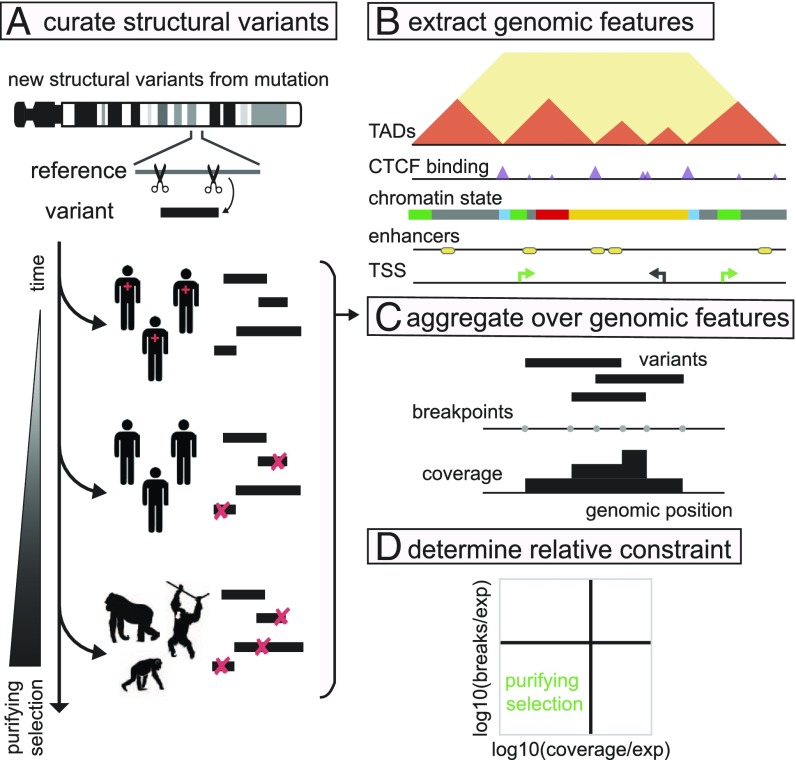
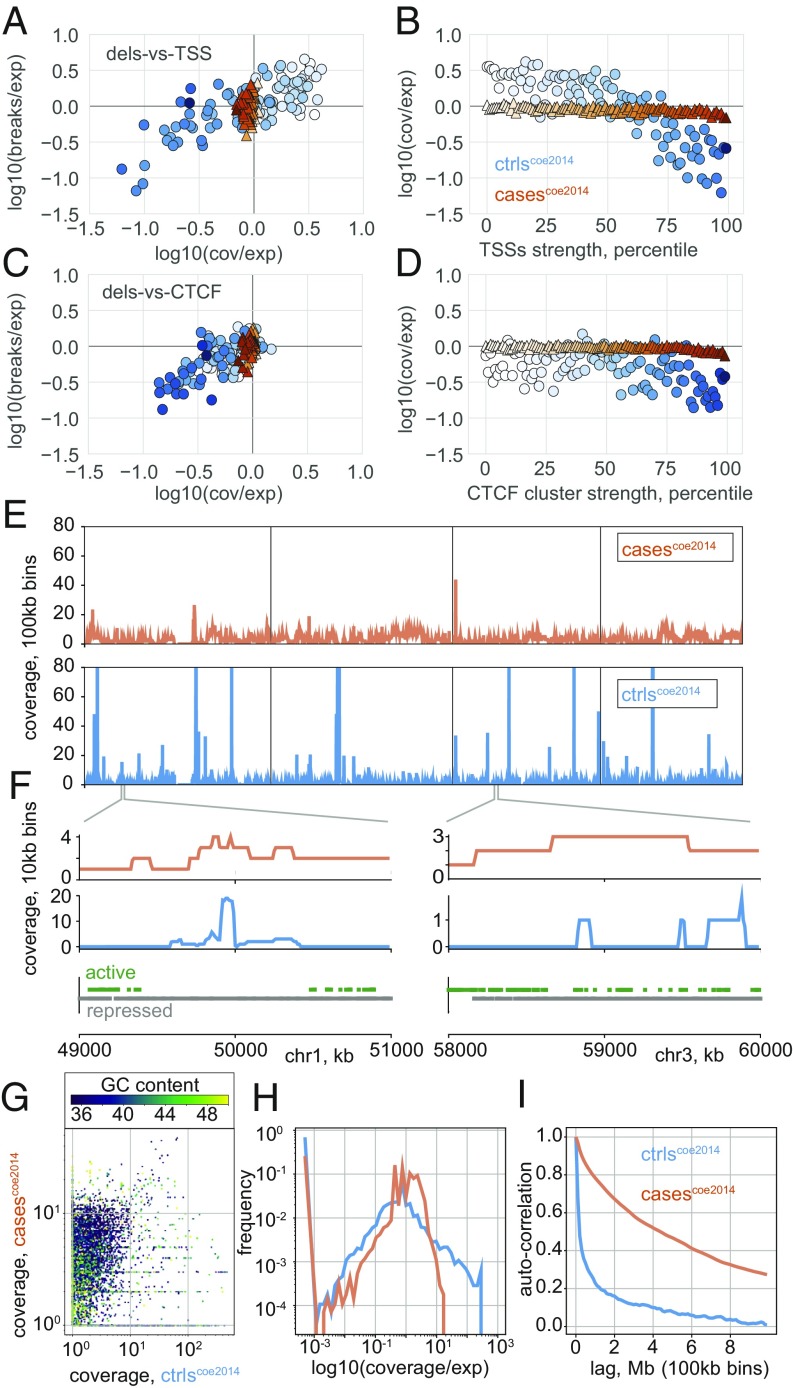
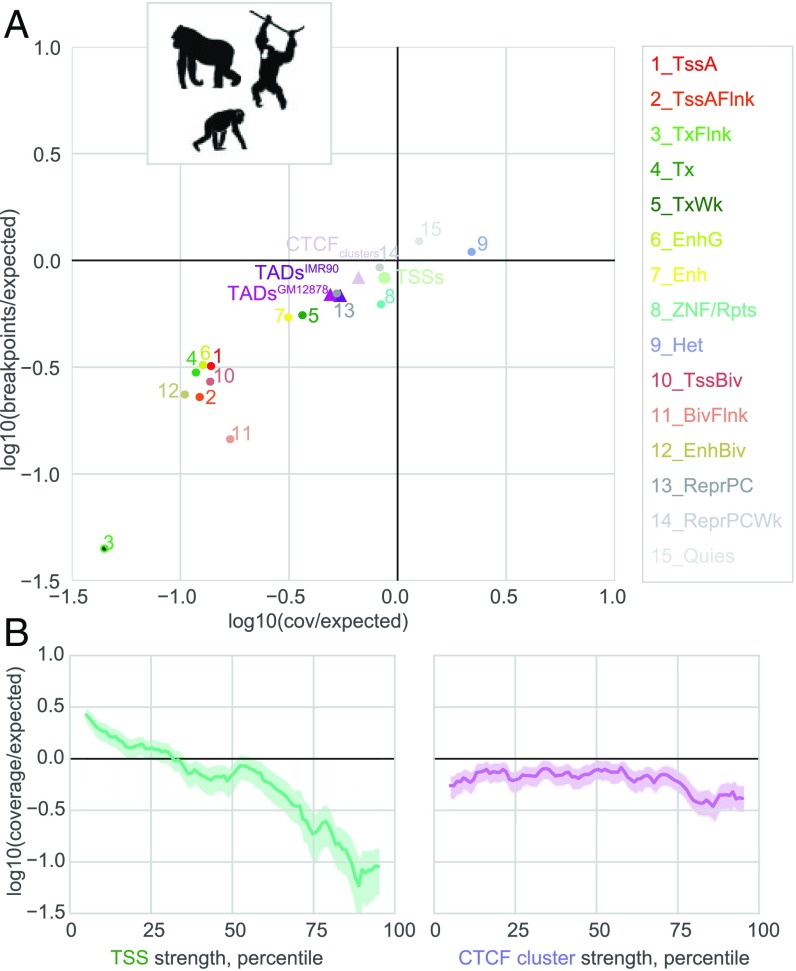
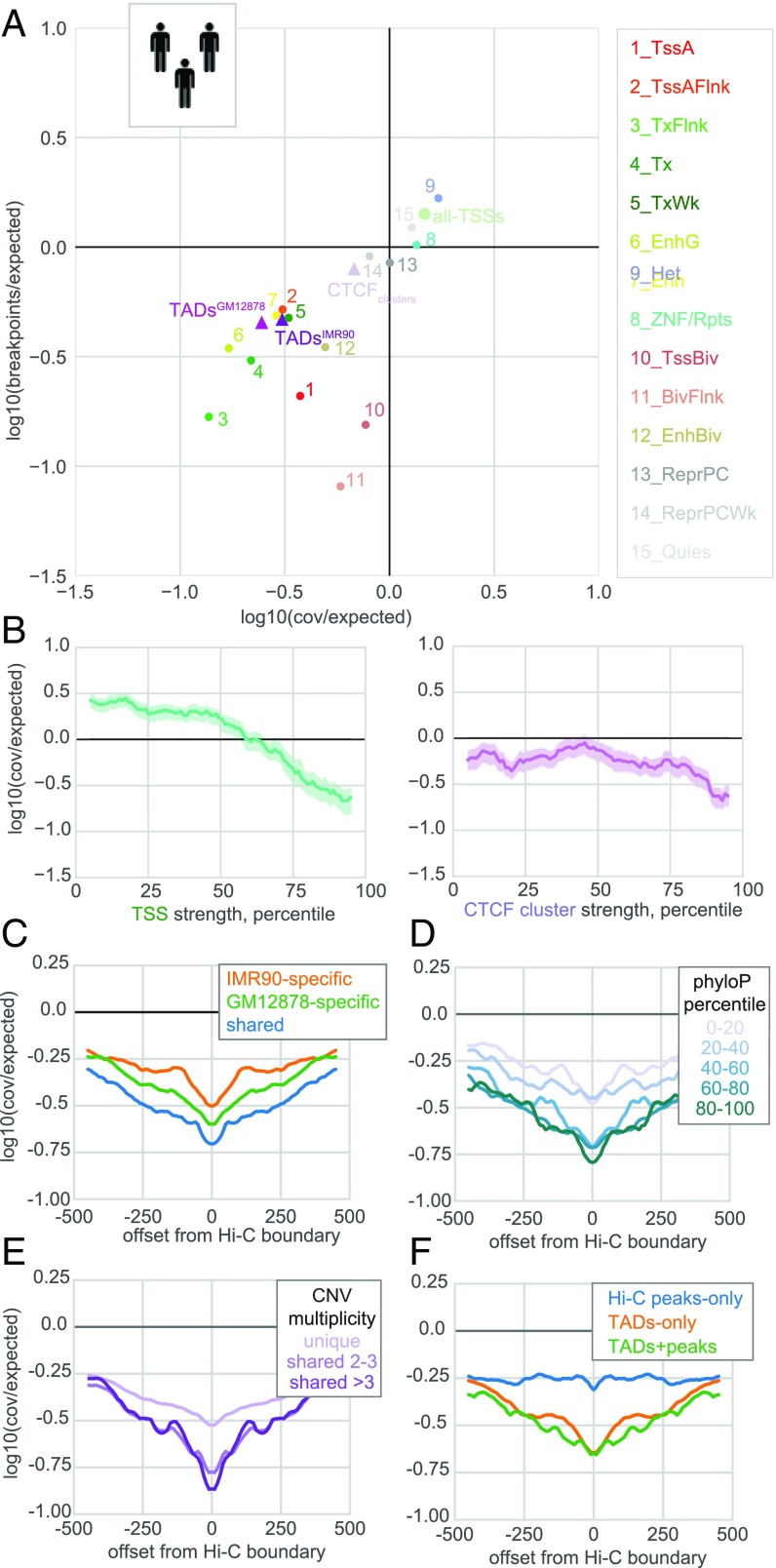
The potential impact of structural variants includes not only the duplication or deletion of coding sequences, but also the perturbation of noncoding DNA regulatory elements and structural chromatin features, including topological domains (TADs). Structural variants disrupting TAD boundaries have been implicated both in cancer and developmental disease; this likely occurs via "enhancer hijacking," whereby removal of the TAD boundary exposes enhancers to new target transcription start sites (TSSs). With this functional role, we hypothesized that boundaries would display evidence for negative selection. Here we demonstrate that the chromatin landscape constrains structural variation both within healthy humans and across primate evolution. In contrast, in patients with developmental delay, variants occur remarkably uniformly across genomic features, suggesting a potentially broad role for enhancer hijacking in human disease.
结构变异的潜在影响不仅包括编码序列的重复或缺失,还包括非编码 DNA 调控元件和结构染色质特征(包括拓扑结构域[TAD])的干扰。破坏 TAD 边界的结构变异既与癌症有关,也与发育性疾病有关;这可能是通过“增强子劫持”发生的,即 TAD 边界的去除使增强子暴露于新的靶转录起始位点(TSS)。鉴于这种功能作用,我们假设边界将显示出负选择的证据。在这里,我们证明染色质景观限制了健康人类和灵长类动物进化过程中结构变异的发生。相比之下,在发育迟缓的患者中,变体在整个基因组特征上都非常均匀地发生,这表明增强子劫持在人类疾病中可能具有广泛的作用。