Departments of Medicine and Pharmacology, University of California, San Diego, CA, USA.
Department of Medicine, Turku University Hospital and University of Turku, Turku, Finland; Department of Public Health Solutions, National Institute for Health and Welfare, Turku, Finland.
Cell Chem Biol. 2019 Mar 21;26(3):433-442.e4. doi: 10.1016/j.chembiol.2018.11.015. Epub 2019 Jan 17.
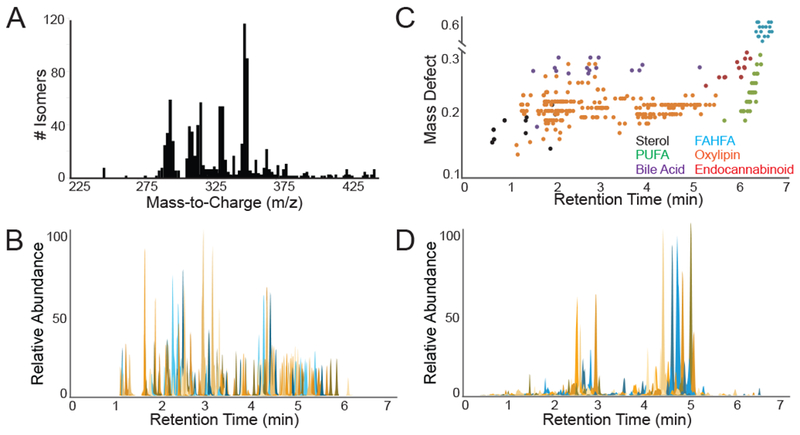
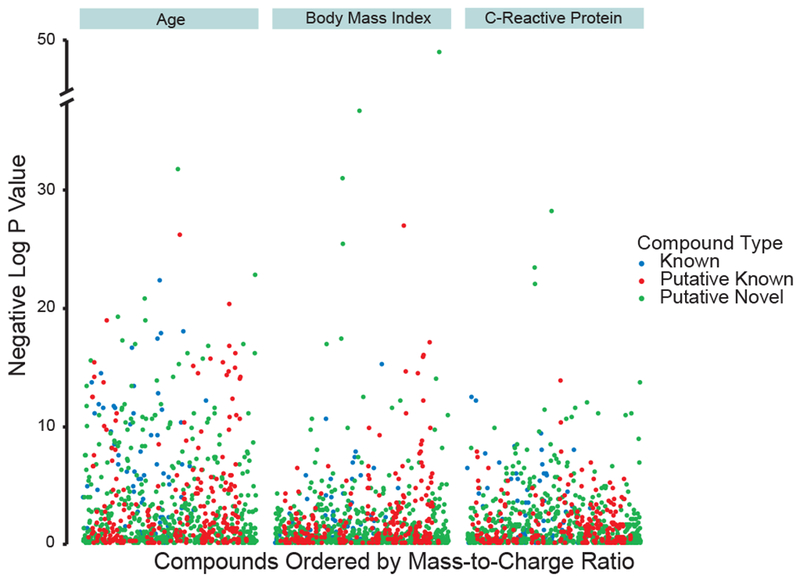
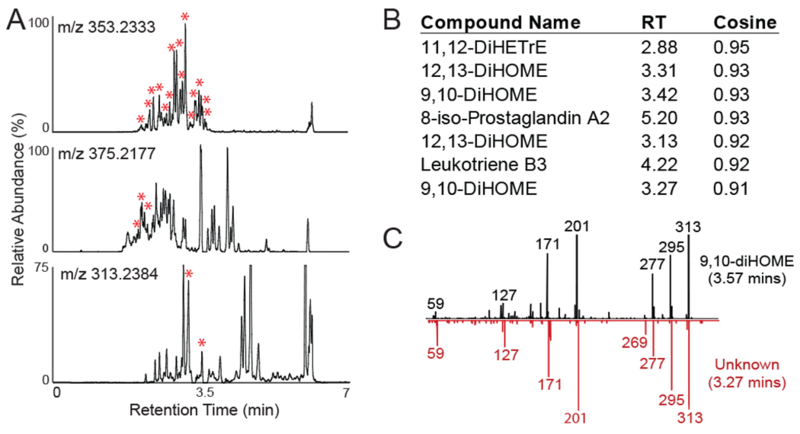
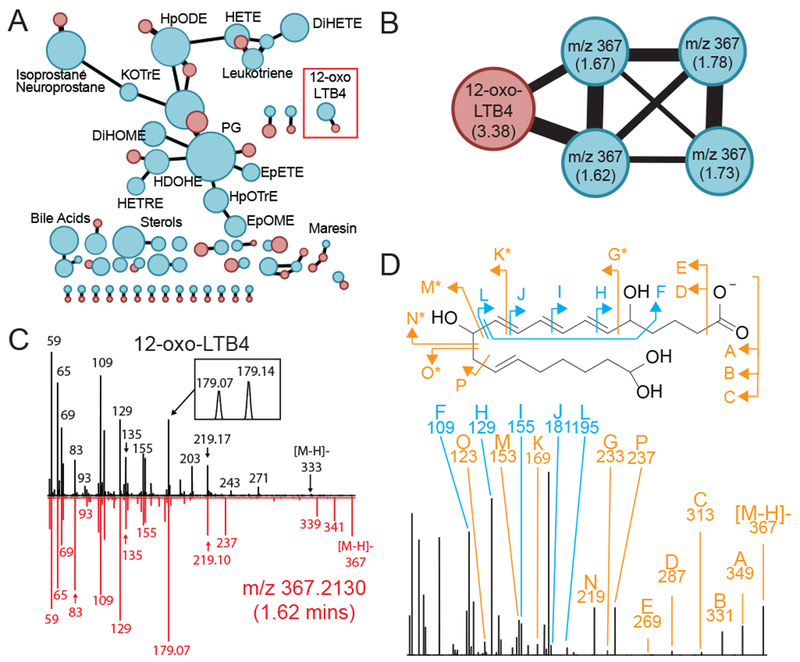
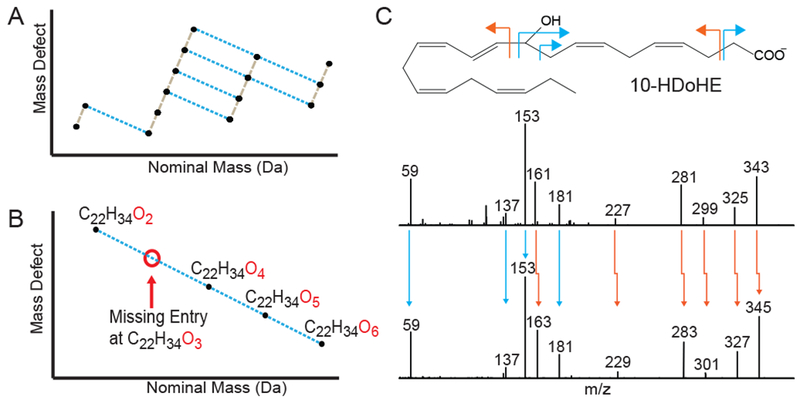
Eicosanoids and related oxylipins are critical, small bioactive mediators of human physiology and inflammation. While ∼1,100 distinct species have been predicted to exist, to date, less than 150 of these molecules have been measured in humans, limiting our understanding of their role in human biology. Using a directed non-targeted mass spectrometry approach in conjunction with chemical networking of spectral fragmentation patterns, we find over 500 discrete chemical signals highly consistent with known and putative eicosanoids and related oxylipins in human plasma including 46 putative molecules not previously described. In plasma samples from 1,500 individuals, we find members of this expanded oxylipin library hold close association with markers of inflammation, as well as clinical characteristics linked with inflammation, including advancing age and obesity. These experimental and computational approaches enable discovery of new chemical entities and will shed important insight into the role of bioactive molecules in human health and disease.
类二十烷酸及其相关的氧化脂类是人类生理学和炎症的关键的、小的生物活性介质。尽管预计存在约 1100 种不同的物质,但迄今为止,在人类中测量到的这些分子还不到 150 种,这限制了我们对它们在人类生物学中作用的理解。我们使用靶向非靶向质谱方法,结合光谱碎片模式的化学网络,在人类血浆中发现了 500 多种离散的化学信号,这些信号与已知和假定的类二十烷酸及其相关的氧化脂类高度一致,包括 46 种以前未描述的假定分子。在来自 1500 个人的血浆样本中,我们发现这个扩展的氧化脂类文库的成员与炎症标志物以及与炎症相关的临床特征密切相关,包括年龄增长和肥胖。这些实验和计算方法能够发现新的化学实体,并将为生物活性分子在人类健康和疾病中的作用提供重要的见解。