Liu Fang, Ma Ni, Xia Fang-Bo, Li Peng, He Chengwei, Wu Zhenqiang, Wan Jian-Bo
State Key Laboratory of Quality Research in Chinese Medicine, Institute of Chinese Medical Sciences, University of Macau, Macao, China.
Department of Product Development, Wenshan Sanqi Institute of Science and Technology, Wenshan University, Wenshan, Yunnan, China.
J Ginseng Res. 2019 Jan;43(1):105-115. doi: 10.1016/j.jgr.2017.09.003. Epub 2017 Oct 16.
Ginsenosides with less sugar moieties may exhibit the better adsorptive capacity and more pharmacological activities.
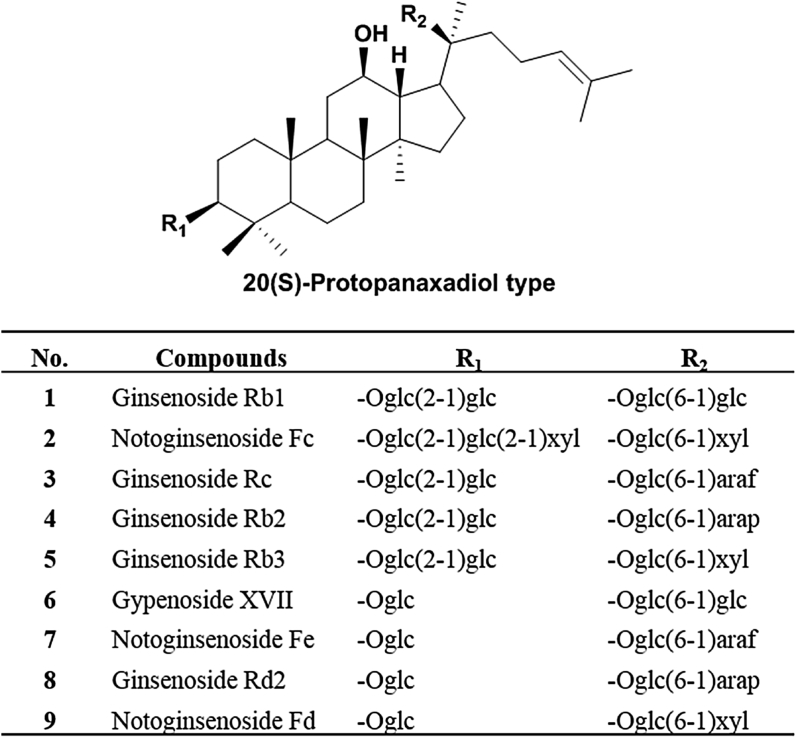
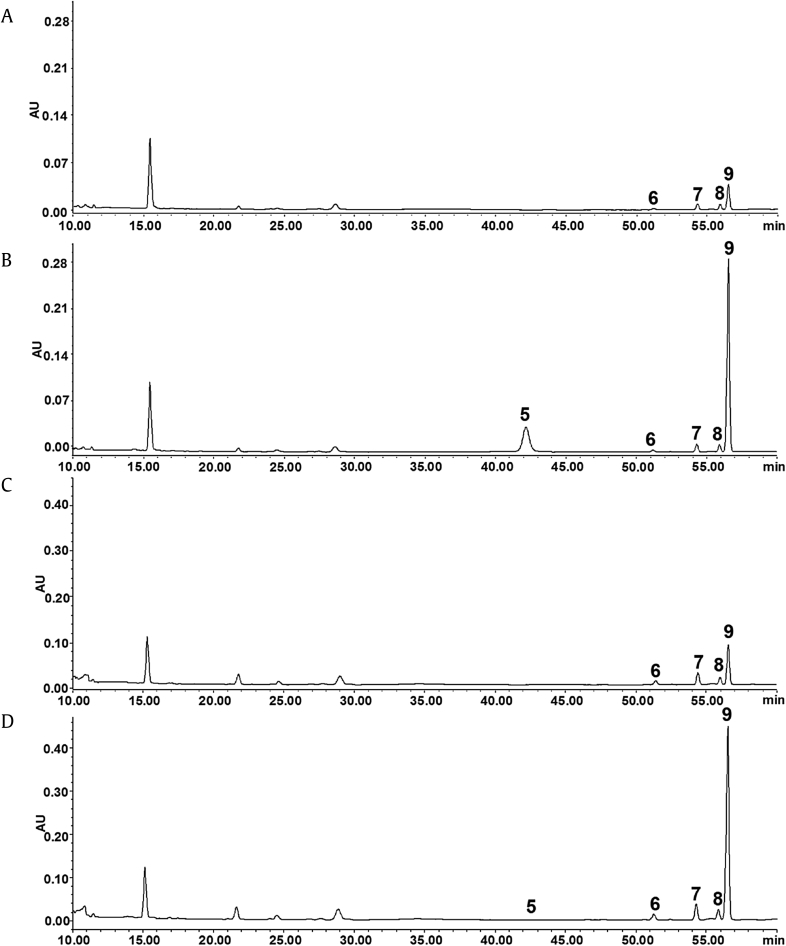
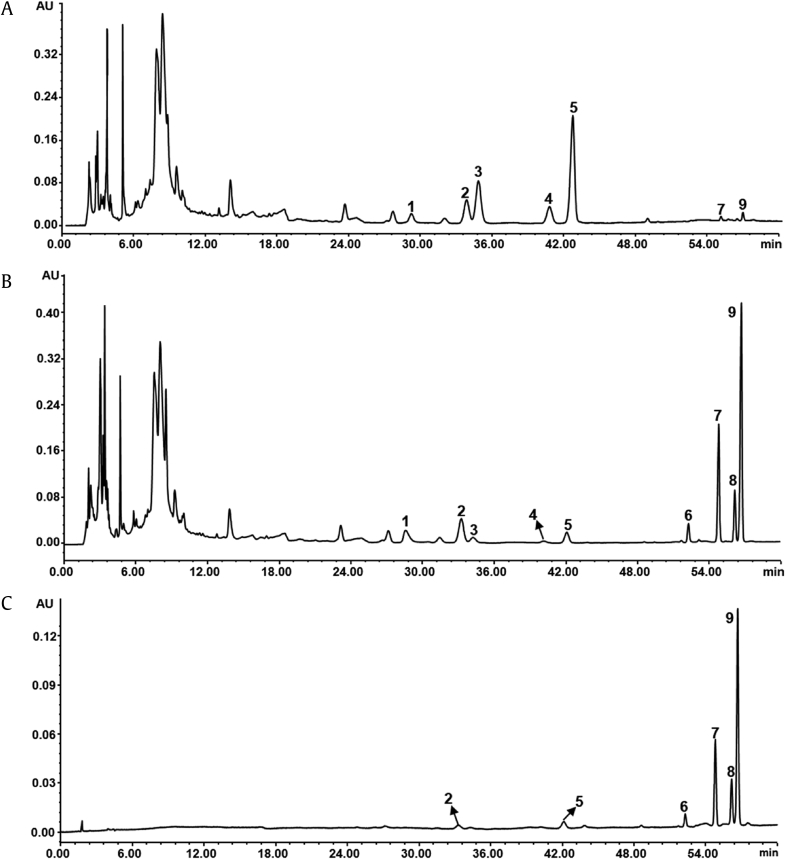
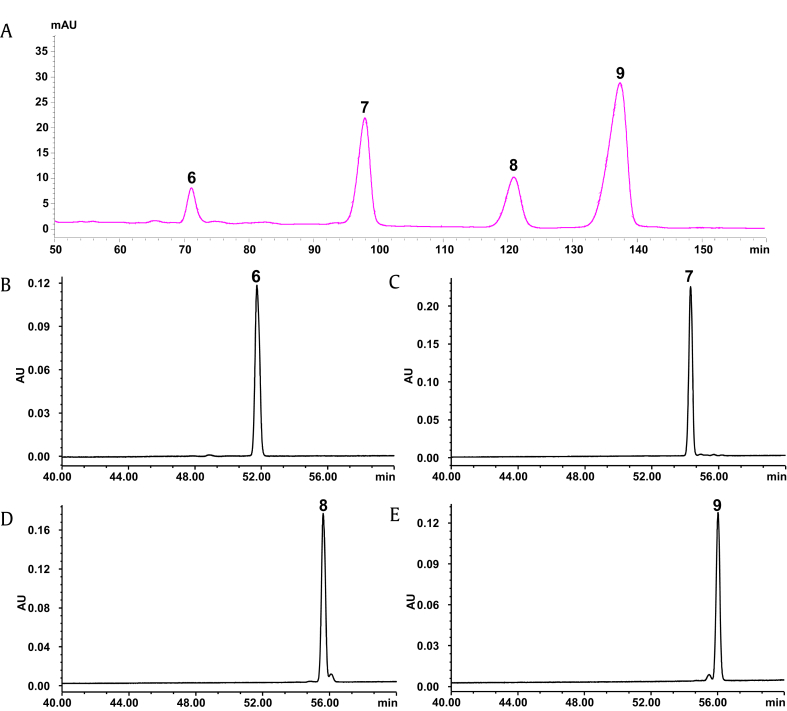
An efficient method for the separation of four minor saponins, including gypenoside XVII, notoginsenoside Fe, ginsenoside Rd2, and notoginsenoside Fd, from leaves (PNL) was established using biotransformation, macroporous resins, and subsequent preparative high-performance liquid chromatography.
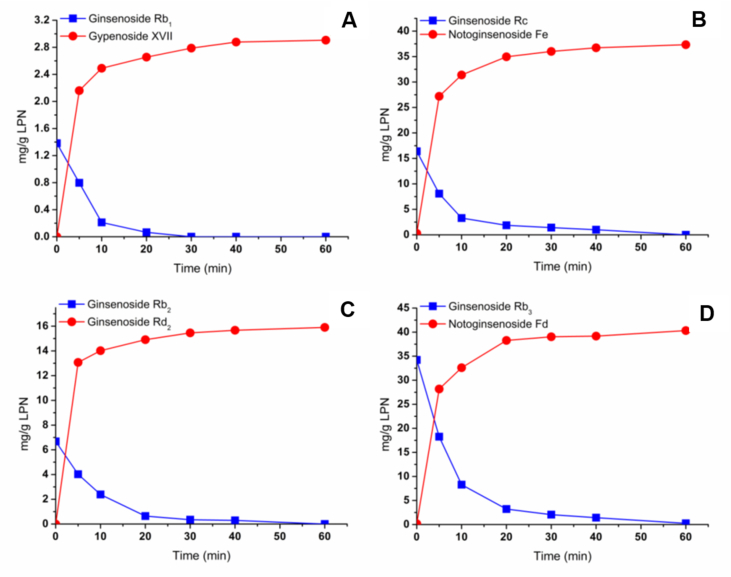
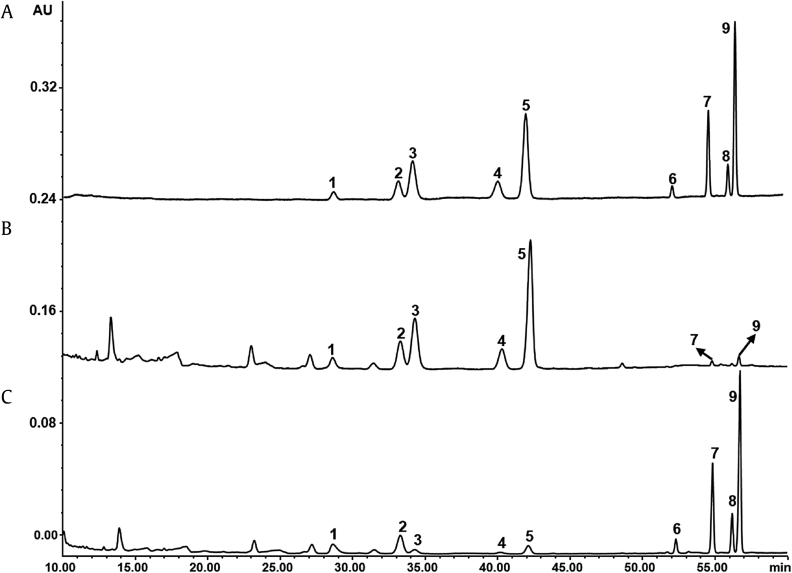
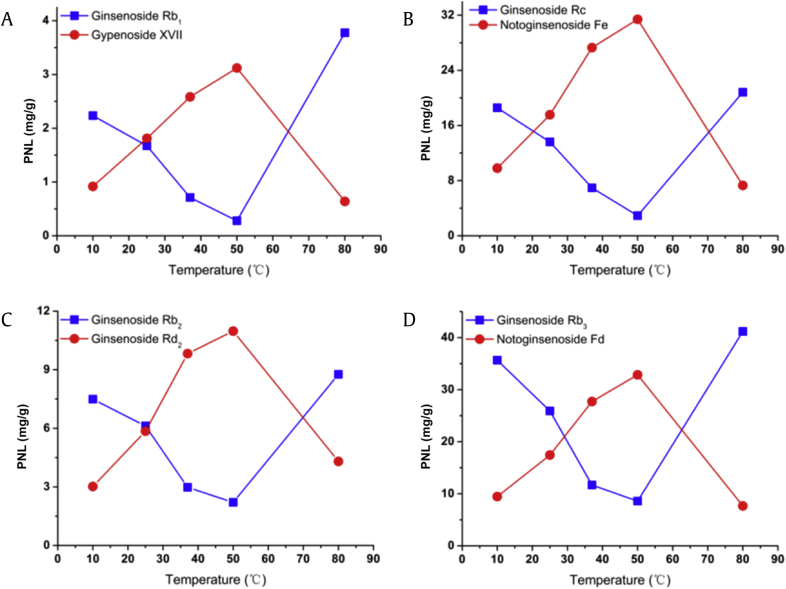
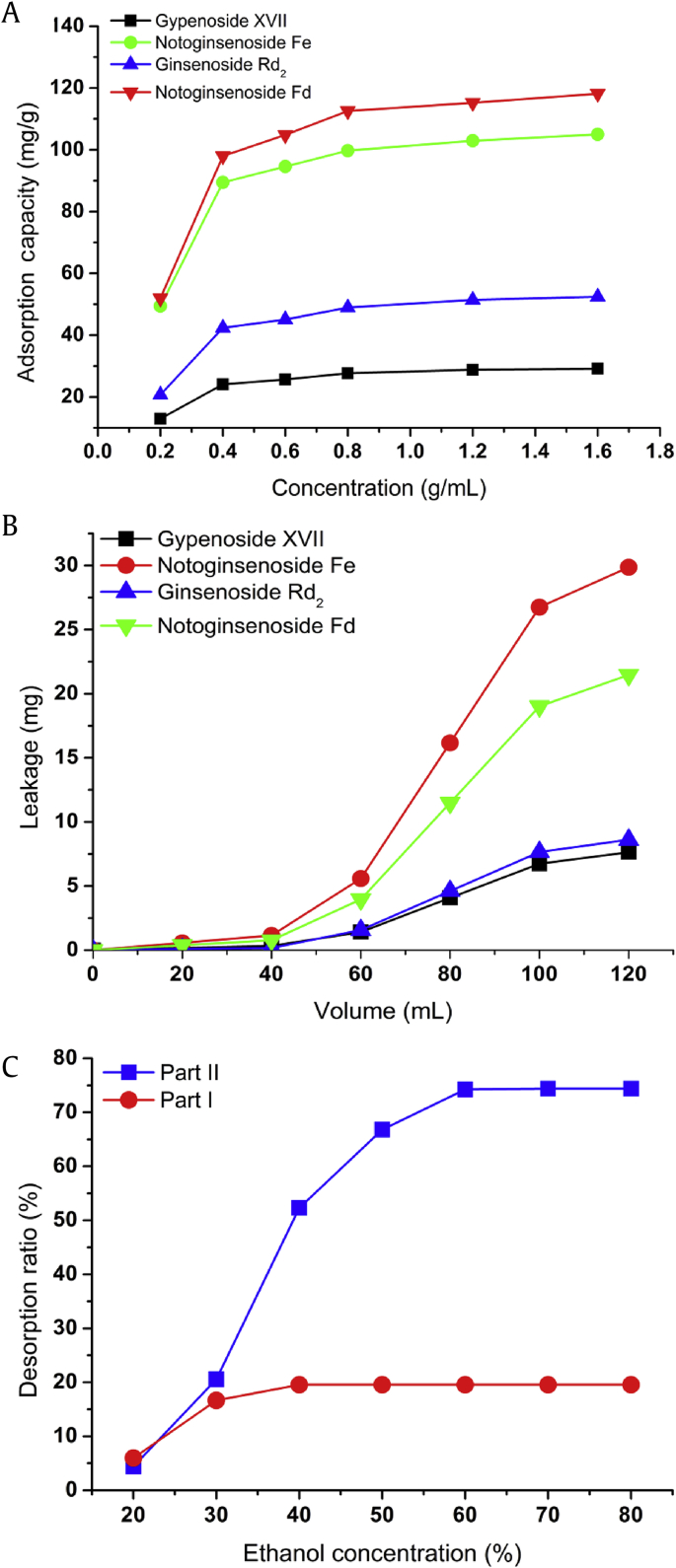
The dried PNL powder was immersed in the distilled water at 50°C for 30 min for converting the major saponins, ginsenosides Rb1, Rc, Rb2, and Rb3, to minor saponins, gypenoside XVII, notoginsenoside Fe, ginsenoside Rd2, and notoginsenoside Fd, respectively, by the enzymes present in PNL. The adsorption characteristics of these minor saponins on five types of macroporous resins, D-101, DA-201, DM-301, X-5, and S-8, were evaluated and compared. Among them, D-101 was selected due to the best adsorption and desorption properties. Under the optimized conditions, the fraction containing the four target saponins was separated by D-101 resin. Subsequently, the target minor saponins were individually separated and purified by preparative high-performance liquid chromatography with a reversed-phase column.
Our study provides a simple and efficient method for the preparation of these four minor saponins from PNL, which will be potential for industrial applications.
糖基部分较少的人参皂苷可能表现出更好的吸附能力和更多的药理活性。
建立了一种从三七叶(PNL)中分离四种次要皂苷的有效方法,包括绞股蓝皂苷 XVII、三七皂苷 Fe、人参皂苷 Rd2 和三七皂苷 Fd,采用生物转化、大孔树脂及后续制备型高效液相色谱法。
将干燥的 PNL 粉末在 50℃下于蒸馏水中浸泡 30 分钟,通过 PNL 中存在的酶将主要皂苷人参皂苷 Rb1、Rc、Rb2 和 Rb3 分别转化为次要皂苷绞股蓝皂苷 XVII、三七皂苷 Fe、人参皂苷 Rd2 和三七皂苷 Fd。评估并比较了这些次要皂苷在五种大孔树脂 D-101、DA-201、DM-301、X-5 和 S-8 上的吸附特性。其中,由于 D-101 具有最佳的吸附和解吸性能而被选用。在优化条件下,用 D-101 树脂分离得到含有四种目标皂苷的馏分。随后,通过反相柱制备型高效液相色谱法将目标次要皂苷分别分离纯化。
我们的研究提供了一种从 PNL 中制备这四种次要皂苷的简单有效方法,具有潜在的工业应用前景。