Zhang Dan, Ni Mengwei, Wu Jiarui, Liu Shuyu, Meng Ziqi, Tian Jinhui, Zhang Xiaomeng, Zhang Bing
Department of Clinical Chinese Pharmacy, School of Chinese Materia Medica, Beijing University of Chinese Medicine, Beijing, China.
Evidence Based Medicine Center, Lanzhou University, Lanzhou, China.
Front Pharmacol. 2019 Jan 4;9:1470. doi: 10.3389/fphar.2018.01470. eCollection 2018.
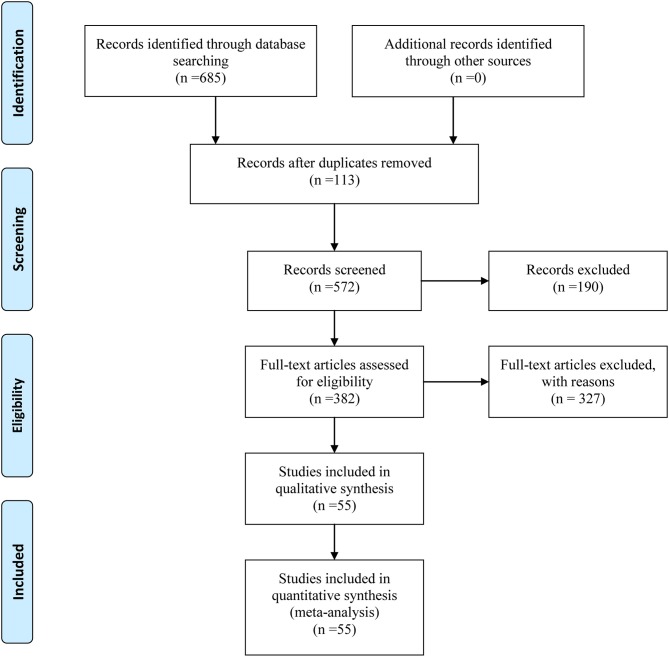
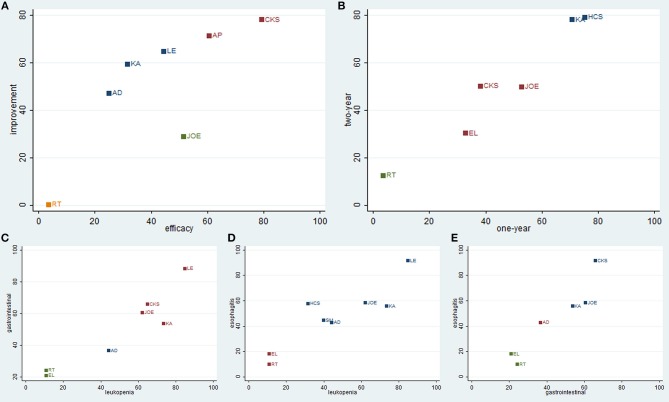
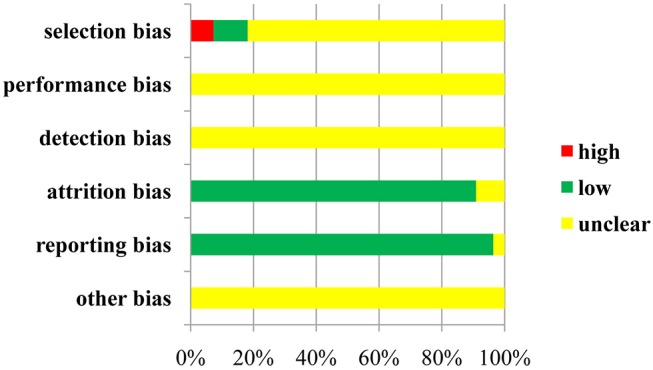
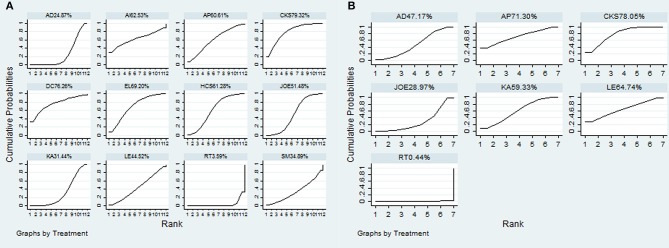
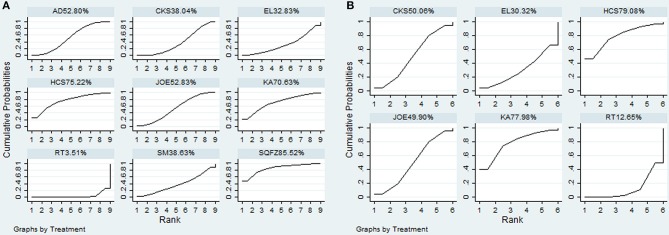
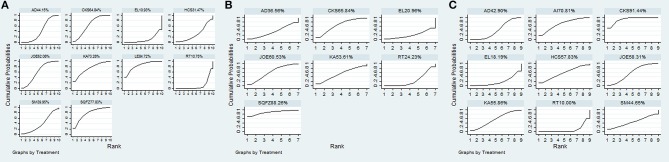
Esophageal cancer is one of the most common human cancers, and its incidence is highly endemic in China. The combination of Chinese herbal injections (CHIs) and radiotherapy should be informed by the best available evidence. To update and expand on previous work in order to compare and rank the efficacy and safety of CHIs in combination with radiotherapy to treat esophageal cancer. We searched several electronic databases to identify randomized controlled trials (RCTs) regarding CHIs to treat esophageal cancer from their inception to March 15, 2017. In a network meta-analysis (NMA), the bias of the included trials was assessed by two individuals independently in accordance with the Cochrane Handbook for Systematic Reviews of Interventions. Outcomes such as the clinical effectiveness rate, performance status, adverse reactions (ADRs), and survival rate were evaluated. We performed a random-effects NMA to obtain estimates of efficacy and safety outcomes, and we present these estimates as odds ratios (ORs) and corresponding 95% confidence intervals (CIs) calculated via Stata 13.1 and WinBUGS 1.4 software. Furthermore, the surface under cumulative the ranking curve (SUCRA) was used to rank the efficacy and safety of different CHIs in relation to each outcome. Of 685 identified trials, 55 were eligible for inclusion in the study. These 55 trials included 12 CHIs and 4,114 participants. The cluster analysis results suggested that Compound kushen injection therapy is the optimal CHI treatment for patients with esophageal cancer in terms of improving the clinical effectiveness rate and performance status. Huachansu and Kangai injection are superior in improving 1-year and 2-year survival rates. Lentinan injection may be considered a favorable choice for reliving ADRs, and Compound kushen injection may provide treatment benefits by reducing both gastrointestinal reaction and radiation esophagitis. The current clinical evidence indicated that Compound kushen injection combined with radiotherapy is the most preferable and beneficial option for patients with esophageal cancer in terms of efficacy and safety. However, the results of our study should be interpreted with caution given the limitations of the sample size and the methodological quality of the included trials.
食管癌是人类最常见的癌症之一,其发病率在中国呈高度地方性流行。中药注射剂(CHIs)与放疗联合应用应以现有最佳证据为依据。为更新和扩展以往的研究工作,以便比较和排序CHIs联合放疗治疗食管癌的疗效和安全性。我们检索了多个电子数据库,以识别从开始到2017年3月15日有关CHIs治疗食管癌的随机对照试验(RCTs)。在一项网络荟萃分析(NMA)中,两名研究人员根据《Cochrane干预措施系统评价手册》独立评估纳入试验的偏倚。评估了临床有效率、身体状况、不良反应(ADRs)和生存率等结局。我们进行了随机效应NMA以获得疗效和安全性结局的估计值,并将这些估计值表示为通过Stata 13.1和WinBUGS 1.4软件计算的比值比(ORs)和相应的95%置信区间(CIs)。此外,累积排序曲线下面积(SUCRA)用于对不同CHIs在各结局方面的疗效和安全性进行排序。在685项识别出的试验中,55项符合纳入本研究的条件。这55项试验包括12种CHIs和4114名参与者。聚类分析结果表明,就提高临床有效率和身体状况而言,复方苦参注射液疗法是食管癌患者的最佳CHI治疗方法。华蟾素和康艾注射液在提高1年和2年生存率方面更具优势。香菇多糖注射液可能是缓解ADRs的有利选择,复方苦参注射液可能通过减少胃肠道反应和放射性食管炎提供治疗益处。目前的临床证据表明,就疗效和安全性而言,复方苦参注射液联合放疗是食管癌患者最优选且有益的选择。然而,鉴于样本量的局限性和纳入试验的方法学质量,我们研究的结果应谨慎解读。