Hopfner Ursula, Aitzetmueller Matthias M, Neßbach Philipp, Hu Michael S, Machens Hans-Guenther, Maan Zeshaan N, Duscher Dominik
Department for Plastic Surgery and Hand Surgery, Klinikum rechts der Isar, Technical University of Munich, Germany.
Department for Plastic Surgery, University of Pittsburgh, Pennsylvania, USA.
Stem Cells Int. 2018 Dec 19;2018:1353085. doi: 10.1155/2018/1353085. eCollection 2018.
Although chronic wounds are a major personal and economic burden, treatment options are still limited. Among those options, adipose-derived stromal cell- (ASC-) based therapies rank as a promising approach but are restricted by the harsh wound environment. Here we use a commercially available fibrin glue to provide a deliverable niche for ASCs in chronic wounds.
To investigate the effect of fibrin glue, cultivation experiments were performed and key cytokines for regeneration were quantified. By using an established murine chronic diabetic wound-healing model, we evaluated the influence of fibrin glue spray seeding on cell survival (In Vivo Imaging System, IVIS), wound healing (wound closure kinetics), and neovascularization of healed wounds (CD31 immunohistochemistry).
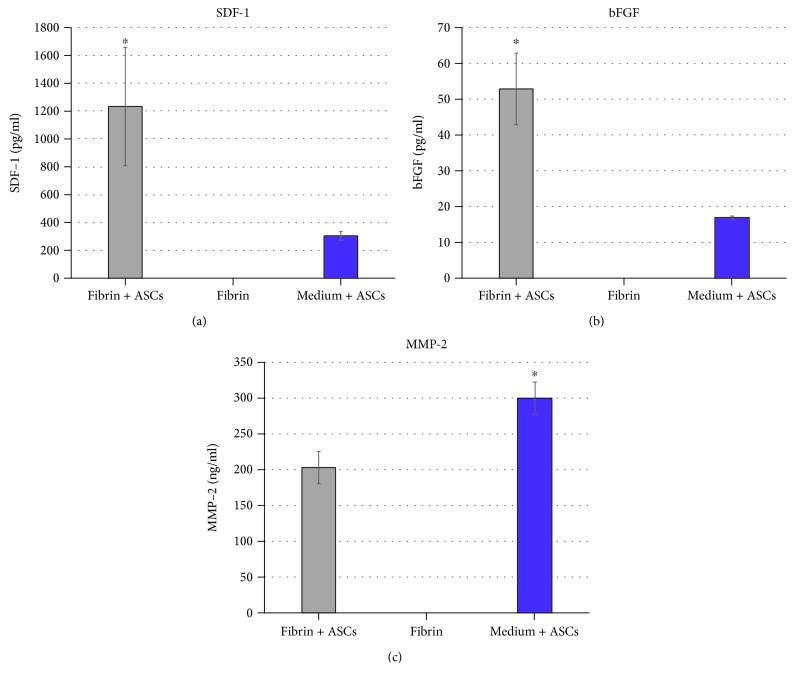
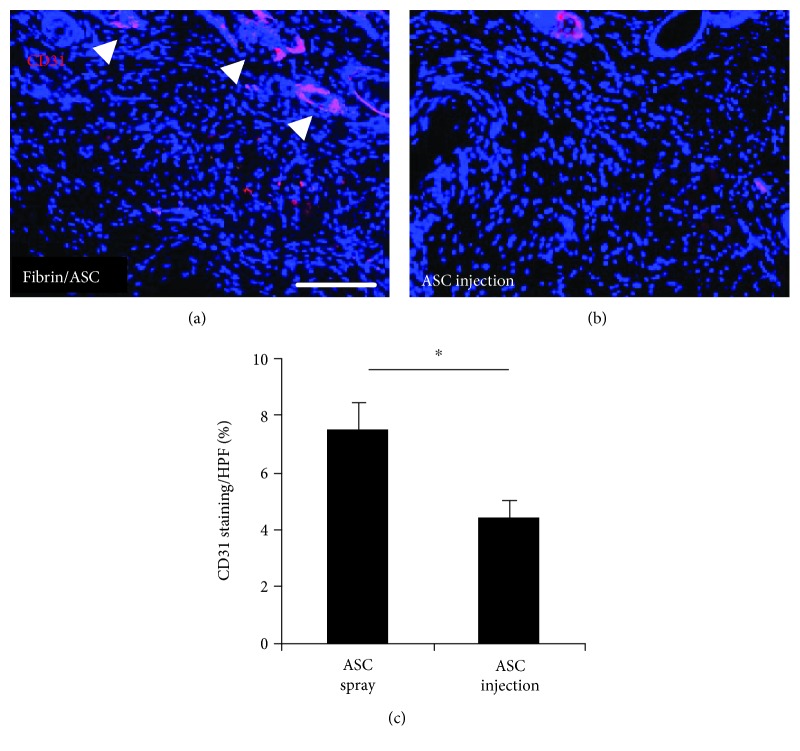
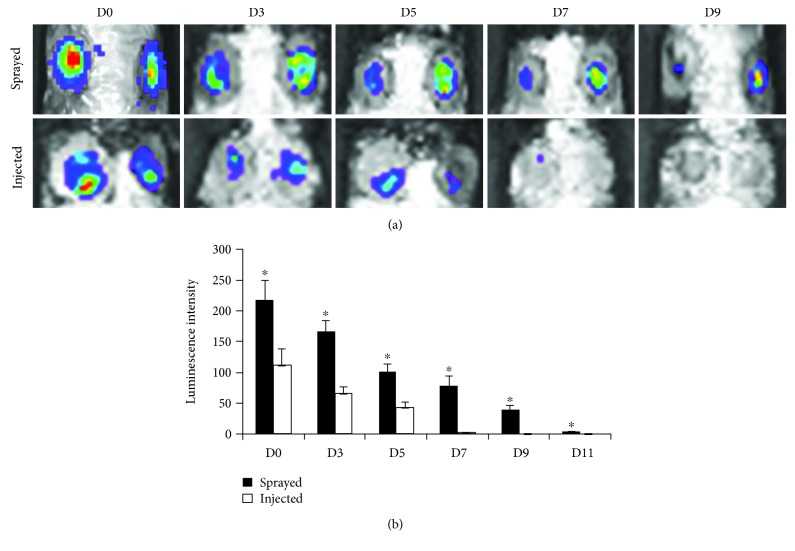
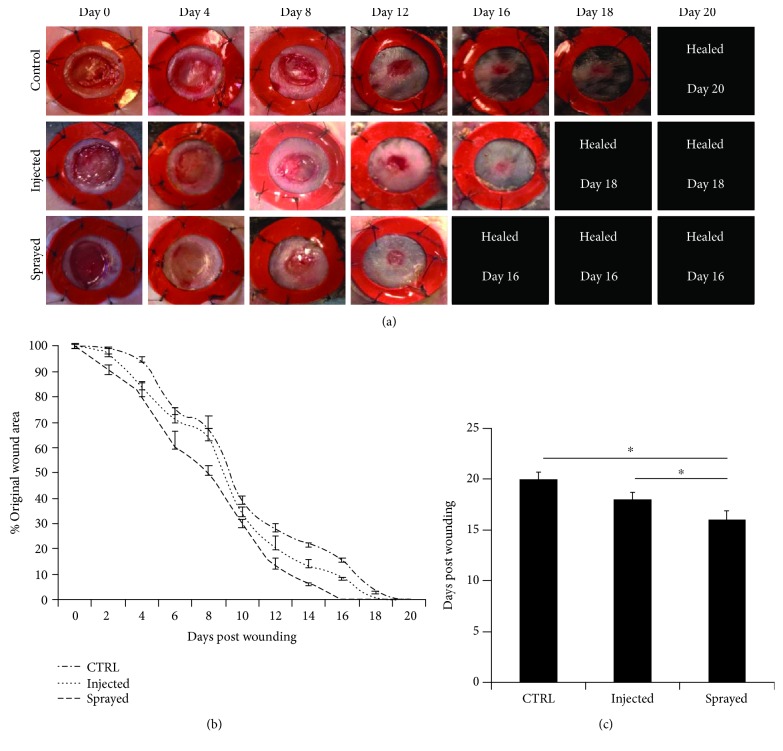
Fibrin glue seeding leads to a significantly enhanced secretion of key cytokines (SDF-1, bFGF, and MMP-2) of human ASCs . IVIS imaging showed a significantly prolonged murine ASC survival in diabetic wounds and significantly accelerated complete wound closure in the fibrin glue seeded group. CD31 immunohistochemistry revealed significantly more neovascularization in healed wounds treated with ASCs spray seeded in fibrin glue vs. ASC injected into the wound bed.
Although several vehicles have shown to successfully act as cell carrier systems in preclinical trials, regulatory issues have prohibited clinical usage for chronic wounds. By demonstrating the ability of fibrin glue to act as a carrier vehicle for ASCs, while simultaneously enhancing cellular regenerative function and viability, this study is a proponent of clinical translation for ASC-based therapies.
尽管慢性伤口是一项重大的个人和经济负担,但治疗选择仍然有限。在这些选择中,基于脂肪来源的基质细胞(ASC)的疗法是一种有前景的方法,但受到恶劣伤口环境的限制。在这里,我们使用一种市售的纤维蛋白胶为慢性伤口中的ASC提供一个可递送的微环境。
为了研究纤维蛋白胶的作用,进行了培养实验并对再生关键细胞因子进行了定量。通过使用已建立的小鼠慢性糖尿病伤口愈合模型,我们评估了纤维蛋白胶喷雾接种对细胞存活(体内成像系统,IVIS)、伤口愈合(伤口闭合动力学)以及愈合伤口的新生血管形成(CD31免疫组织化学)的影响。
纤维蛋白胶接种导致人ASC关键细胞因子(SDF-1、bFGF和MMP-2)的分泌显著增强。IVIS成像显示糖尿病伤口中鼠ASC存活时间显著延长,纤维蛋白胶接种组伤口完全闭合显著加速。CD31免疫组织化学显示,与将ASC注射到伤口床相比,用纤维蛋白胶喷雾接种ASC治疗的愈合伤口中有更多的新生血管形成。
尽管在临床前试验中几种载体已显示能成功充当细胞载体系统,但监管问题禁止其用于慢性伤口的临床治疗。通过证明纤维蛋白胶作为ASC载体的能力,同时增强细胞再生功能和活力,本研究支持基于ASC疗法的临床转化。