Department of Diagnostics, Wannan Medical College, Wuhu, Anhui 241001, P.R. China.
Mol Med Rep. 2019 Mar;19(3):2005-2012. doi: 10.3892/mmr.2019.9855. Epub 2019 Jan 15.
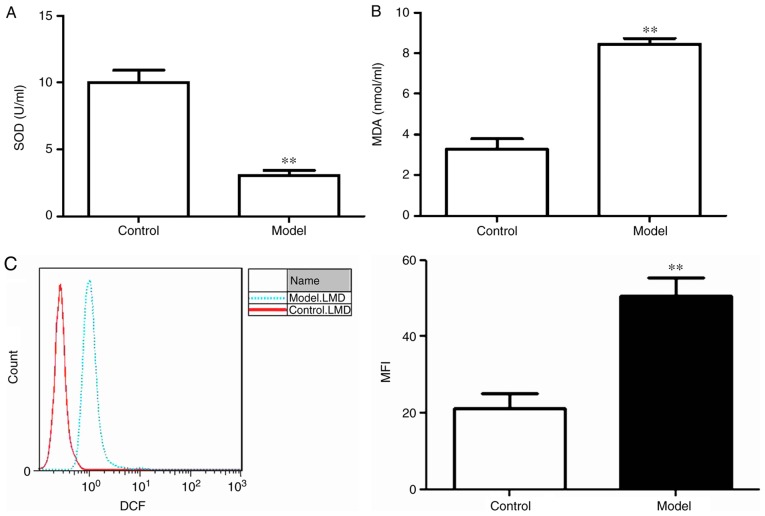
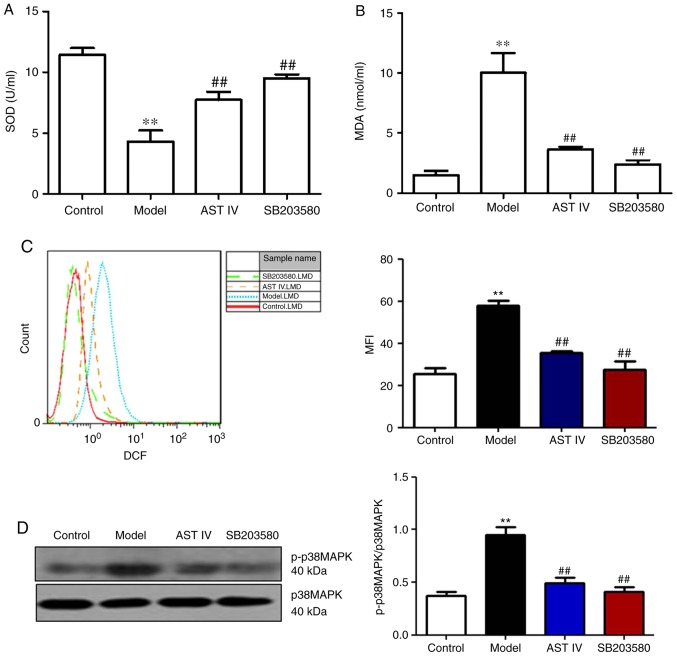
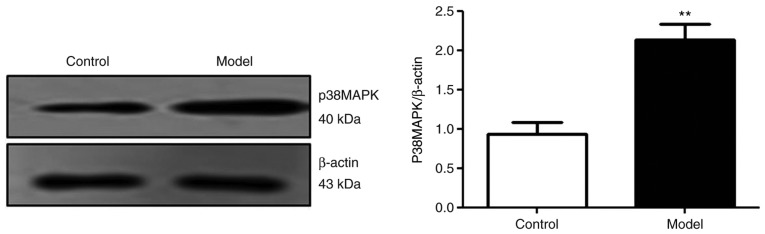
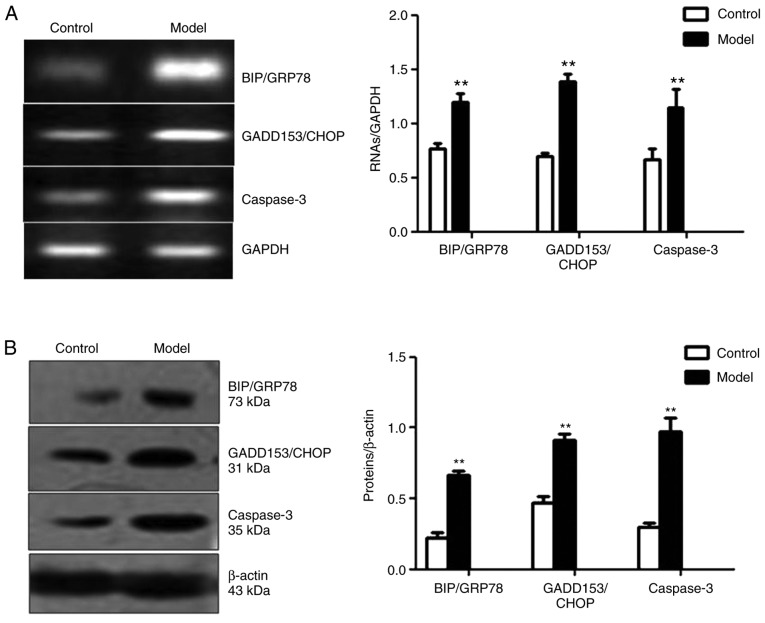
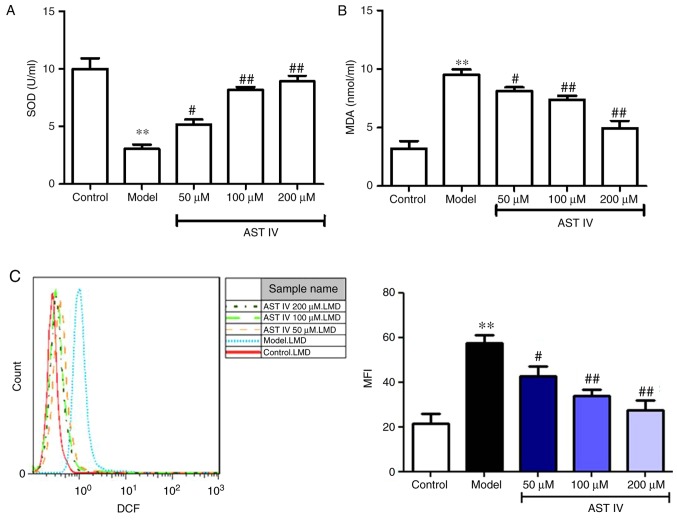
Endoplasmic reticulum stress (ERS) serves a vital role in the pathological development of Alzheimer's disease (AD). ERS can promote programmed cell death (apoptosis) during AD; however, the specific molecular mechanisms that lead to ERS remain unclear. It is very important that a drug for the treatment of AD is identified. Our previous studies indicated that astragaloside IV (AST IV) has anti‑inflammatory effects and helps cells resist oxidative stress. In the present study, western blotting and reverse transcription semi‑quantitative polymerase chain reaction were used to detect protein and mRNA expression levels, flow cytometry was used to measure intracellular reactive oxygen species (ROS) levels, and superoxide dismutase (SOD) and malondialdehyde (MDA) activity was detected using commercially available kits. The results demonstrated that SOD activity was decreased, and MDA content, ROS levels, and the expression levels of p38 mitogen‑activated protein kinase (MAPK) and ERS‑associated proteins, including binding immunoglobulin protein/glucose‑regulated protein and growth arrest‑ and DNA damage ‑inducible gene 153/C/EBP homologous protein, were increased in amyloid β (Aβ)25‑35‑treated PC12 cells. Furthermore, to investigate the role of p38 MAPK and the effects of AST IV in an in vitro model of AD, SB203580, a p38 MAPK signaling pathway inhibitor, and AST IV were administered to Aβ25‑35‑treated PC12 cells. The results revealed that AST IV protected the cells against AD. This effect may be caused by decreases in ROS levels, which may inhibit the p38 MAPK signaling pathway and thereby suppress ERS in Aβ25‑35‑treated PC12 cells.
内质网应激(ERS)在阿尔茨海默病(AD)的病理发展中起着至关重要的作用。ERS 可在 AD 期间促进程序性细胞死亡(细胞凋亡);然而,导致 ERS 的具体分子机制尚不清楚。因此,鉴定一种用于治疗 AD 的药物非常重要。我们之前的研究表明,黄芪甲苷(AST IV)具有抗炎作用,并有助于细胞抵抗氧化应激。在本研究中,采用 Western blot 法和逆转录半定量聚合酶链反应检测蛋白和 mRNA 表达水平,采用流式细胞术检测细胞内活性氧(ROS)水平,采用商业试剂盒检测超氧化物歧化酶(SOD)和丙二醛(MDA)活性。结果表明,SOD 活性降低,MDA 含量、ROS 水平以及 p38 丝裂原活化蛋白激酶(p38 MAPK)和 ERS 相关蛋白,包括结合免疫球蛋白蛋白/葡萄糖调节蛋白和生长停滞及 DNA 损伤诱导基因 153/C/EBP 同源蛋白的表达水平升高在淀粉样β(Aβ)25-35 处理的 PC12 细胞中。此外,为了研究 p38 MAPK 的作用以及 AST IV 在 AD 体外模型中的作用,给予 p38 MAPK 信号通路抑制剂 SB203580 和 AST IV 处理 Aβ25-35 处理的 PC12 细胞。结果表明,AST IV 可保护细胞免受 AD 的侵害。这种作用可能是由于 ROS 水平降低所致,其可能抑制 p38 MAPK 信号通路,从而抑制 Aβ25-35 处理的 PC12 细胞中的 ERS。