Rabia Lilia A, Desai Alec A, Jhajj Harkamal S, Tessier Peter M
Center for Biotechnology & Interdisciplinary Studies, Isermann Dept. of Chemical & Biological Engineering, Rensselaer Polytechnic Institute, Troy, NY 12180.
Department of Chemical Engineering, Biointerfaces Institute, University of Michigan, Ann Arbor, MI 48109, USA.
Biochem Eng J. 2018 Sep 15;137:365-374. doi: 10.1016/j.bej.2018.06.003. Epub 2018 Jun 5.
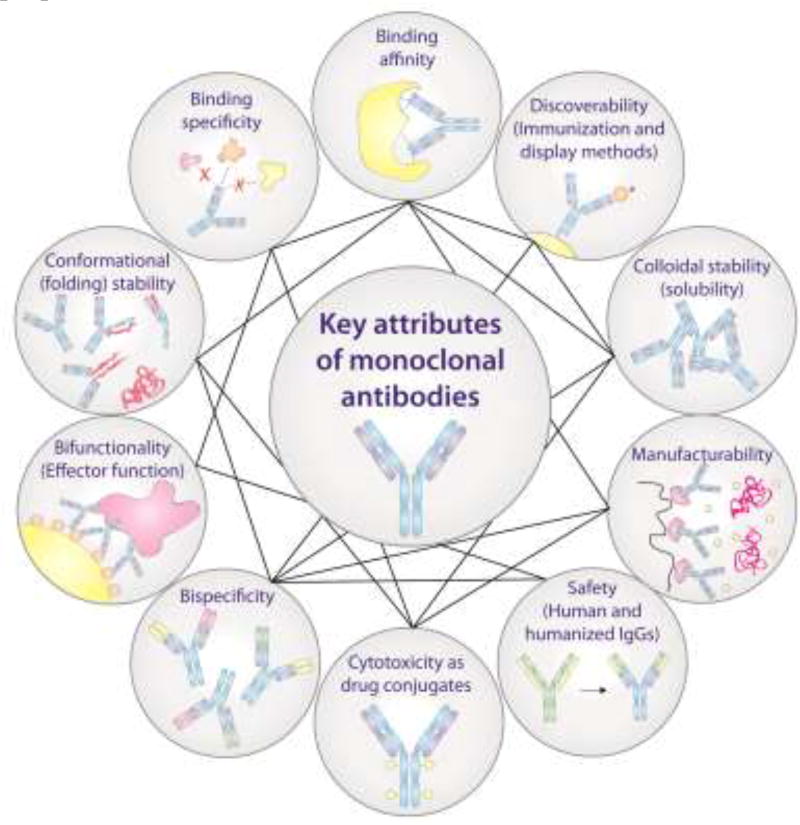
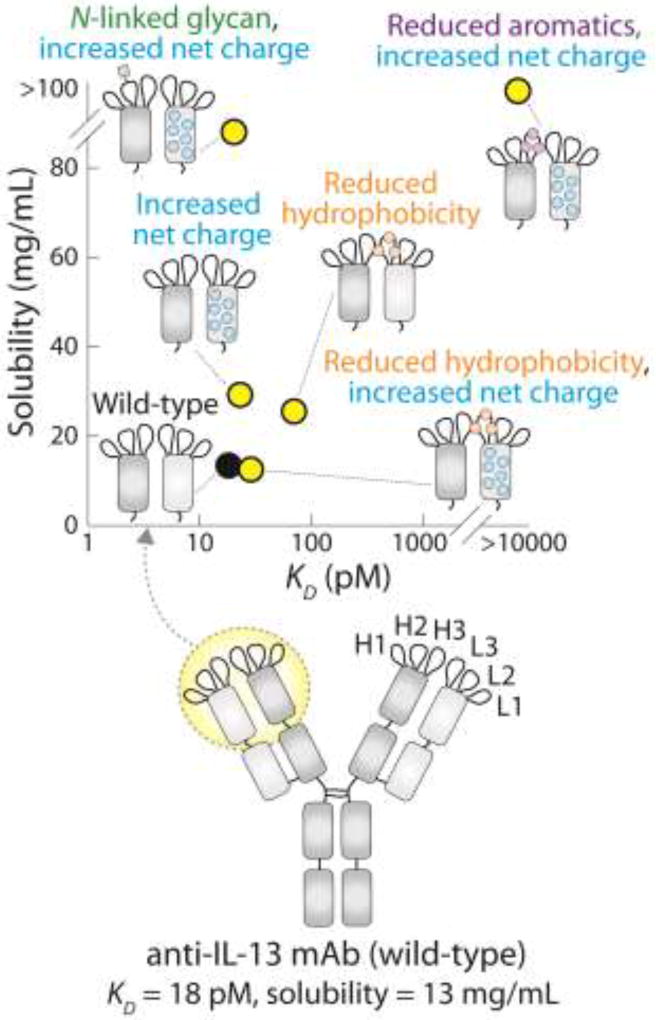
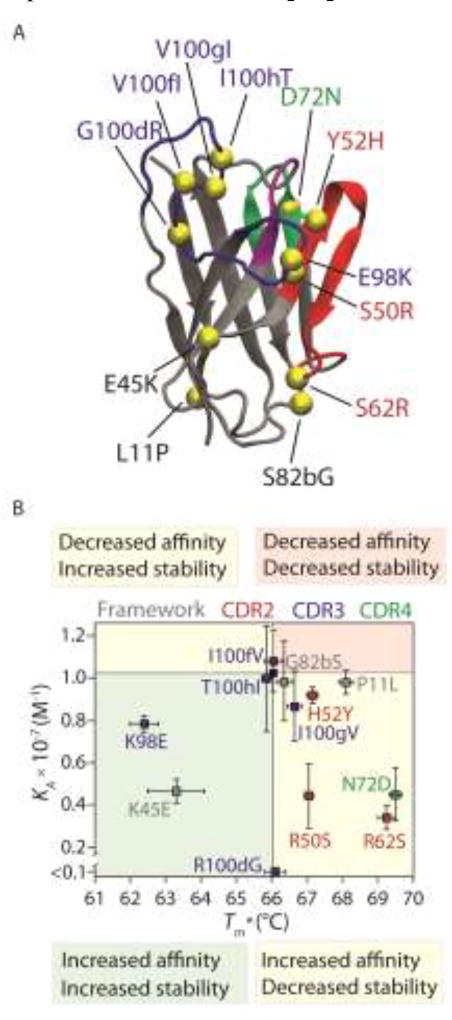
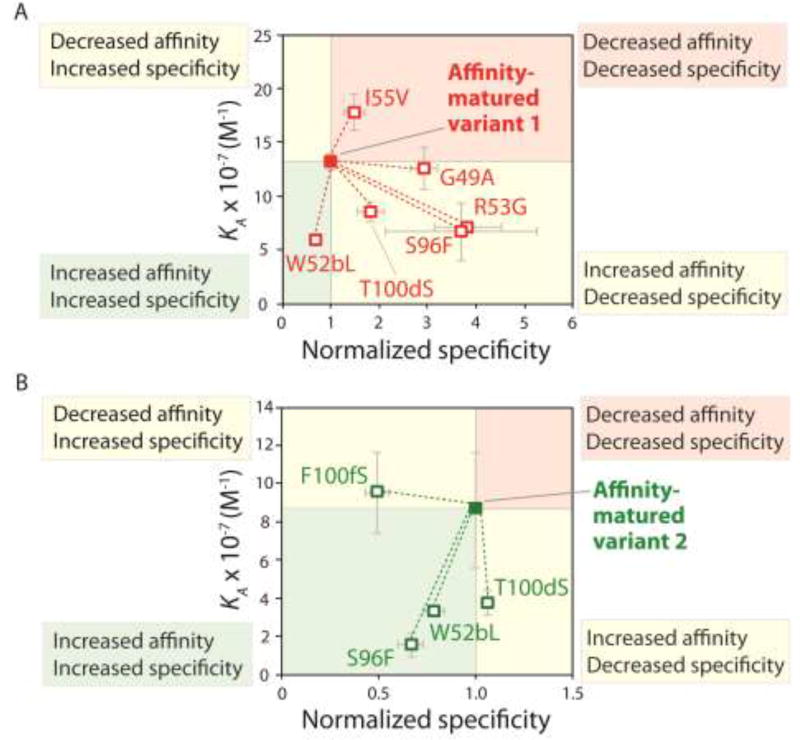
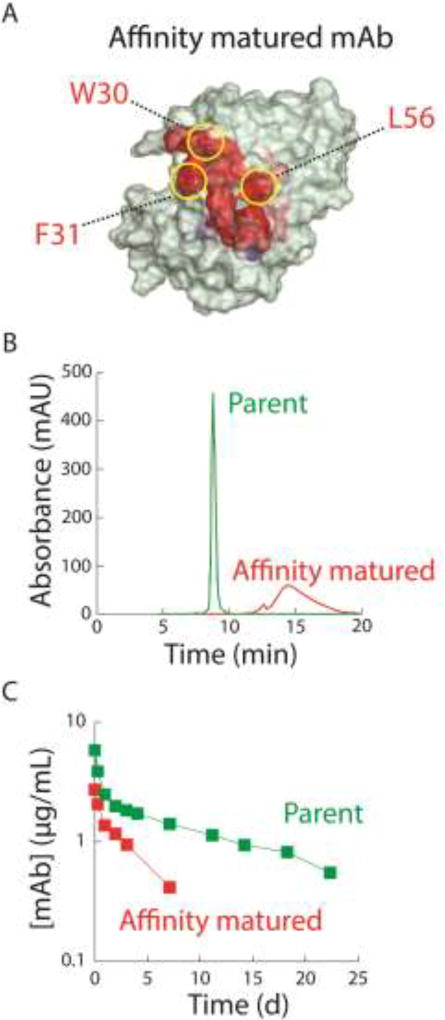
The widespread use of monoclonal antibodies for therapeutic applications has led to intense interest in optimizing several of their natural properties (affinity, specificity, stability, solubility and effector functions) as well as introducing non-natural activities (bispecificity and cytotoxicity mediated by conjugated drugs). A common challenge during antibody optimization is that improvements in one property (e.g., affinity) can lead to deficits in other properties (e.g., stability). Here we review recent advances in understanding trade-offs between different antibody properties, including affinity, specificity, stability and solubility. We also review new approaches for co-optimizing multiple antibody properties and discuss how these methods can be used to rapidly and systematically generate antibodies for a wide range of applications.
单克隆抗体在治疗应用中的广泛使用引发了人们对优化其多种天然特性(亲和力、特异性、稳定性、溶解性和效应功能)以及引入非天然活性(双特异性和由偶联药物介导的细胞毒性)的浓厚兴趣。抗体优化过程中的一个常见挑战是,一种特性(如亲和力)的改善可能会导致其他特性(如稳定性)的不足。在此,我们综述了在理解不同抗体特性(包括亲和力、特异性、稳定性和溶解性)之间权衡方面的最新进展。我们还综述了共同优化多种抗体特性的新方法,并讨论了如何利用这些方法快速、系统地生成适用于广泛应用的抗体。