Department of Microbiology and Molecular Genetics, University of Pittsburgh School of Medicine, Pittsburgh, Pennsylvania, USA.
Department of Microbiology and Molecular Genetics, University of Pittsburgh School of Medicine, Pittsburgh, Pennsylvania, USA
mBio. 2019 Jan 22;10(1):e02674-18. doi: 10.1128/mBio.02674-18.
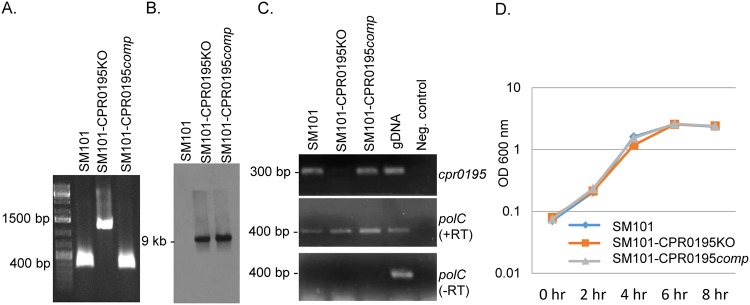
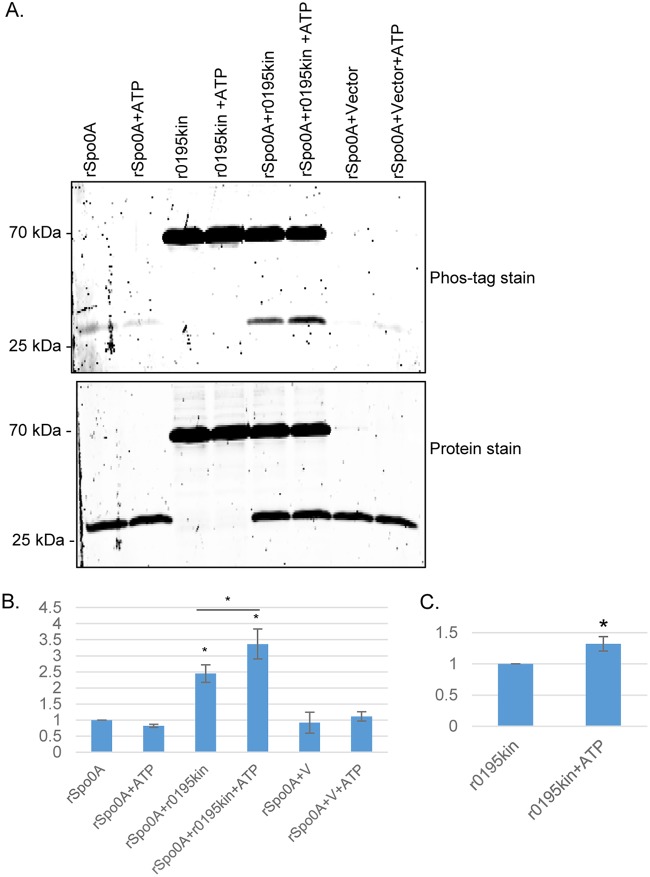
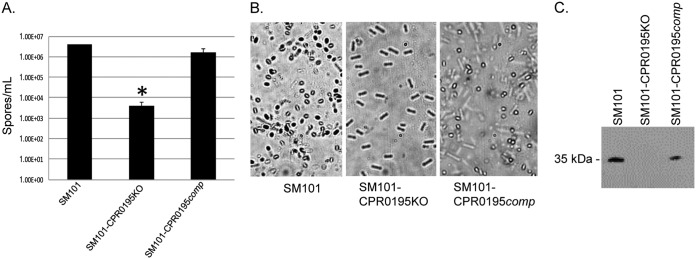
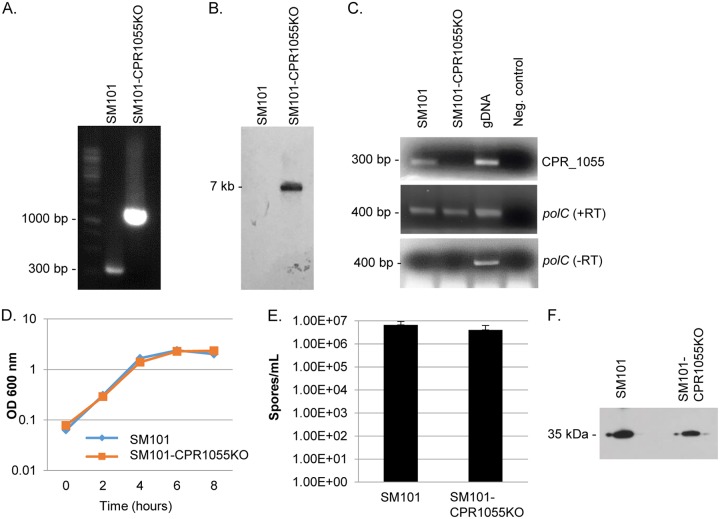
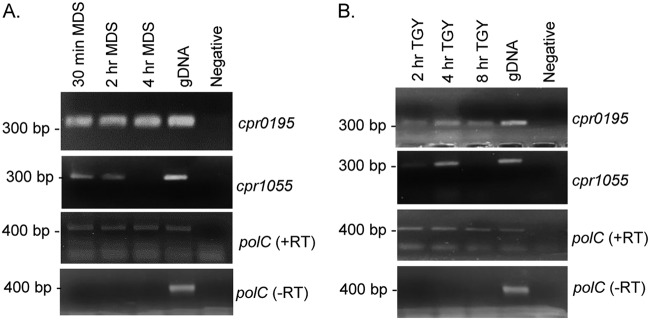
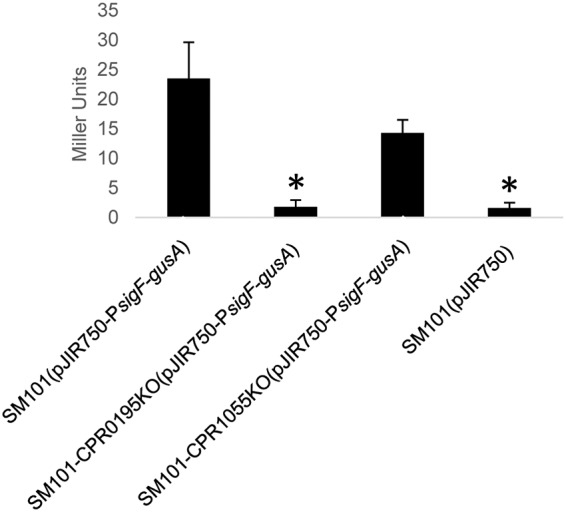
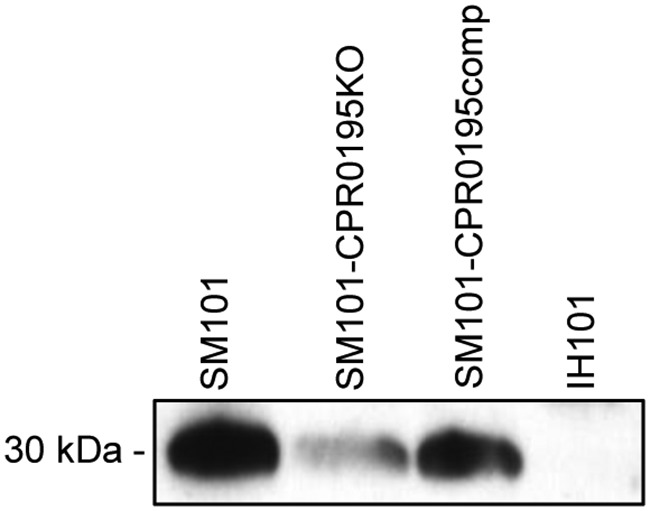
type F strains cause a common human foodborne illness and many cases of nonfoodborne human gastrointestinal diseases. Sporulation plays two critical roles during type F enteric disease. First, it produces broadly resistant spores that facilitate type F strain survival in the food and nosocomial environments. Second, production of enterotoxin (CPE), the toxin responsible for causing the enteric symptoms of type F diseases, is restricted to cells in the process of sporulation. While later steps in the regulation of sporulation have been discerned, the process leading to phosphorylation of Spo0A, the master early regulator of sporulation and consequent CPE production, has remained unknown. Using an insertional mutagenesis approach, the current study identified the orphan histidine kinase CPR0195 as an important factor regulating sporulation and CPE production. Specifically, a CPR0195 null mutant of type F strain SM101 made 10-fold fewer spores than its wild-type parent and produced no detectable CPE. In contrast, a null mutant of another putative orphan histidine kinase (CPR1055) did not significantly affect sporulation or CPE production. Studies using a operon promoter-driven reporter plasmid indicated that CPR0195 functions early during sporulation, i.e., prior to production of sporulation-associated sigma factors. Furthermore, studies showed that the CPR0195 kinase domain can autophosphorylate and phosphorylate Spo0A. These results support the idea of CPR0195 as an important kinase that initiates sporulation by directly phosphorylating Spo0A. This kinase could represent a novel therapeutic target to block sporulation and CPE production during type F disease. type F enteric diseases, which include a very common form of food poisoning and many cases of antibiotic-associated diarrhea, develop when type F strains sporulate and produce enterotoxin (CPE) in the intestines. Spores are also important for transmission of type F disease. Despite the importance of sporulation for type F disease and the evidence that sporulation begins with phosphorylation of the Spo0A transcriptional regulator, the kinase phosphorylating Spo0A to initiate sporulation and CPE production had not been ascertained. In response, the current report now provides identification of an orphan histidine kinase named CPR0195 that can directly phosphorylate Spo0A. Results using a CPR0195 null mutant indicate that this kinase is very important for initiating sporulation and CPE production. Therefore, the CPR0195 kinase represents a potential target to block type F disease by interfering with intestinal sporulation and CPE production.
F 型菌株引起常见的人类食源性疾病和许多非食源性人类胃肠道疾病。孢子形成在 F 型肠道疾病中起着两个关键作用。首先,它产生广泛耐药的孢子,有利于 F 型菌株在食物和医院环境中的生存。其次,肠毒素(CPE)的产生,负责引起 F 型疾病的肠道症状,仅限于孢子形成过程中的细胞。虽然已经发现了孢子形成后期调节的后续步骤,但导致 Spo0A 磷酸化的过程仍然未知,Spo0A 是孢子形成和随后的 CPE 产生的主要早期调节剂。使用插入诱变方法,本研究确定了孤儿组氨酸激酶 CPR0195 是调节孢子形成和 CPE 产生的重要因素。具体来说,F 型菌株 SM101 的 CPR0195 缺失突变体比其野生型亲本产生的孢子少 10 倍,并且未检测到可检测的 CPE。相比之下,另一个假定的孤儿组氨酸激酶(CPR1055)的缺失突变体对孢子形成或 CPE 产生没有显著影响。使用 操纵子启动子驱动的报告质粒进行的研究表明,CPR0195 在孢子形成早期起作用,即在与孢子形成相关的 sigma 因子产生之前。此外,研究表明,CPR0195 激酶结构域可以自身磷酸化和磷酸化 Spo0A。这些结果支持 CPR0195 作为一种重要激酶的观点,该激酶通过直接磷酸化 Spo0A 来启动孢子形成。这种激酶可能成为阻断 F 型疾病期间孢子形成和 CPE 产生的新型治疗靶标。
F 型肠道疾病包括一种非常常见的食物中毒形式和许多抗生素相关性腹泻病例,当 F 型菌株在肠道中形成孢子并产生肠毒素(CPE)时就会发生。孢子对于 F 型疾病的传播也很重要。尽管孢子形成对 F 型疾病很重要,并且有证据表明孢子形成始于 Spo0A 转录调节剂的磷酸化,但尚未确定磷酸化 Spo0A 以启动孢子形成和 CPE 产生的激酶。作为回应,本报告现在提供了一种名为 CPR0195 的孤儿组氨酸激酶的鉴定,该激酶可以直接磷酸化 Spo0A。使用 CPR0195 缺失突变体的结果表明,该激酶对于启动孢子形成和 CPE 产生非常重要。因此,CPR0195 激酶代表通过干扰肠道孢子形成和 CPE 产生来阻断 F 型疾病的潜在靶标。