Department of Mechanical Engineering & Mechanics, Lehigh University, 19 Memorial Drive West, Bethlehem, PA, 18015, USA.
Department of Medicine, Rheumatology, Columbia University Medical Center, New York, NY, 10032, USA.
Sci Rep. 2019 Jan 22;9(1):267. doi: 10.1038/s41598-018-36449-2.
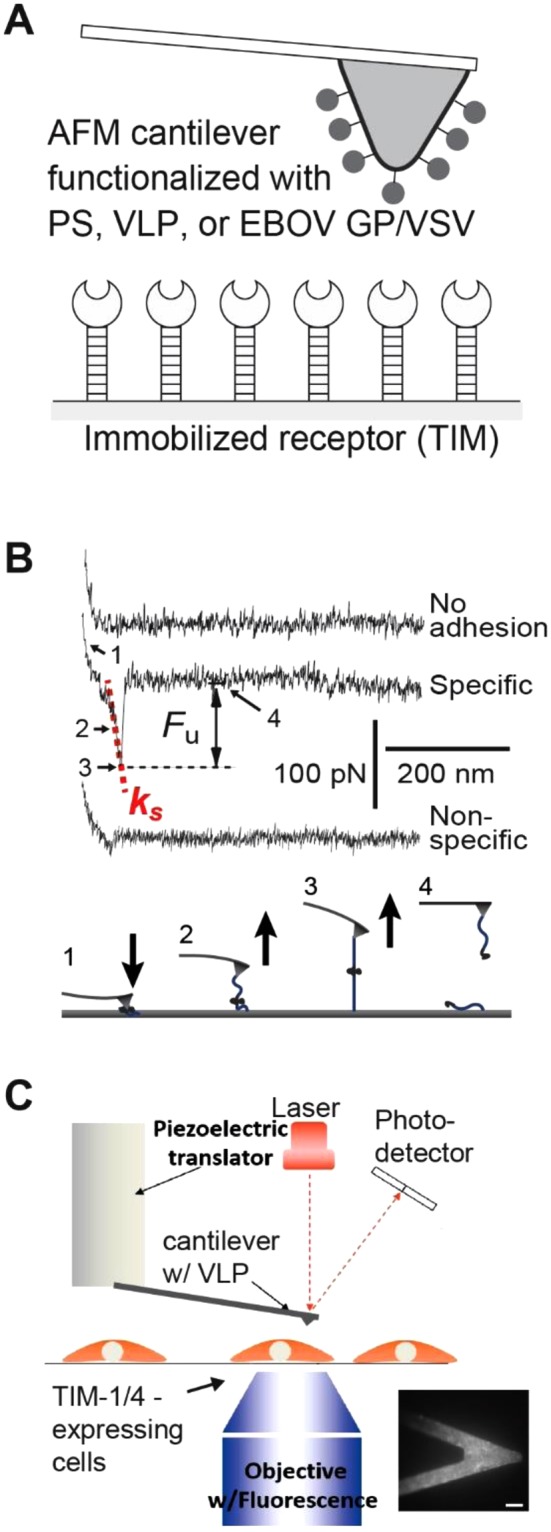
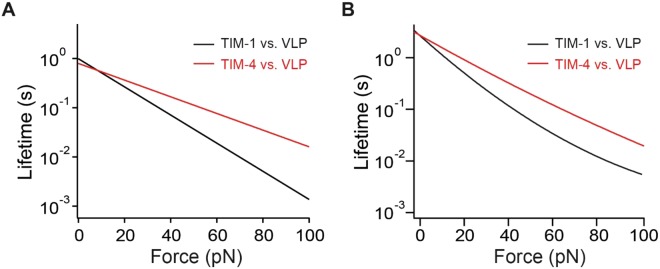
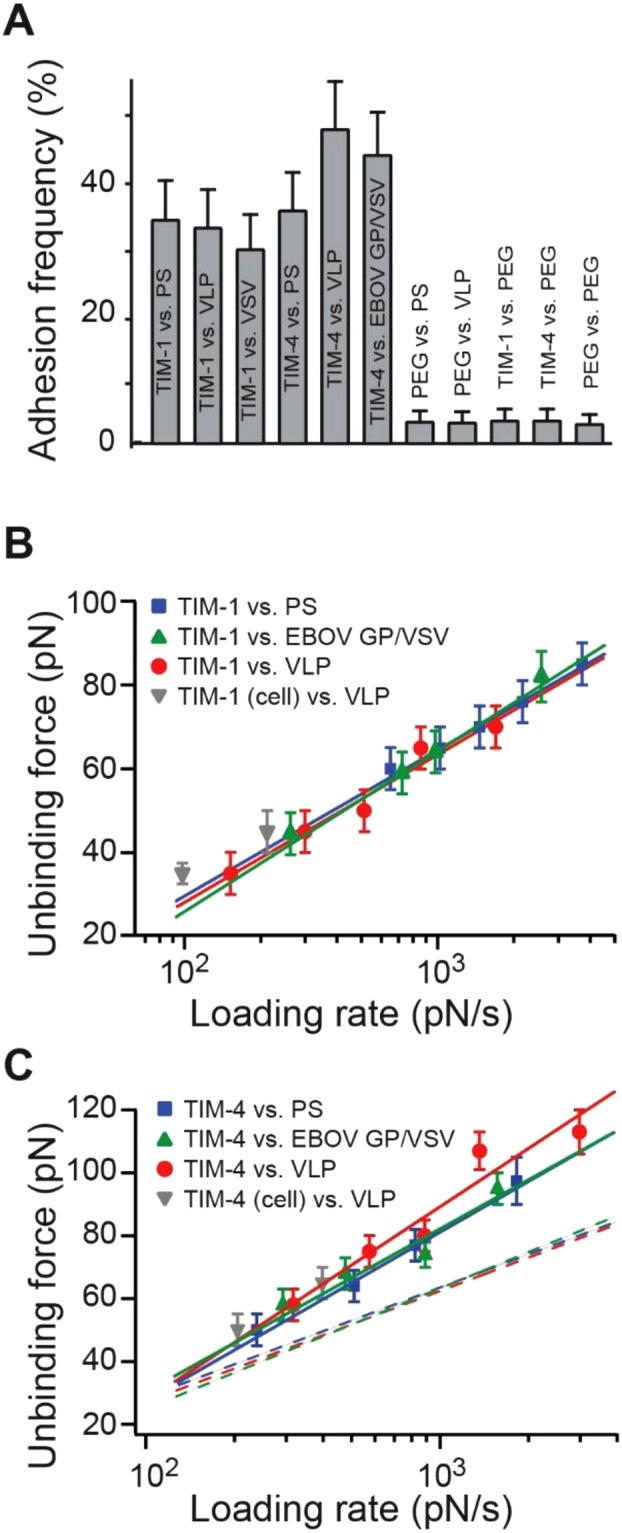
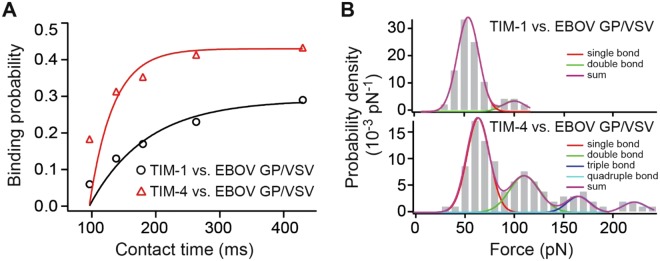
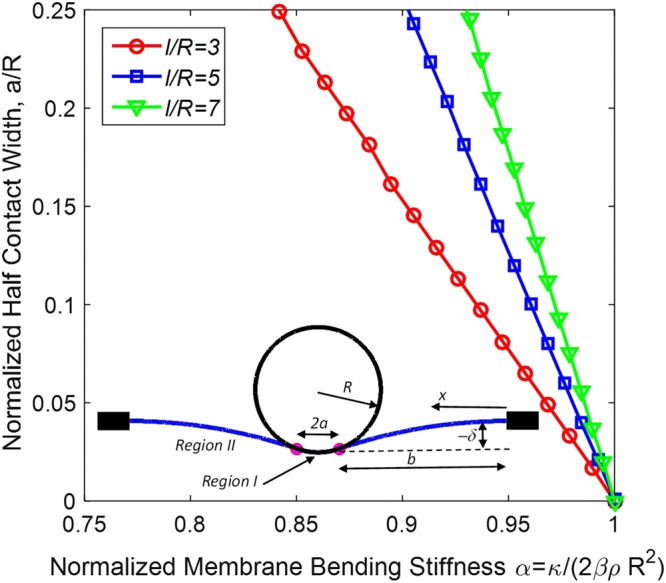
Since the most recent outbreak, the Ebola virus (EBOV) epidemic remains one of the world's public health and safety concerns. EBOV is a negative-sense RNA virus that can infect humans and non-human primates, and causes hemorrhagic fever. It has been proposed that the T-cell immunoglobulin and mucin domain (TIM) family proteins act as cell surface receptors for EBOV, and that the interaction between TIM and phosphatidylserine (PS) on the surface of EBOV mediates the EBOV-host cell attachment. Despite these initial findings, the biophysical properties of the TIM-EBOV interaction, such as the mechanical strength of the TIM-PS bond that allows the virus-cell interaction to resist external mechanical perturbations, have not yet been characterized. This study utilizes single-molecule force spectroscopy to quantify the specific interaction forces between TIM-1 or TIM-4 and the following binding partners: PS, EBOV virus-like particle, and EBOV glycoprotein/vesicular stomatitis virus pseudovirion. Depending on the loading rates, the unbinding forces between TIM and ligands ranged from 40 to 100 pN, suggesting that TIM-EBOV interactions are mechanically comparable to previously reported adhesion molecule-ligand interactions. The TIM-4-PS interaction is more resistant to mechanical force than the TIM-1-PS interaction. We have developed a simple model for virus-host cell interaction that is driven by its adhesion to cell surface receptors and resisted by membrane bending (or tension). Our model identifies critical dimensionless parameters representing the ratio of deformation and adhesion energies, showing how single-molecule adhesion measurements relate quantitatively to the mechanics of virus adhesion to the cell.
自最近一次爆发以来,埃博拉病毒(EBOV)疫情仍然是全球公共卫生和安全关注的问题之一。EBOV 是一种负义 RNA 病毒,可以感染人类和非人类灵长类动物,并引起出血热。据推测,T 细胞免疫球蛋白和粘蛋白结构域(TIM)家族蛋白作为 EBOV 的细胞表面受体,而 TIM 与 EBOV 表面磷脂酰丝氨酸(PS)之间的相互作用介导 EBOV-宿主细胞附着。尽管有这些初步发现,但 TIM-EBOV 相互作用的生物物理特性,例如允许病毒-细胞相互作用抵抗外部机械扰动的 TIM-PS 键的机械强度,尚未得到表征。本研究利用单分子力谱技术来量化 TIM-1 或 TIM-4 与以下结合伙伴之间的特定相互作用力:PS、EBOV 病毒样颗粒和 EBOV 糖蛋白/水疱性口炎病毒假病毒。根据加载速率的不同,TIM 与配体之间的解键力范围为 40 至 100 pN,这表明 TIM-EBOV 相互作用在机械上与先前报道的粘附分子-配体相互作用相当。TIM-4-PS 相互作用比 TIM-1-PS 相互作用更能抵抗机械力。我们已经开发了一种简单的病毒-宿主细胞相互作用模型,该模型由其与细胞表面受体的粘附驱动,并由膜弯曲(或张力)抵抗。我们的模型确定了表示变形和粘附能比的关键无维参数,展示了单分子粘附测量如何与病毒与细胞粘附的力学相关联。