Department of Anesthesiology, The First People's Hospital of Foshan, 81 North of Rinlan Road, Foshan 528000, China.
Department of Anesthesiology, Shenzhen Maternity and Child Healthcare Hospital, Southern Medical University, Shenzhen 518116, China.
Mediators Inflamm. 2018 Dec 20;2018:6158671. doi: 10.1155/2018/6158671. eCollection 2018.
Inflammatory responses induced by intestinal ischemia-reperfusion (IIR) lead to serious systemic organ dysfunction and pose a challenge for current treatment. This study aimed at investigating the effects of resveratrol on IIR-induced intestinal injury and its influence on mast cells (MCs) in rats.
Rats subjected to intestinal ischemia for 60 min and 4 h of IIR were investigated. Animals were randomly divided into five groups ( = 8 per group): sham, IIR, resveratrol (RESV, 15 mg/kg/day for 5 days before operation) + IIR, cromolyn sodium (CS, MC membrane stabilizer) + IIR, and RESV + compound 48/80 (CP, MC agonist) + IIR.
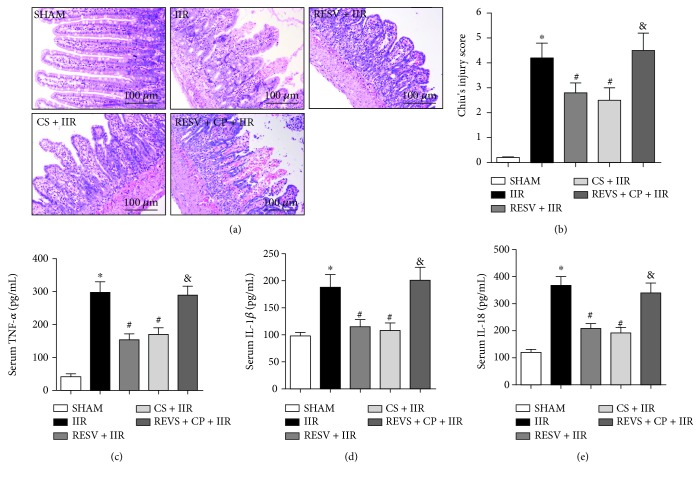
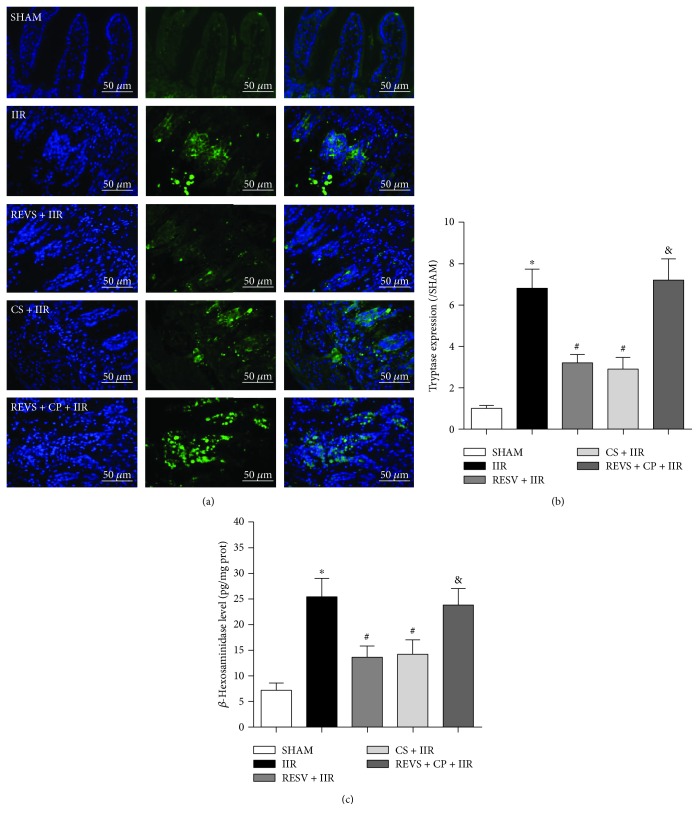
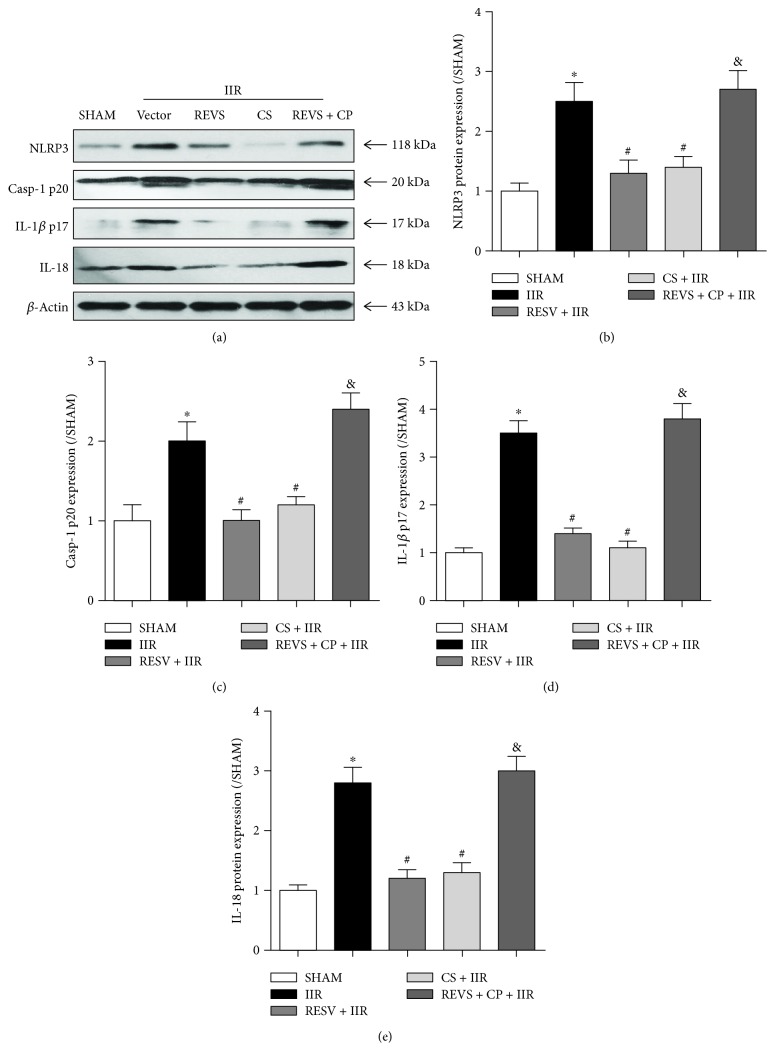
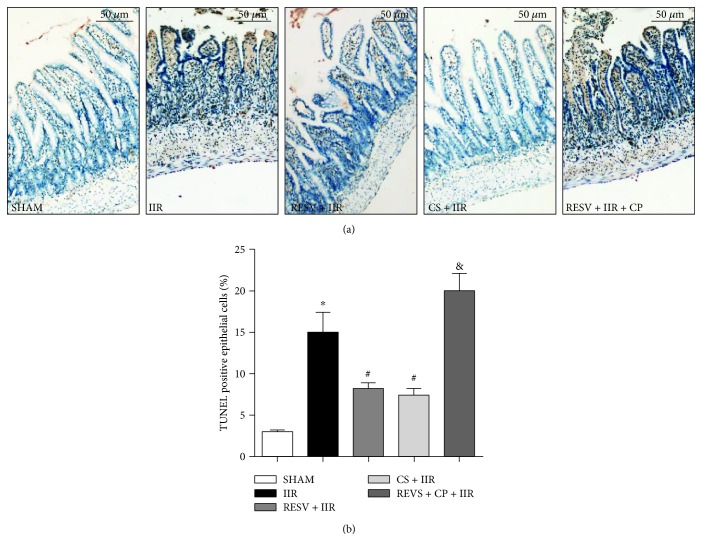
Intestinal injury and increased proinflammatory cytokines including tumor necrosis factor-, interleukin-1, and interleukin-18 were observed in the IIR group. Intestinal MC-related tryptase and -hexosaminidase levels were also increased after rats were subjected to IIR accompanied by activation of NLRP3 inflammasomes. Interestingly, pretreatment with resveratrol significantly suppressed the activities of proinflammatory cytokines and attenuated intestinal injury. Resveratrol also reduced MC and NLRP3 inflammasome activation, which was consistent with the effects of cromolyn sodium. However, the protective effects of resveratrol were reversed by the MC agonist compound 48/80.
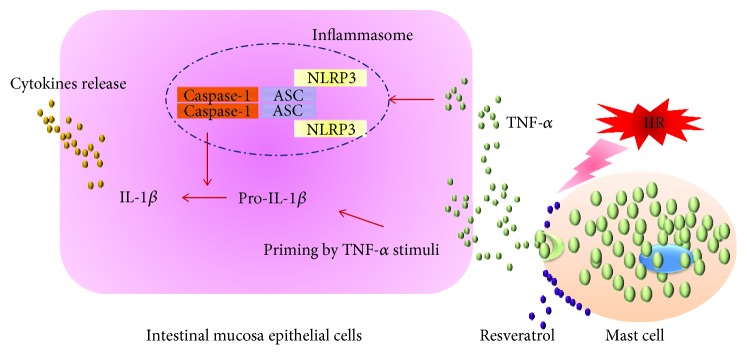
In summary, these findings reveal that resveratrol suppressed IIR injury by stabilizing MCs, preventing them from degranulation, accompanied with intestinal mucosa NLRP3 inflammasome inhibition and intestinal epithelial cell apoptosis reduction.
肠缺血再灌注(IIR)引起的炎症反应导致严重的全身器官功能障碍,对当前的治疗构成挑战。本研究旨在探讨白藜芦醇对大鼠 IIR 诱导的肠损伤的影响及其对肥大细胞(MCs)的影响。
研究了经历 60 分钟肠缺血和 4 小时 IIR 的大鼠。动物随机分为五组(每组 8 只):假手术组、IIR 组、白藜芦醇(RESV,术前 5 天每天 15mg/kg)+IIR 组、色甘酸钠(CS,MC 膜稳定剂)+IIR 组和 RESV+化合物 48/80(CP,MC 激动剂)+IIR 组。
在 IIR 组中观察到肠损伤和促炎细胞因子(包括肿瘤坏死因子-α、白细胞介素-1 和白细胞介素-18)的增加。大鼠经历 IIR 后,肠 MC 相关的胰蛋白酶和β-己糖胺酶水平也升高,同时 NLRP3 炎性小体被激活。有趣的是,白藜芦醇预处理显著抑制了促炎细胞因子的活性并减轻了肠损伤。白藜芦醇还降低了 MC 和 NLRP3 炎性小体的激活,这与色甘酸钠的作用一致。然而,MC 激动剂化合物 48/80 逆转了白藜芦醇的保护作用。
综上所述,这些发现表明,白藜芦醇通过稳定 MC 来抑制 IIR 损伤,防止其脱颗粒,同时抑制肠道黏膜 NLRP3 炎性小体和减少肠道上皮细胞凋亡。