Tesena Parichart, Yingchutrakul Yodying, Roytrakul Sittiruk, Wongtawan Tuempong, Angkanaporn Kris
Graduate Program in Animal Physiology, Department of Veterinary Physiology, Faculty of Veterinary Science, Chulalongkorn University, Bangkok 10330, Thailand.
Department of Clinical Science and Public Health, Faculty of Veterinary Science, Mahidol University, Salaya, Puttamonthon, Nakhon Pathom 73170, Thailand.
J Vet Med Sci. 2019 Mar 20;81(3):418-424. doi: 10.1292/jvms.18-0679. Epub 2019 Jan 23.
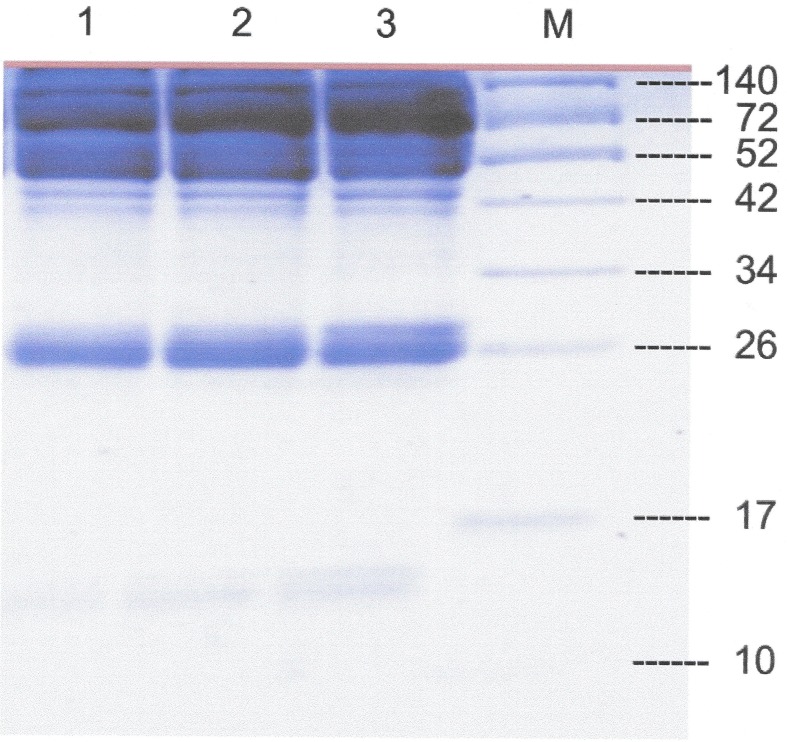
Equine Glandular Gastric Disease (EGGD) is a common disease in sport horses. This disease might be associated with usage of nonsteroidal anti-inflammatory drugs (NSAIDs) for treating inflammatory diseases. Although gastroscopy has been an effective method for diagnosis, but a less invasive, and inexpensive method is preferred. This study used proteomic technology to identify candidate serum proteins that might be used as markers of NSAIDs induced EGGD. Five Thoroughbred horses were given high doses of NSAID, phenylbutazone to treat lameness. The experiment was divided into three periods: (i) Pre-EGGD period, (ii) during EGGD period, and (iii) Post-EGGD period. Gastroscopy were used to diagnose EGGD, serum was collected to perform gel electrophoresis (1D SDS-PAGE) and mass spectrometry (LC-MS) in order to identify serum proteins in each group. The candidate serum proteins were computationally predicted for the interaction between phenylbutazone and proteins, tissue specific expression, and association to gastric ulceration. After EGGD induction, all horses showed clinical signs of colic with marked congestion and erosion appearing in the mucosa of the glandular stomach whereas no change was observed in the mucosa of non-glandular stomach. Our proteomic results identified 14 proteins that might be used as EGGD markers. These proteins were highly expressed in the glandular stomach and some proteins were associated with phenylbutazone or ulcer development. However, confirmation of these candidate marker proteins is required with specific antibodies in the larger horse population before they can be considered for application in the field.
马腺胃疾病(EGGD)是运动马中的一种常见疾病。这种疾病可能与使用非甾体抗炎药(NSAIDs)治疗炎症性疾病有关。尽管胃镜检查一直是一种有效的诊断方法,但人们更倾向于一种侵入性较小且成本较低的方法。本研究使用蛋白质组学技术来鉴定可能用作NSAIDs诱导的EGGD标志物的候选血清蛋白。五匹纯种马被给予高剂量的NSAID——保泰松来治疗跛行。实验分为三个阶段:(i)EGGD前期,(ii)EGGD期,以及(iii)EGGD后期。使用胃镜检查来诊断EGGD,采集血清以进行凝胶电泳(一维SDS-PAGE)和质谱分析(LC-MS),以便鉴定每组中的血清蛋白。对候选血清蛋白进行了保泰松与蛋白质之间相互作用、组织特异性表达以及与胃溃疡关联的计算预测。在诱导EGGD后,所有马匹均出现腹痛的临床症状,腺胃黏膜出现明显充血和糜烂,而非腺胃黏膜未观察到变化。我们的蛋白质组学结果鉴定出14种可能用作EGGD标志物的蛋白质。这些蛋白质在腺胃中高度表达,并且一些蛋白质与保泰松或溃疡发展有关。然而,在将这些候选标志物蛋白考虑应用于该领域之前,需要在更大的马群中用特异性抗体对其进行确认。