Division of Pediatric Critical Care, Texas Children's Hospital, 6651 Main St. E1470.36, Houston, TX, 77030, USA.
Division of Pediatric Critical Care, Riley Hospital for Children at the University of Indiana Health, 705 Riley Hospital Dr., Indianapolis, IN, 46202, USA.
Sci Rep. 2019 Jan 23;9(1):424. doi: 10.1038/s41598-018-36743-z.
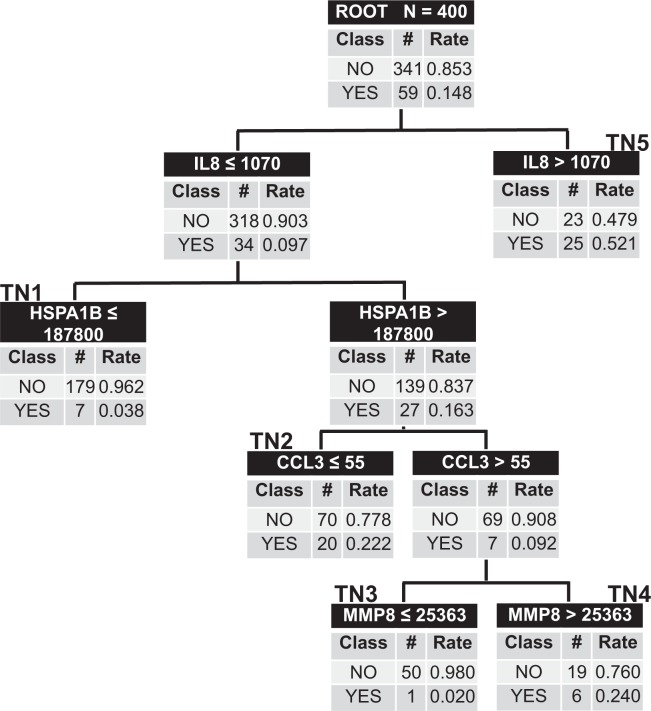
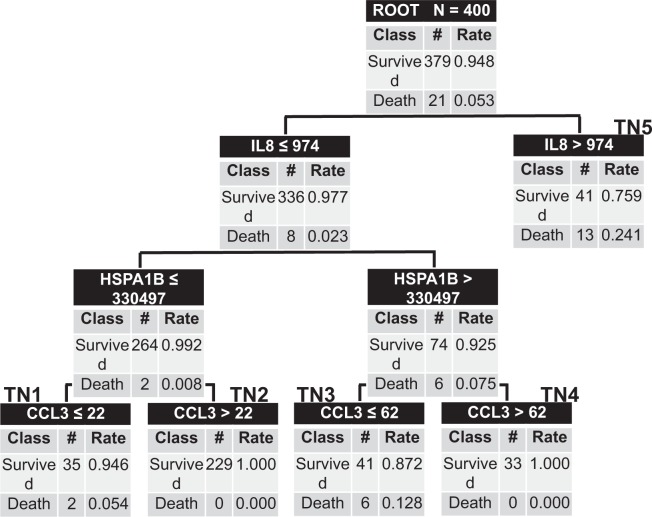
Pediatric sepsis and bacterial infection cause significant morbidity and mortality worldwide, with immunocompromised patients being at particularly high risk of rapid deterioration and death. This study evaluated if PERSEVERE, PERSEVERE-II, or the PERSEVERE biomarkers, can reliably estimate the risk of clinical deterioration and 28-day mortality among immunocompromised pediatric patients. This is a single-center prospective cohort study conducted from July 2016 through September 2017 incorporating 400 episodes of suspected bacterial infection from the inpatient units at Cincinnati Children's Hospital Medical Center, a large, tertiary care children's hospital. The primary analysis assessed clinical deterioration within 72 hours of evaluation for infection. Secondarily, we assessed 28-day mortality. Clinical deterioration was seen in 15% of subjects. Twenty-eight day mortality was 5%, but significantly higher among critically ill patients. Neither PERSEVERE nor PERSEVERE-II performed well to predict clinical deterioration or 28-day mortality, thus we derived new stratification models using the PERSEVERE biomarkers with both high sensitivity and negative predictive value. In conclusion, we evaluated previously validated biomarker risk models in a novel population of largely non-critically ill immunocompromised pediatric patients, and attempted to stratify patients based on a new outcome metric, clinical deterioration. The new highly predictive models indicate common physiologic pathways to clinical deterioration or death from bacterial infection.
儿科脓毒症和细菌感染在全球范围内导致了大量发病率和死亡率,免疫功能低下的患者尤其面临着迅速恶化和死亡的高风险。本研究评估了 PERSEVERE、PERSEVERE-II 或 PERSEVERE 生物标志物是否能够可靠地估计免疫功能低下的儿科患者发生临床恶化和 28 天死亡率的风险。这是一项单中心前瞻性队列研究,于 2016 年 7 月至 2017 年 9 月期间在辛辛那提儿童医院医疗中心的住院病房中对 400 例疑似细菌感染的病例进行了研究,该中心是一家大型的三级儿童保健医院。主要分析评估了感染评估后 72 小时内的临床恶化情况。其次,评估了 28 天死亡率。15%的患者出现临床恶化。28 天死亡率为 5%,但危重症患者明显更高。PERSEVERE 和 PERSEVERE-II 均不能很好地预测临床恶化或 28 天死亡率,因此我们使用 PERSEVERE 生物标志物开发了新的分层模型,这些模型具有高灵敏度和阴性预测值。总之,我们在一个新的主要是非危重症免疫功能低下儿科患者的人群中评估了先前经过验证的生物标志物风险模型,并试图根据新的结局指标(临床恶化)对患者进行分层。新的高度预测模型表明,细菌感染导致临床恶化或死亡的常见生理途径。