Park Ho-Eun, Kim Ye Jin, Do Kyung-Hyo, Kim Jae Kwang, Ham Jun-Sang, Lee Wan-Kyu
College of Veterinary Medicine, Chungbuk National University, Cheongju 28644, Korea.
Division of Life Sciences, Incheon National University, Incheon 22012, Korea.
Korean J Food Sci Anim Resour. 2018 Dec;38(6):1261-1272. doi: 10.5851/kosfa.2018.e62. Epub 2018 Dec 31.
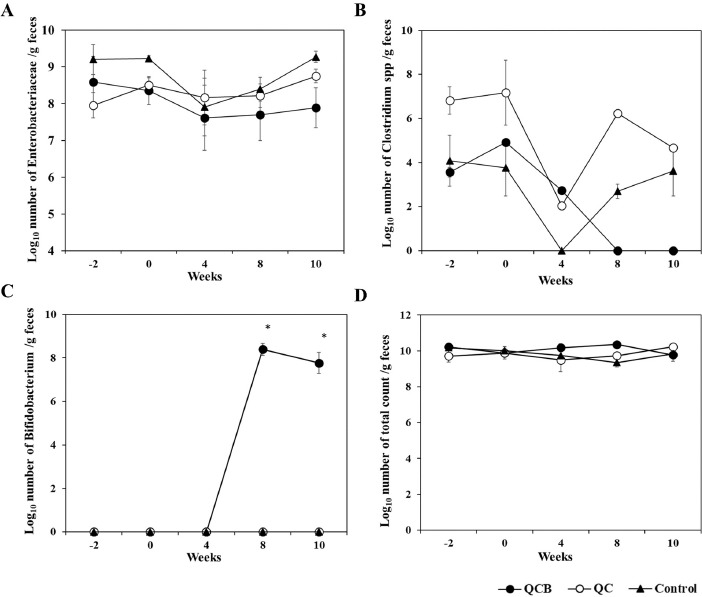
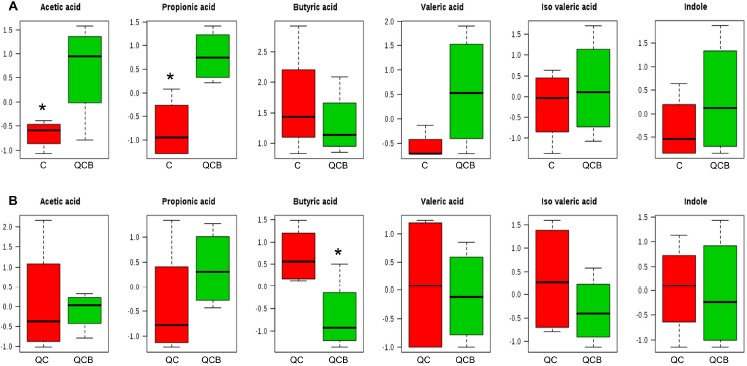
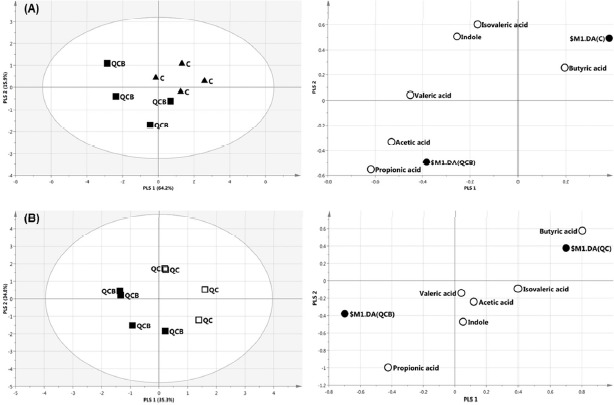
The effects of Queso Blanco cheese containing KACC 91563 was studied on the intestinal microbiota and short chain fatty acids (SCFAs) in healthy companion dogs. There were three experimental groups with five healthy dogs each: a control group, not fed with any cheese, and groups fed with Queso Blanco cheese with (QCB) or without KACC 91563 (QC) for 8 weeks. Fecal samples were collected 5 times before, during, and after feeding with cheese. Intestinal microbiota was analyzed using two non-selective agar plates (BL and TS) and five selective agar plates (BS, NN, LBS, TATAC, and MacConkey). SPME-GC-MS method was applied to confirm SCFAs and indole in dog feces. The six intestinal metabolites such as acetic, propionic, butyric, valeric, isovaleric acid and indole were identified in dog feces. Administration of KACC 91563 (QCB) for 8 weeks significantly increased the beneficial intestinal bacteria such as (8.4±0.55) and reduced harmful bacteria such as Enterobacteriaceae and (p<0.05). SCFA such as acetic and propionic acid were significantly higher in the QCB group than in the Control group (p<0.05). In conclusion, this study demonstrates that administration of Queso Blanco cheese containing KACC 91563 had positive effects on intestinal microbiota and metabolites in companion dogs. These results suggest that Queso Blanco cheese containing KACC 91563 could be used as a functional food for companion animals and humans.
研究了含有KACC 91563的白奶酪对健康宠物狗肠道微生物群和短链脂肪酸(SCFA)的影响。有三个实验组,每组五只健康的狗:一个对照组,不喂食任何奶酪;另外两组分别喂食含KACC 91563的白奶酪(QCB)和不含KACC 91563的白奶酪(QC),为期8周。在喂食奶酪前、期间和之后分别采集5次粪便样本。使用两种非选择性琼脂平板(BL和TS)和五种选择性琼脂平板(BS、NN、LBS、TATAC和麦康凯琼脂平板)分析肠道微生物群。采用固相微萃取-气相色谱-质谱法确认狗粪便中的短链脂肪酸和吲哚。在狗粪便中鉴定出六种肠道代谢物,如乙酸、丙酸、丁酸、戊酸、异戊酸和吲哚。连续8周给予KACC 91563(QCB)可显著增加有益肠道细菌,如(8.4±0.55),并减少有害细菌,如肠杆菌科和(p<0.05)。QCB组中的乙酸和丙酸等短链脂肪酸显著高于对照组(p<0.05)。总之,本研究表明,给予含有KACC 91563的白奶酪对宠物狗的肠道微生物群和代谢物有积极影响。这些结果表明,含有KACC 91563的白奶酪可作为伴侣动物和人类的功能性食品。