1Nosocomial Infection Research Center, Isfahan University of Medical Sciences, Isfahan, Iran.
2Department of Microbiology, School of Medicine, Isfahan University of Medical Sciences, Isfahan, Iran.
Antimicrob Resist Infect Control. 2019 Jan 14;8:12. doi: 10.1186/s13756-018-0454-6. eCollection 2019.
infection (CDI) is known as one of the most important causes of nosocomial infections. The main objective of this study was to evaluate the presence of in the stool of hospitalized patients with diarrhea as well as in their environments.
isolates were characterized according to the presence of toxin genes and antibiotic resistance. Multilocus Sequence Typing Analysis (MLST) was applied for finding the genetic polymorphism and relationship among strain lineages.
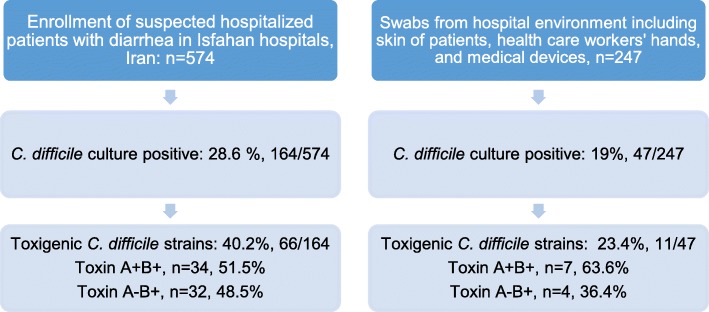
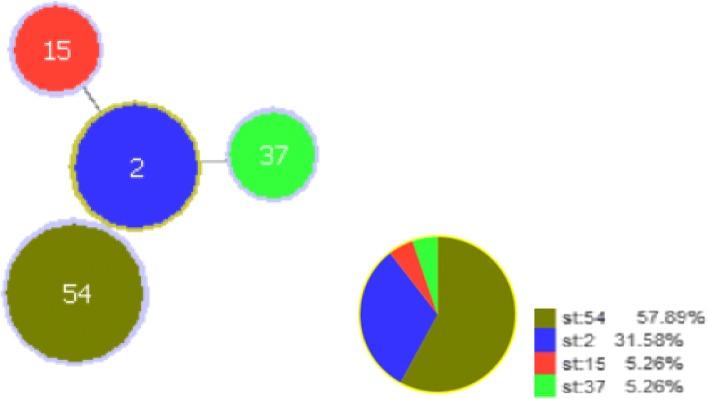
A total of 821 samples (574 stools and 247 swabs) were collected between April 2015 and May 2017. The prevalence of isolates was 28.6% (164/574) in patients and 19% (47/247) in swabs taken from medical devices, hands of healthcare workers and skin patient sites. Finally, 11.5% (66/574) toxigenic strains isolated from stool samples of inpatients and 4.4% (11/247) from hands of healthcare workers and skin patient sites. All the toxigenic isolates were inhibited by a low concentration of vancomycin (MIC < 0.5 μg/ml). About 43% (33/77) and 39% of isolates were resistant to Clindamycin and moxifloxacin respectively. All isolates were susceptible to metronidazole. Toxigenic strains were analyzed by MLST and were divided into 4 different STs. The detected types were ST-54 (57.9%), followed by ST-2 (31.6. %), ST-15 (5.3%) and ST-37 (5.3%), while none of the isolates were identified as ST-1 or ST-11. Significant risk factors for CDI appear to be advanced age, undergoing chemotherapy, previous surgery, and residence in the nursing home.
CDI is common in Iran and further studies are recommended to monitor its epidemiological variations. Moreover, greater attempts must be made to encourage antibiotic stewardship by healthcare workers and the public.
感染(CDI)是医院感染的最重要原因之一。本研究的主要目的是评估住院腹泻患者粪便中以及其环境中是否存在产毒素。
根据毒素基因和抗生素耐药性对分离株进行特征描述。多位点序列分型分析(MLST)用于寻找菌株谱系之间的遗传多态性和关系。
2015 年 4 月至 2017 年 5 月期间共采集了 821 份样本(574 份粪便和 247 份拭子)。患者中分离出的产毒素 菌株的患病率为 28.6%(164/574),从医疗器械、医护人员手部和患者皮肤部位采集的拭子中为 19%(47/247)。最后,从住院患者粪便样本中分离出 11.5%(66/574)的产毒 菌株,从医护人员手部和患者皮肤部位采集的拭子中分离出 4.4%(11/247)。所有产毒分离株均被低浓度万古霉素(MIC<0.5μg/ml)抑制。约 43%(33/77)和 39%的分离株分别对克林霉素和莫西沙星耐药。所有分离株均对甲硝唑敏感。产毒 菌株通过 MLST 进行分析,分为 4 个不同的 ST。检测到的类型为 ST-54(57.9%),其次是 ST-2(31.6. %)、ST-15(5.3%)和 ST-37(5.3%),而没有分离株被鉴定为 ST-1 或 ST-11。CDI 的显著危险因素似乎是年龄较大、接受化疗、先前手术和居住在养老院。
CDI 在伊朗很常见,建议进一步研究以监测其流行病学变化。此外,必须更加努力鼓励医护人员和公众采取抗生素管理措施。