Jensen Kelsey, Beylergil Sinem Balta, Shaikh Aasef G
1Neurological Institute, University Hospitals, Cleveland, OH USA.
2Department of Neurology, Case Western Reserve University, Cleveland, OH 44022 USA.
Cerebellum Ataxias. 2019 Jan 17;6:1. doi: 10.1186/s40673-018-0095-9. eCollection 2019.
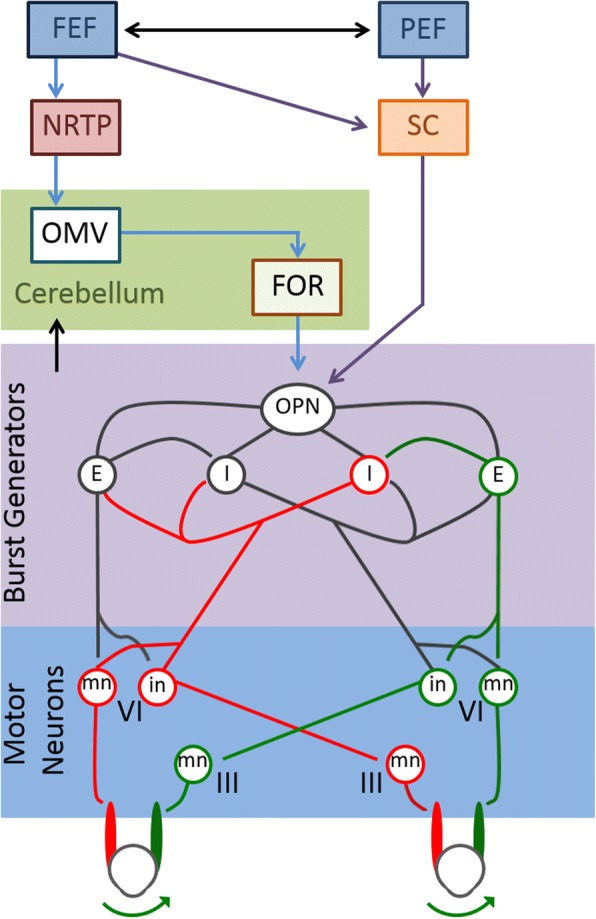
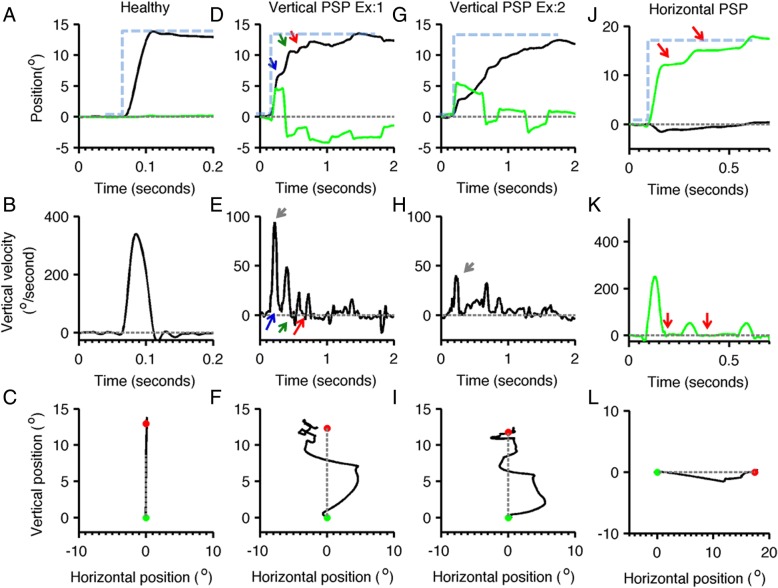
Eye movements are frequently considered diagnostic markers indicating involvement of the cerebellum. Impaired amplitude of saccades (saccade dysmetria), impaired gaze holding function (horizontal or downbeat nystagmus), and interrupted (choppy) pursuit are typically considered hallmarks of cerebellar disorders. While saccade dysmetria is a frequently considered abnormality, the velocity of saccades are rarely considered part of the constellation of cerebellar involvement. Reduced saccade velocity, frequently called "slow saccades" are typically seen in a classic disorder of the midbrain called progressive supranuclear palsy. It is also traditionally diagnostic of spinocerebellar ataxia type 2. In addition to its common causes, the slowness of vertical saccades is not rare in cerebellar disorders. Frequently this phenomenology is seen in multisystem involvement that substantially involves the cerebellum. In this review we will first discuss the physiological basis and the biological need for high saccade velocities. In subsequent sections we will discuss disorders of cerebellum that are known to cause slowing of saccades. We will then discuss possible pathology and novel therapeutic strategies.
眼球运动常被视为提示小脑受累的诊断标志物。扫视幅度受损(扫视辨距不良)、注视保持功能受损(水平或下跳性眼球震颤)以及追踪中断(急促)通常被认为是小脑疾病的特征。虽然扫视辨距不良是一种常被考虑的异常情况,但扫视速度很少被视为小脑受累的一系列表现的一部分。扫视速度降低,常被称为“慢扫视”,通常见于一种称为进行性核上性麻痹的中脑经典疾病。它传统上也是2型脊髓小脑共济失调的诊断依据。除了常见原因外,垂直扫视减慢在小脑疾病中并不罕见。这种现象常见于多系统受累且小脑受累程度较重的情况。在本综述中,我们将首先讨论高扫视速度的生理基础和生物学需求。在随后的章节中,我们将讨论已知会导致扫视减慢的小脑疾病。然后我们将讨论可能的病理和新的治疗策略。