Cardiff School of Engineering, College of Physical Sciences, Cardiff University, Cardiff, United Kingdom.
Arthritis Research UK Biomechanics and Bioengineering Centre, Cardiff University, Cardiff, United Kingdom.
PLoS One. 2019 Jan 25;14(1):e0203417. doi: 10.1371/journal.pone.0203417. eCollection 2019.
Gait analysis can be used to measure variations in joint function in patients with knee osteoarthritis (OA), and is useful when observing longitudinal biomechanical changes following Total Knee Replacement (TKR) surgery. The Cardiff Classifier is an objective classification tool applied previously to examine the extent of biomechanical recovery following TKR. In this study, it is further developed to reveal the salient features that contribute to recovery towards healthy function.
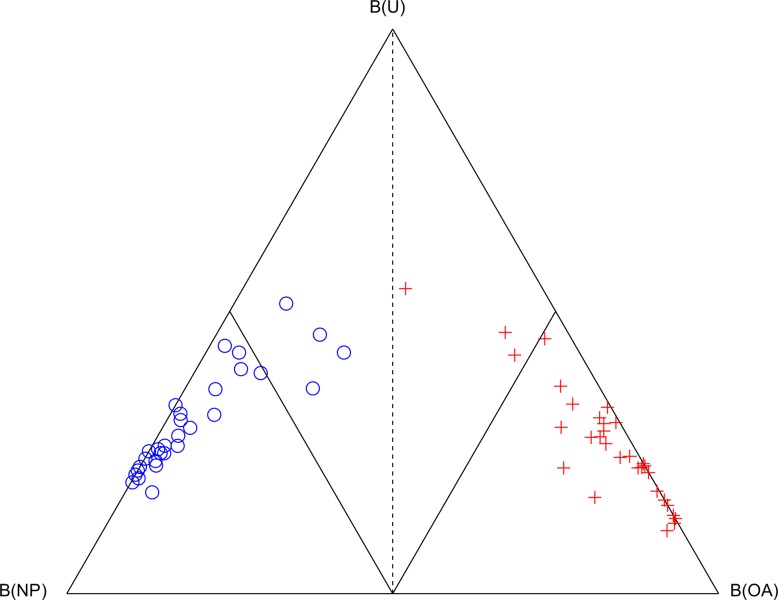
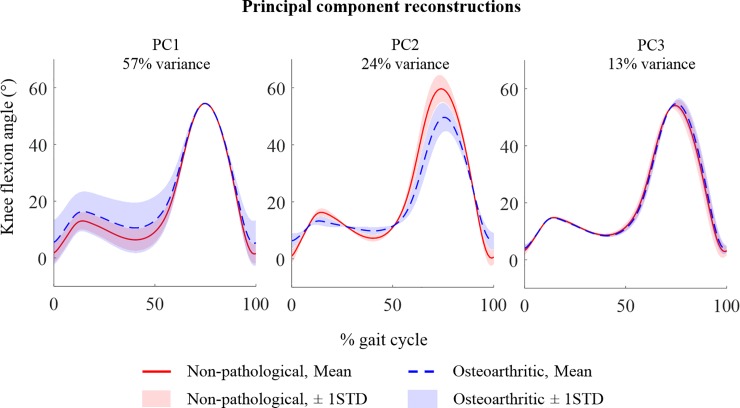
Gait analysis was performed on 30 patients before and after TKR surgery, and 30 healthy controls. Median TKR follow-up time was 13 months. The combined application of principal component analysis (PCA) and the Cardiff Classifier defined 18 biomechanical features that discriminated OA from healthy gait. Statistical analysis tested whether these features were affected by TKR surgery and, if so, whether they recovered to values found for the controls.
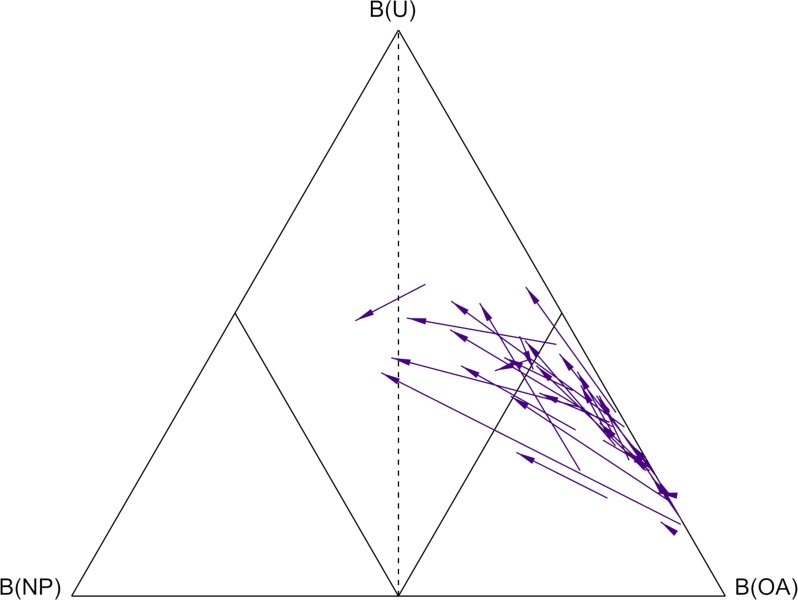
The Cardiff Classifier successfully discriminated between OA and healthy gait in all 60 cases. Of the 18 discriminatory features, only six (33%) were significantly affected by surgery, including features in all three planes of the ground reaction force (p<0.001), ankle dorsiflexion moment (p<0.001), hip adduction moment (p = 0.003), and transverse hip angle (p = 0.007). All but two (89%) of these features remained significantly different to those of the control group after surgery.
This approach was able to discriminate gait biomechanics associated with knee OA. The ground reaction force provided the strongest discriminatory features. Despite increased gait velocity and improvements in self-reported pain and function, which would normally be clinical indicators of recovery, the majority of features were not affected by TKR surgery. This TKR cohort retained pre-operative gait patterns; reduced sagittal hip and knee moments, decreased knee flexion, increased hip flexion, and reduced hip adduction. The changes that were associated with surgery were predominantly found at the ankle and hip, rather than at the knee.
步态分析可用于测量膝骨关节炎(OA)患者关节功能的变化,并且在观察全膝关节置换(TKR)手术后的纵向生物力学变化时非常有用。卡迪夫分类器是一种以前用于检查 TKR 后生物力学恢复程度的客观分类工具。在这项研究中,它进一步发展为揭示有助于恢复健康功能的显著特征。
对 30 例 TKR 手术前后患者和 30 例健康对照者进行步态分析。TKR 随访中位数为 13 个月。主成分分析(PCA)和卡迪夫分类器的联合应用确定了 18 个区分 OA 和健康步态的生物力学特征。统计分析测试这些特征是否受 TKR 手术影响,如果是,它们是否恢复到对照组的值。
卡迪夫分类器成功区分了所有 60 例 OA 和健康步态。在 18 个区分特征中,只有 6 个(33%)受手术显著影响,包括地面反力的所有三个平面(p<0.001)、踝关节背屈力矩(p<0.001)、髋关节内收力矩(p=0.003)和横向髋关节角度(p=0.007)。手术后,这些特征中有 16 个(89%)仍与对照组显著不同。
这种方法能够区分与膝骨关节炎相关的步态生物力学。地面反力提供了最强的区分特征。尽管步态速度增加,自我报告的疼痛和功能改善,这通常是恢复的临床指标,但大多数特征不受 TKR 手术的影响。这个 TKR 队列保留了术前的步态模式;减少矢状面髋膝力矩,减少膝关节屈曲,增加髋关节屈曲,减少髋关节内收。与手术相关的变化主要发生在踝关节和髋关节,而不是膝关节。