Department of Neurosurgery, Brigham and Women's Hospital and Harvard Medical School, Boston, MA, USA.
Department of Chemotherapy, Tumor Hospital of Guangxi Medical University, No.2, Nanning, Guangxi, China.
J Exp Clin Cancer Res. 2019 Jan 25;38(1):36. doi: 10.1186/s13046-019-1026-1.
Glioblastoma is a malignant brain tumor characterized by rapid growth, diffuse invasion and therapeutic resistance. We recently used microRNA expression profiles to subclassify glioblastoma into five genetically and clinically distinct subclasses, and showed that microRNAs both define and contribute to the phenotypes of these subclasses. Here we show that miR-29a activates a multi-faceted growth and invasion program that promotes glioblastoma aggressiveness.
microRNA expression profiles from 197 glioblastomas were analyzed to identify the candidate miRNAs that are correlated to glioblastoma aggressiveness. The candidate miRNA, miR-29a, was further studied in vitro and in vivo.
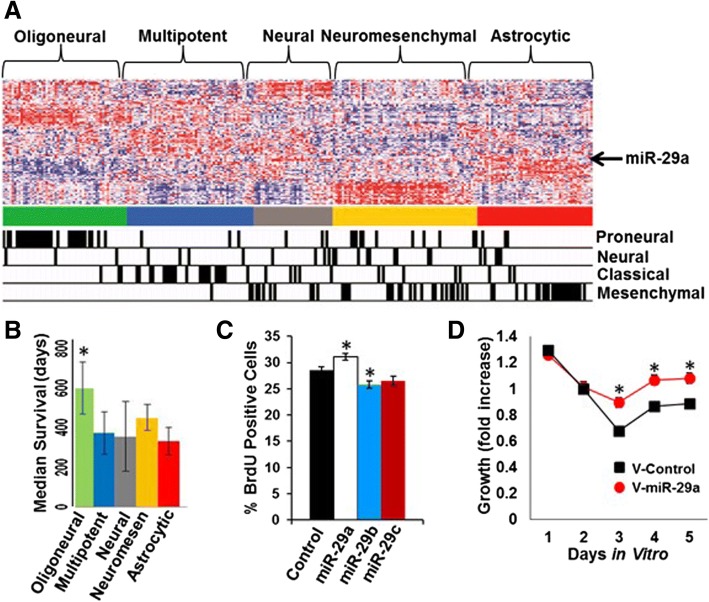
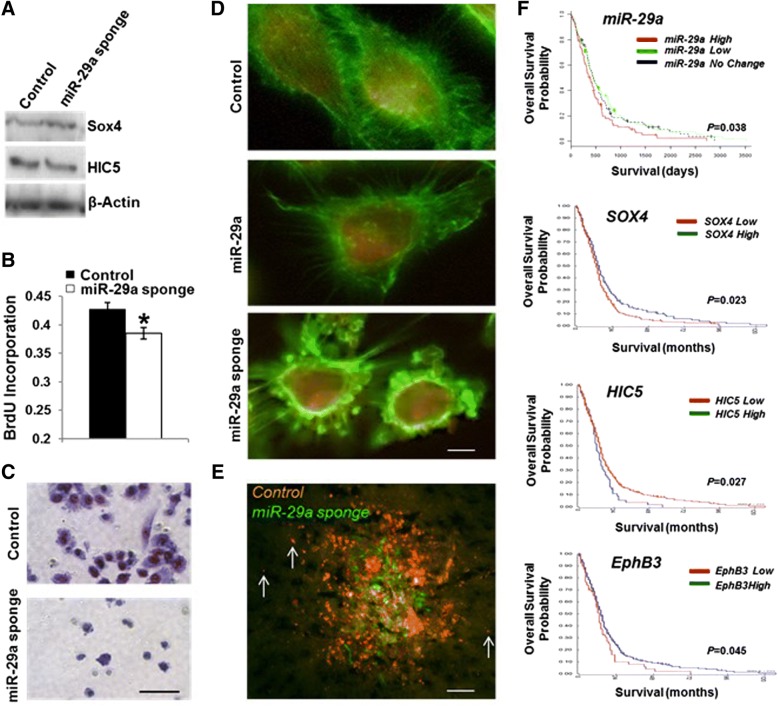
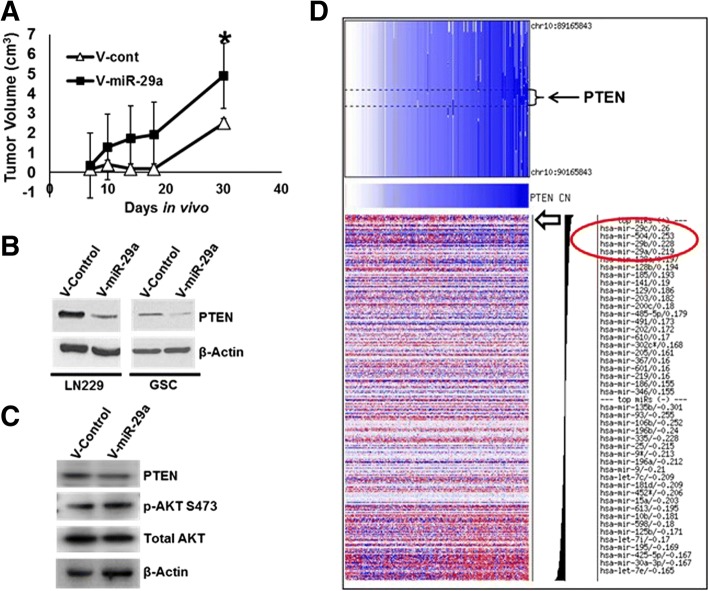
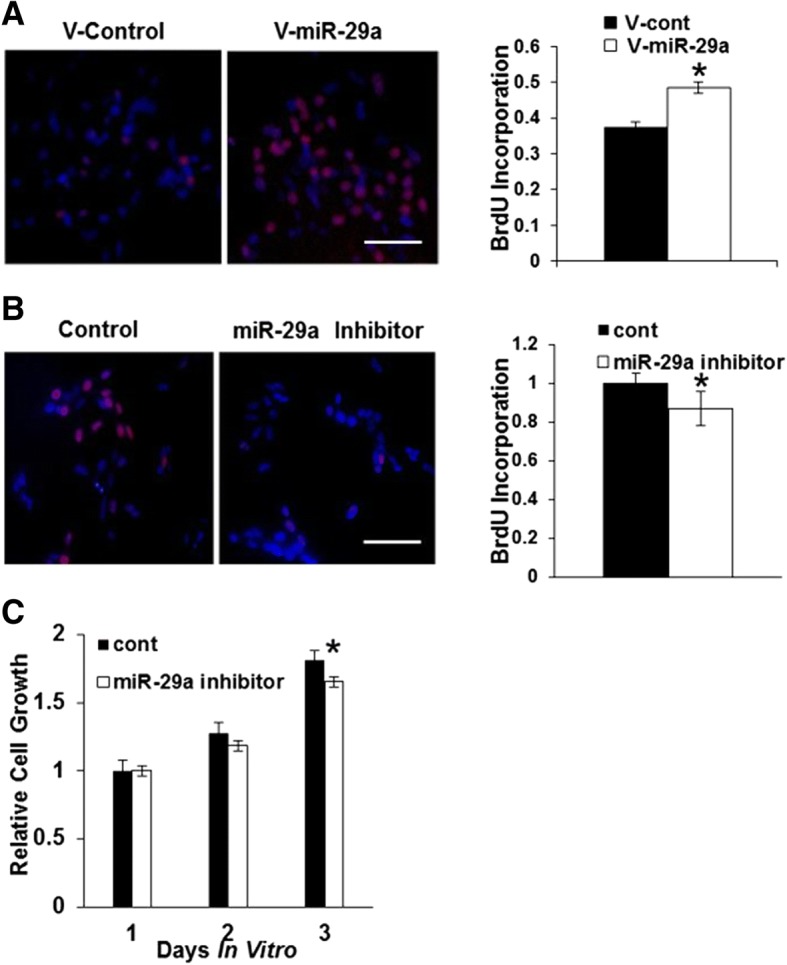
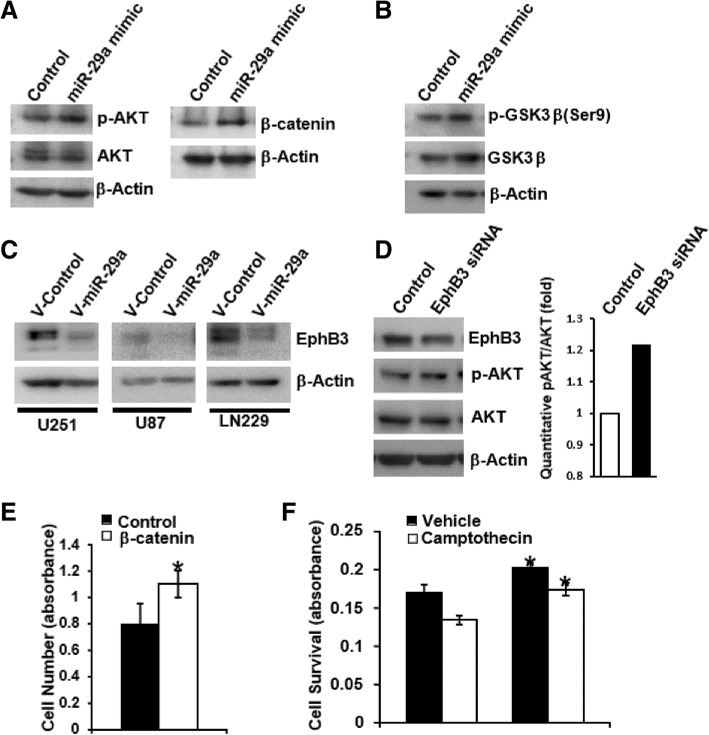
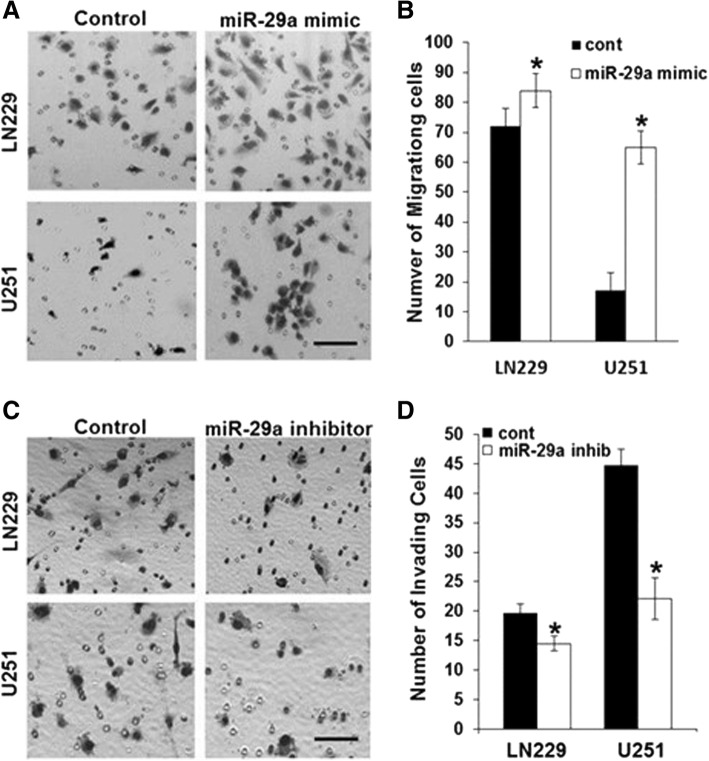
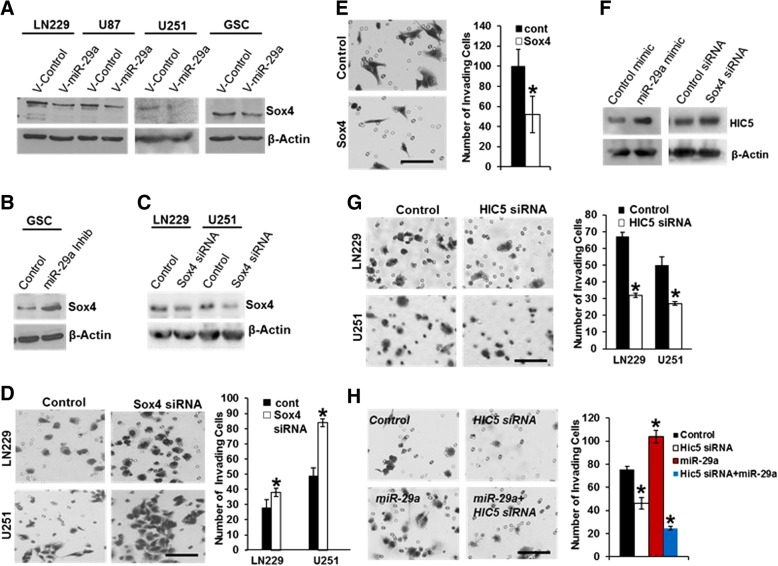
Members of the miR-29 subfamily display increased expression in the two glioblastoma subclasses with the worst prognoses (astrocytic and neural). We observed that miR-29a is among the microRNAs that are most positively-correlated with PTEN copy number in glioblastoma, and that miR-29a promotes glioblastoma growth and invasion in part by targeting PTEN. In PTEN-deficient glioblastoma cells, however, miR-29a nevertheless activates AKT by downregulating the metastasis suppressor, EphB3. In addition, miR-29a robustly promotes invasion in PTEN-deficient glioblastoma cells by repressing translation of the Sox4 transcription factor, and this upregulates the invasion-promoting protein, HIC5. Indeed, we identified Sox4 as the most anti-correlated predicted target of miR-29a in glioblastoma. Importantly, inhibition of endogenous miR-29a decreases glioblastoma growth and invasion in vitro and in vivo, and increased miR-29a expression in glioblastoma specimens correlates with decreased patient survival.
Taken together, these data identify miR-29a as a master regulator of glioblastoma growth and invasion.
胶质母细胞瘤是一种恶性脑肿瘤,其特征为生长迅速、弥漫浸润和治疗抵抗。我们最近使用 microRNA 表达谱将胶质母细胞瘤分为五个具有遗传和临床特征的不同亚型,并表明 microRNA 既定义又促成这些亚型的表型。在这里,我们显示 miR-29a 激活了一个多方面的生长和侵袭程序,促进了胶质母细胞瘤的侵袭性。
分析了 197 例胶质母细胞瘤的 microRNA 表达谱,以鉴定与胶质母细胞瘤侵袭性相关的候选 microRNA。候选 microRNA,miR-29a,在体外和体内进一步研究。
miR-29 亚家族的成员在预后最差的两个胶质母细胞瘤亚型(星形细胞瘤和神经细胞瘤)中表达增加。我们观察到 miR-29a 是与胶质母细胞瘤中 PTEN 拷贝数最正相关的 microRNAs 之一,并且 miR-29a 通过靶向 PTEN 促进胶质母细胞瘤的生长和侵袭。然而,在 PTEN 缺失的胶质母细胞瘤细胞中,miR-29a 仍然通过下调转移抑制因子 EphB3 来激活 AKT。此外,miR-29a 通过抑制 Sox4 转录因子的翻译强烈促进 PTEN 缺失的胶质母细胞瘤细胞的侵袭,这上调了侵袭促进蛋白 HIC5。事实上,我们确定 Sox4 是胶质母细胞瘤中 miR-29a 最反相关的预测靶标。重要的是,内源性 miR-29a 的抑制减少了体外和体内胶质母细胞瘤的生长和侵袭,并且在胶质母细胞瘤标本中增加 miR-29a 的表达与降低患者生存率相关。
总之,这些数据表明 miR-29a 是胶质母细胞瘤生长和侵袭的主要调节因子。