Scolari Miranda, Awh Edward
Department of Psychological Sciences, Texas Tech University, Lubbock, TX, USA.
Department of Psychology, University of Chicago, Chicago, IL, USA.
Atten Percept Psychophys. 2019 Jul;81(5):1366-1385. doi: 10.3758/s13414-018-01656-6.
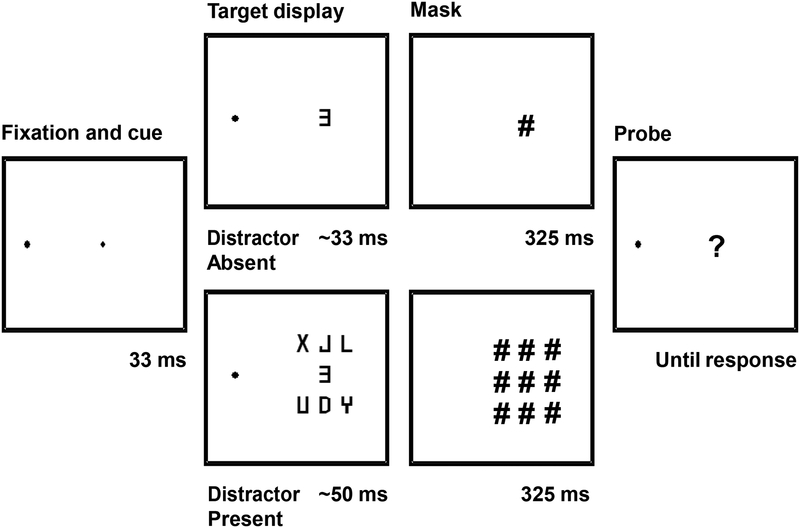
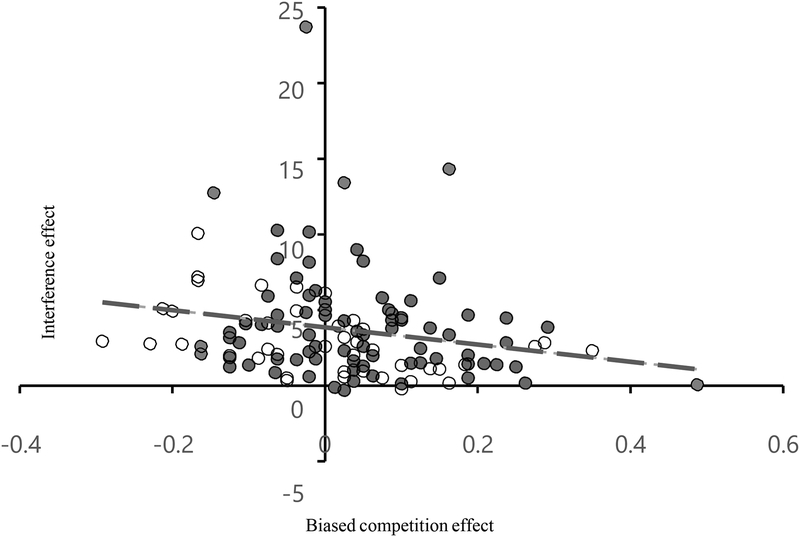
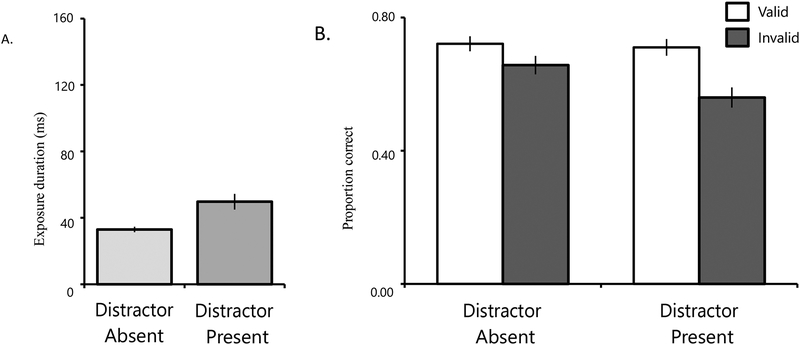
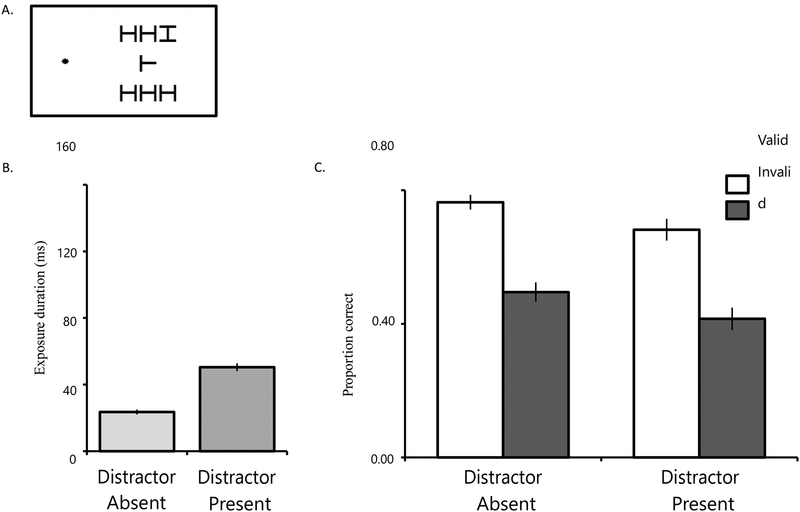
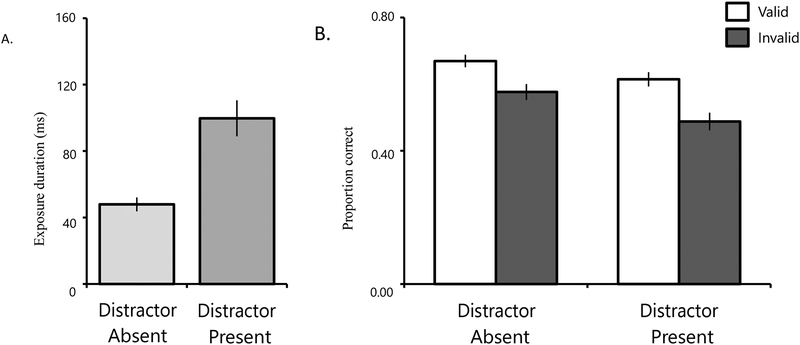
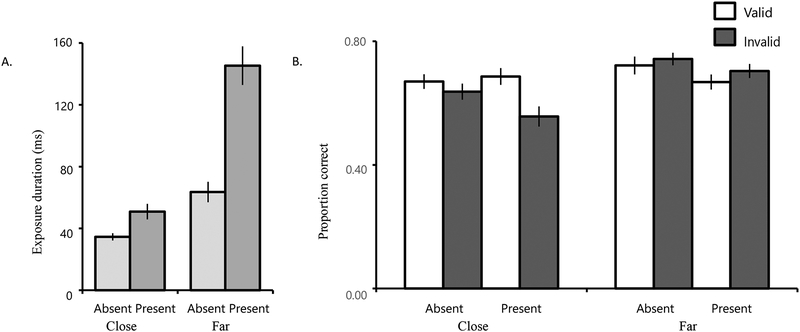
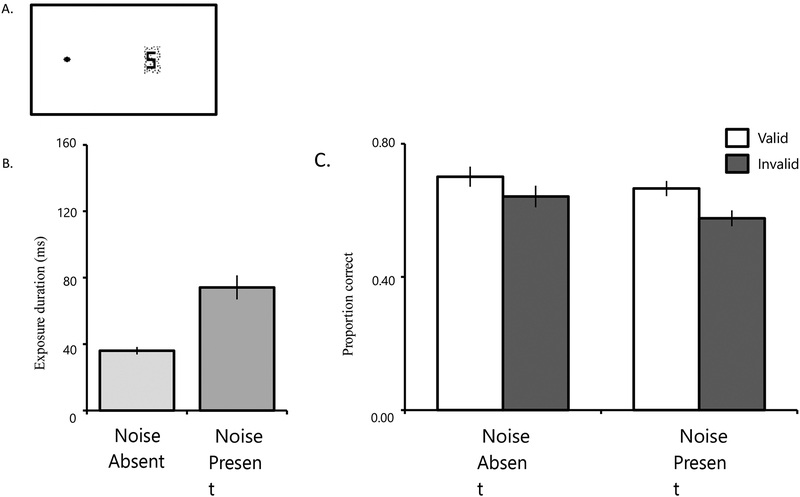
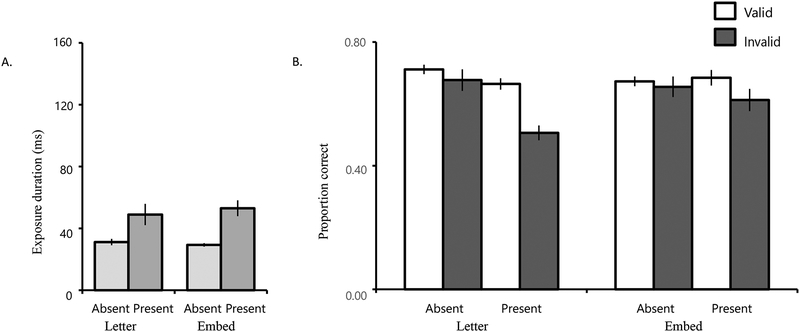
Biased-competition models assert that spatial attention facilitates visual perception by biasing competitive interactions in favor of relevant input. In line with this view, past work has shown that the benefits of covert spatial attention are greatest when targets must compete with interfering stimuli. Here we propose a boundary condition for the resolution of interference via exogenous attention: Attention resolves visual interference between targets and distractors, but only when they can be individuated into distinct representations. Thus, we propose that biased competition may be object-based. We replicated previous observations of larger attention effects when targets were flanked by irrelevant distractors (interference-present displays) than when targets were presented alone (interference-absent displays). Critically, we then showed that this amplification of cueing effects in the presence of interference is eliminated when strong crowding hampers individuation of the targets and distractors. Likewise, when targets were embedded within a noise mask that did not evoke the percept of an individuated distractor, the attention effects were equivalent across noise and lone-target displays. Thus, we conclude that exogenous spatial attention resolves interference in an object-based fashion that depends on the perception of individuated targets and distractors.
偏向竞争模型认为,空间注意力通过偏向有利于相关输入的竞争交互来促进视觉感知。与这一观点一致的是,过去的研究表明,当目标必须与干扰刺激竞争时,隐蔽空间注意力的益处最大。在此,我们提出了一个通过外源性注意力解决干扰的边界条件:注意力解决目标与干扰项之间的视觉干扰,但前提是它们能够被区分为不同的表征。因此,我们提出偏向竞争可能是基于对象的。我们重复了之前的观察结果,即当目标两侧有无关干扰项时(存在干扰的显示)比目标单独呈现时(无干扰的显示),注意力效应更大。关键的是,我们随后表明,当强烈的拥挤阻碍目标和干扰项的个体化时,干扰存在时提示效应的这种增强就会消除。同样,当目标嵌入在一个不会引发个体化干扰项感知的噪声掩蔽中时,噪声显示和单独目标显示的注意力效应是等效的。因此,我们得出结论,外源性空间注意力以一种基于对象的方式解决干扰,这种方式取决于对个体化目标和干扰项的感知。