
社区参与基于移动健康技术的身体活动与心血管健康干预项目(“行动起来”)的开发:焦点小组试点研究
Community Engagement in the Development of an mHealth-Enabled Physical Activity and Cardiovascular Health Intervention (Step It Up): Pilot Focus Group Study.
作者信息
Ceasar Joniqua Nashae, Claudel Sophie Elizabeth, Andrews Marcus R, Tamura Kosuke, Mitchell Valerie, Brooks Alyssa T, Dodge Tonya, El-Toukhy Sherine, Farmer Nicole, Middleton Kimberly, Sabado-Liwag Melanie, Troncoso Melissa, Wallen Gwenyth R, Powell-Wiley Tiffany M
机构信息
National Heart, Lung, and Blood Institute, National Institutes of Health, Bethesda, MD, United States.
Clinical Center, National Institutes of Health, Bethesda, MD, United States.
出版信息
JMIR Form Res. 2019 Jan 4;3(1):e10944. doi: 10.2196/10944.
BACKGROUND
Community-based participatory research is an effective tool for improving health outcomes in minority communities. Few community-based participatory research studies have evaluated methods of optimizing smartphone apps for health technology-enabled interventions in African Americans.
OBJECTIVE
This study aimed to utilize focus groups (FGs) for gathering qualitative data to inform the development of an app that promotes physical activity (PA) among African American women in Washington, DC.
METHODS
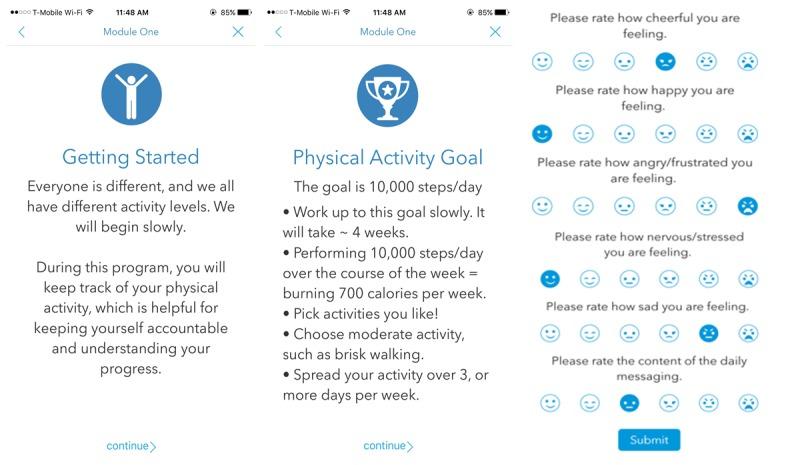
We recruited a convenience sample of African American women (N=16, age range 51-74 years) from regions of Washington, DC metropolitan area with the highest burden of cardiovascular disease. Participants used an app created by the research team, which provided motivational messages through app push notifications and educational content to promote PA. Subsequently, participants engaged in semistructured FG interviews led by moderators who asked open-ended questions about participants' experiences of using the app. FGs were audiorecorded and transcribed verbatim, with subsequent behavioral theory-driven thematic analysis. Key themes based on the Health Belief Model and emerging themes were identified from the transcripts. Three independent reviewers iteratively coded the transcripts until consensus was reached. Then, the final codebook was approved by a qualitative research expert.
RESULTS
In this study, 10 main themes emerged. Participants emphasized the need to improve the app by optimizing automation, increasing relatability (eg, photos that reflect target demographic), increasing educational material (eg, health information), and connecting with community resources (eg, cooking classes and exercise groups).
CONCLUSIONS
Involving target users in the development of a culturally sensitive PA app is an essential step for creating an app that has a higher likelihood of acceptance and use in a technology-enabled intervention. This may decrease health disparities in cardiovascular diseases by more effectively increasing PA in a minority population.
背景
基于社区的参与性研究是改善少数族裔社区健康状况的有效工具。很少有基于社区的参与性研究评估过优化智能手机应用程序以用于针对非裔美国人的健康技术干预措施的方法。
目的
本研究旨在利用焦点小组收集定性数据,为开发一款促进华盛顿特区非裔美国女性身体活动的应用程序提供信息。
方法
我们从华盛顿特区大都市地区心血管疾病负担最高的区域招募了一个非裔美国女性的便利样本(N = 16,年龄范围51 - 74岁)。参与者使用了研究团队创建的一款应用程序,该应用程序通过应用推送通知和教育内容提供激励信息以促进身体活动。随后,参与者参与了由主持人主导的半结构化焦点小组访谈,主持人就参与者使用该应用程序的体验提出开放式问题。焦点小组访谈进行了录音并逐字转录,随后进行行为理论驱动的主题分析。从转录本中确定了基于健康信念模型的关键主题和新出现的主题。三位独立评审员对转录本进行反复编码,直至达成共识。然后,最终的编码手册由一位定性研究专家批准。
结果
在本研究中,出现了10个主要主题。参与者强调需要通过优化自动化、提高相关性(例如反映目标人群的照片)、增加教育材料(例如健康信息)以及与社区资源(例如烹饪课程和锻炼小组)建立联系来改进该应用程序。
结论
让目标用户参与具有文化敏感性的身体活动应用程序的开发,是创建一款在技术支持的干预措施中更有可能被接受和使用的应用程序的关键一步。这可能通过更有效地增加少数族裔人群的身体活动来减少心血管疾病方面的健康差距。
 Zotero 插件