Taylor Herman A, Francis Sherilyn, Evans Chad Ray, Harvey Marques, Newton Brittney A, Jones Camara P, Akintobi Tabia Henry, Clifford Gari
Cardiovascular Research Institute, Morehouse School of Medicine, Atlanta, GA, United States.
Nucleus Health Communications, Atlanta, GA, United States.
JMIR Res Protoc. 2020 Jul 9;9(7):e16699. doi: 10.2196/16699.
Cardiovascular disease (CVD) disparities are a particularly devastating manifestation of health inequity. Despite advancements in prevention and treatment, CVD is still the leading cause of death in the United States. Additionally, research indicates that African American (AA) and other ethnic-minority populations are affected by CVD at earlier ages than white Americans. Given that AAs are the fastest-growing population of smartphone owners and users, mobile health (mHealth) technologies offer the unparalleled potential to prevent or improve self-management of chronic disease among this population.
To address the unmet need for culturally tailored primordial prevention CVD-focused mHealth interventions, the MOYO app was cocreated with the involvement of young people from this priority community. The overall project aims to develop and evaluate the effectiveness of a novel smartphone app designed to reduce CVD risk factors among urban-AAs, 18-29 years of age.
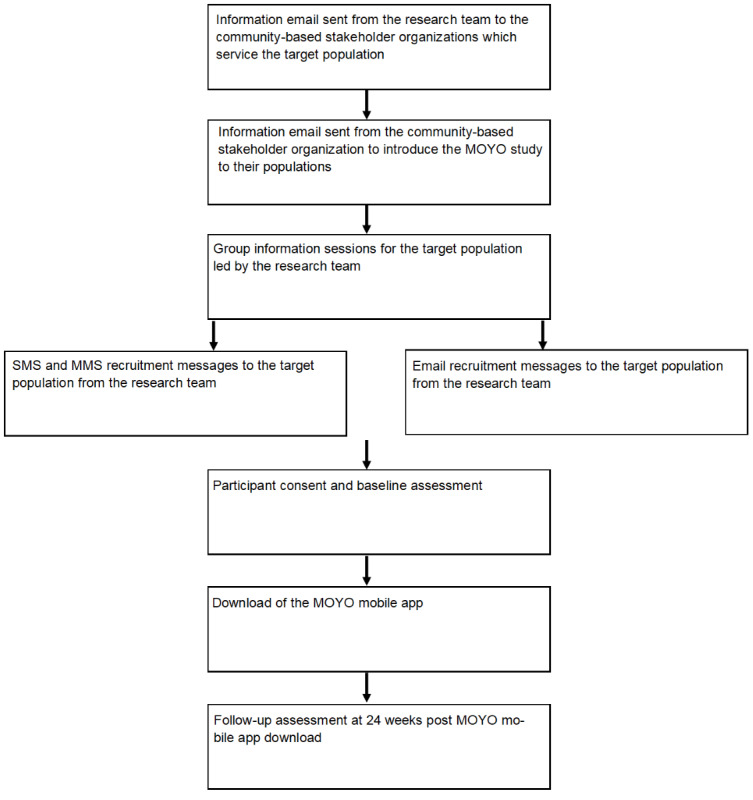
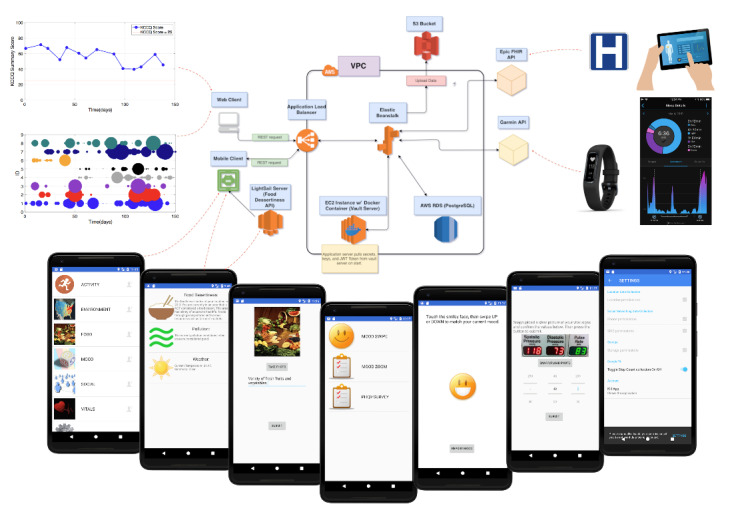
The theoretical underpinning will combine the principles of community-based participatory research and the agile software development framework. The primary outcome goals of the study will be to determine the usability, acceptability, and functionality of the MOYO app, and to build a cloud-based data collection infrastructure suitable for digital epidemiology in a disparity population. Changes in health-related parameters over a 24-week period as determined by both passive (eg, physical activity levels, sleep duration, social networking) and active (eg, use of mood measures, surveys, uploading pictures of meals and blood pressure readings) measures will be the secondary outcome. Participants will be recruited from a majority AA "large city" school district, 2 historically black colleges or universities, and 1 urban undergraduate college. Following baseline screening for inclusion (administered in person), participants will receive the beta version of the MOYO app. Participants will be monitored during a 24-week pilot period. Analyses of varying data including social network dynamics, standard metrics of activity, percentage of time away from a given radius of home, circadian rhythm metrics, and proxies for sleep will be performed. Together with external variables (eg, weather, pollution, and socioeconomic indicators such as food access), these metrics will be used to train machine-learning frameworks to regress them on the self-reported quality of life indicators.
This 5-year study (2015-2020) is currently in the implementation phase. We believe that MOYO can build upon findings of classical epidemiology and longitudinal studies like the Jackson Heart Study by adding greater granularity to our knowledge of the exposures and behaviors that affect health and disease, and creating a channel for outreach capable of launching interventions, clinical trials, and enhancements of health literacy.
The results of this pilot will provide valuable information about community cocreation of mHealth programs, efficacious design features, and essential infrastructure for digital epidemiology among young AA adults.
INTERNATIONAL REGISTERED REPORT IDENTIFIER (IRRID): DERR1-10.2196/16699.
心血管疾病(CVD)差异是健康不平等的一种特别具有破坏性的表现形式。尽管在预防和治疗方面取得了进展,但心血管疾病仍是美国的主要死因。此外,研究表明,非裔美国人(AA)和其他少数族裔人群比美国白人更早受到心血管疾病的影响。鉴于非裔美国人是智能手机拥有者和使用者中增长最快的群体,移动健康(mHealth)技术为预防或改善该人群的慢性病自我管理提供了无与伦比的潜力。
为满足对针对心血管疾病的文化适应性原始预防的移动健康干预措施的未满足需求,MOYO应用程序是与这个优先社区的年轻人共同创建的。整个项目旨在开发和评估一款新型智能手机应用程序的有效性,该应用程序旨在降低18 - 29岁城市非裔美国人的心血管疾病风险因素。
理论基础将结合基于社区的参与性研究原则和敏捷软件开发框架。该研究的主要成果目标将是确定MOYO应用程序的可用性、可接受性和功能,并建立一个适用于差异人群数字流行病学的基于云的数据收集基础设施。通过被动(如身体活动水平、睡眠时间、社交网络)和主动(如使用情绪测量、调查、上传餐食图片和血压读数)测量确定的24周内健康相关参数的变化将作为次要成果。参与者将从一个以非裔美国人为主的“大城市”学区、2所历史悠久的黑人学院或大学以及1所城市本科院校招募。在进行基线筛查以确定纳入资格(亲自进行)后,参与者将收到MOYO应用程序的测试版。在24周的试点期内对参与者进行监测。将对包括社交网络动态、活动标准指标、离家给定半径外的时间百分比、昼夜节律指标以及睡眠代理等不同数据进行分析。连同外部变量(如天气、污染以及食品获取等社会经济指标),这些指标将用于训练机器学习框架,以便根据自我报告的生活质量指标对它们进行回归分析。
这项为期5年的研究(2015 - 2020年)目前处于实施阶段。我们相信,MOYO可以在经典流行病学和纵向研究(如杰克逊心脏研究)的基础上,通过更详细地了解影响健康和疾病的暴露因素和行为,并创建一个能够开展干预、临床试验和提高健康素养的外展渠道。
该试点的结果将为年轻非裔美国成年人中移动健康项目的社区共同创建、有效的设计特点以及数字流行病学的基本基础设施提供有价值的信息。
国际注册报告识别码(IRRID):DERR1 - 10.2196/16699。