Wassouf Zinah, Hentrich Thomas, Casadei Nicolas, Jaumann Mirko, Knipper Marlies, Riess Olaf, Schulze-Hentrich Julia M
Institute of Medical Genetics and Applied Genomics, University of Tübingen, Tübingen, Germany.
Molecular Physiology of Hearing, Department of Otolaryngology, Tübingen Hearing Research Centre, University of Tübingen, Tübingen, Germany.
Front Neurosci. 2019 Jan 10;12:1033. doi: 10.3389/fnins.2018.01033. eCollection 2018.
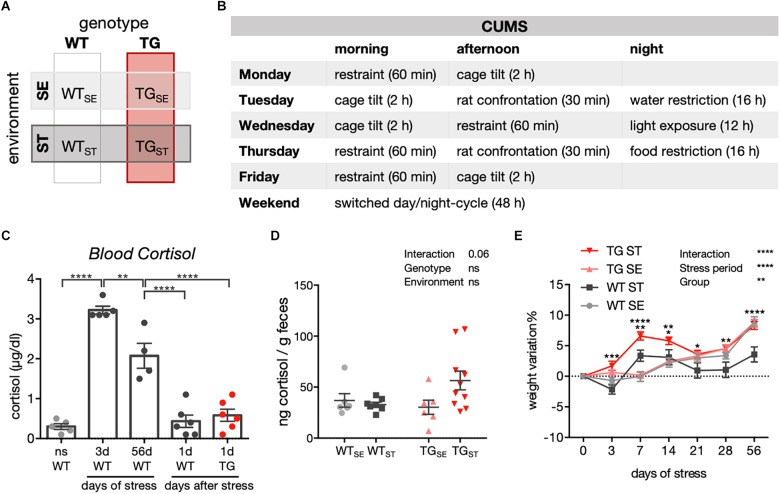
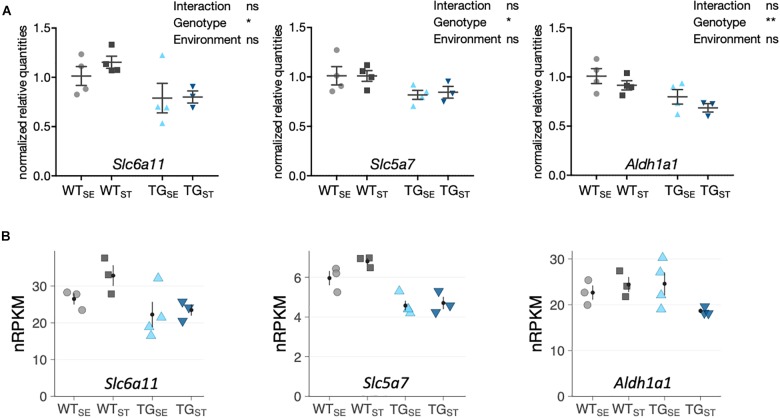
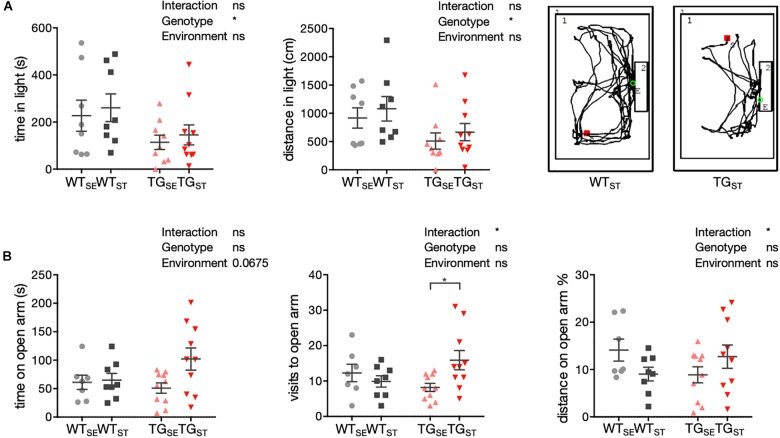
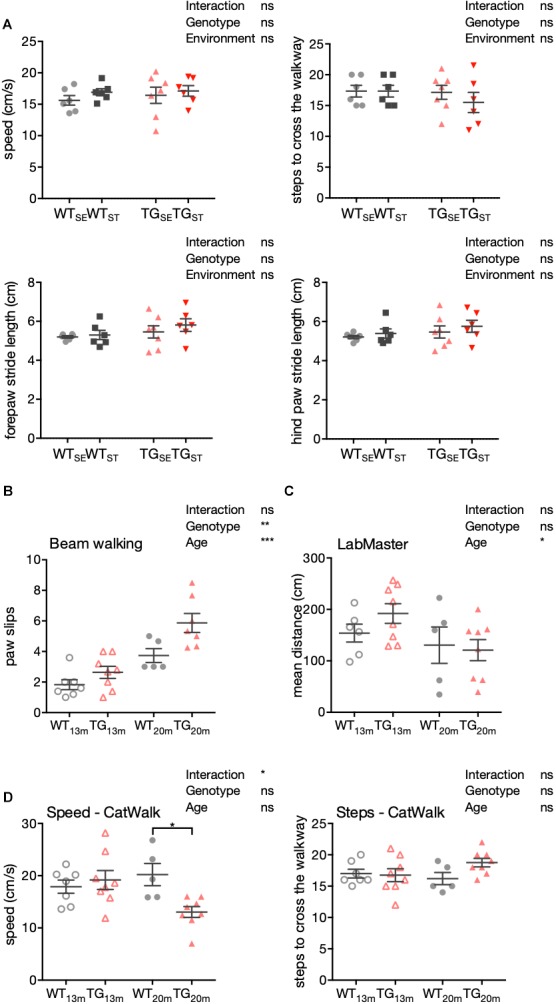
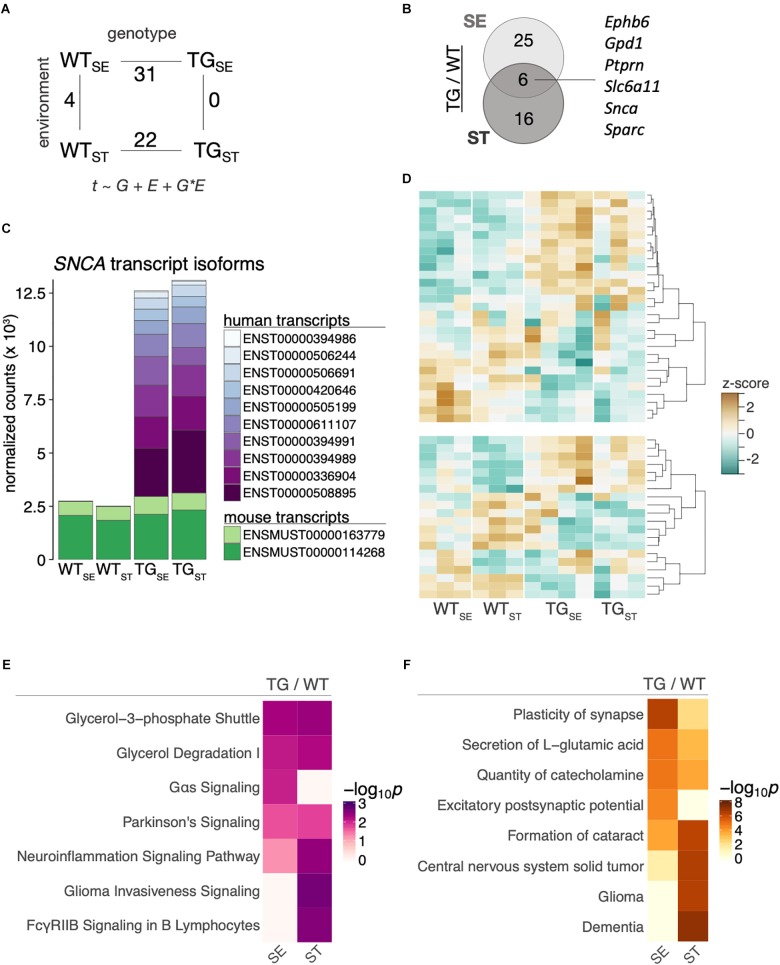
Parkinson's disease (PD) is a progressive neurodegenerative disorder with motor symptoms and a plethora of non-motor and neuropsychiatric features that accompany the disease from prodromal to advanced stages. While several genetic defects have been identified in familial forms of PD, the predominance of cases are sporadic and result from a complex interplay of genetic and non-genetic factors. Clinical evidence, moreover, indicates a role of environmental stress in PD, supported by analogies between stress-induced pathological consequences and neuronal deterioration observed in PD. From this perspective, we set out to investigate the effects of chronic stress exposure in the context of PD by using a genetic mouse model that overexpresses human wildtype . Mimicking chronic stress was achieved by adapting a chronic unpredictable mild stress protocol (CUMS) comprising eight different stressors that were applied randomly over a period of eight weeks starting at an age of four months. A distinctive stress response with an impact on anxiety-related behavior was observed upon overexpression and CUMS exposure. -overexpressing mice showed prolonged elevation of cortisol metabolites during CUMS exposure, altered anxiety-related traits, and declined motor skills surfacing with advanced age. To relate our phenotypic observations to molecular events, we profiled the striatal and hippocampal transcriptome and used a 2 × 2 factorial design opposing genotype and environment to determine differentially expressed genes. Disturbed striatal gene expression and minor hippocampal gene expression changes were observed in -overexpressing mice at six months of age. Irrespective of the CUMS-exposure, genes attributed to the terms neuroinflammation, Parkinson's signaling, and plasticity of synapses were altered in the striatum of -overexpressing mice.
帕金森病(PD)是一种进行性神经退行性疾病,具有运动症状以及从前驱期到晚期伴随该疾病的大量非运动和神经精神特征。虽然在家族性PD中已发现几种基因缺陷,但大多数病例是散发性的,由遗传和非遗传因素的复杂相互作用导致。此外,临床证据表明环境应激在PD中起作用,应激诱导的病理后果与PD中观察到的神经元退化之间的相似性支持了这一点。从这个角度出发,我们通过使用过表达人类野生型的基因小鼠模型,研究了在PD背景下慢性应激暴露的影响。通过采用慢性不可预测轻度应激方案(CUMS)来模拟慢性应激,该方案包括八种不同的应激源,从四个月大开始在八周的时间内随机施加。在过表达和CUMS暴露后,观察到对焦虑相关行为有影响的独特应激反应。过表达小鼠在CUMS暴露期间皮质醇代谢物水平持续升高,焦虑相关特征改变,运动技能随着年龄增长而下降。为了将我们的表型观察结果与分子事件联系起来,我们对纹状体和海马转录组进行了分析,并使用2×2析因设计来对比基因型和环境,以确定差异表达基因。在六个月大的过表达小鼠中观察到纹状体基因表达紊乱和海马基因表达有轻微变化。无论是否暴露于CUMS,在过表达小鼠的纹状体中,与神经炎症、帕金森信号传导和突触可塑性相关的基因都发生了改变。