Department of Pediatric Orthopaedics, Xinhua Hospital, School of Medicine, Shanghai Jiao Tong University, No. 1665, Kongjiang Road, Shanghai 200092, China.
Division of Orthopaedic Surgery, Children's Mercy Kansas City, 2401 Gillham Road, Kansas City, MO 64108, USA.
Biomed Res Int. 2018 Dec 30;2018:6348171. doi: 10.1155/2018/6348171. eCollection 2018.
Hemiepiphysiodesis has been widely used to correct angular deformity of long bone in immature patients. However, there is a limited knowledge about the biomechanical effect of this technique on the histopathological changes of the growth plate and the mechanism of recurrence of malformation after implant removal. We aimed to evaluate the biomechanical effect of hemiepiphysiodesis on the histopathological changes of the growth plate and the mechanism of recurrence of malformation after implant removal in Bama miniature pigs, and to explore the role of asymmetric stress during this procedure.
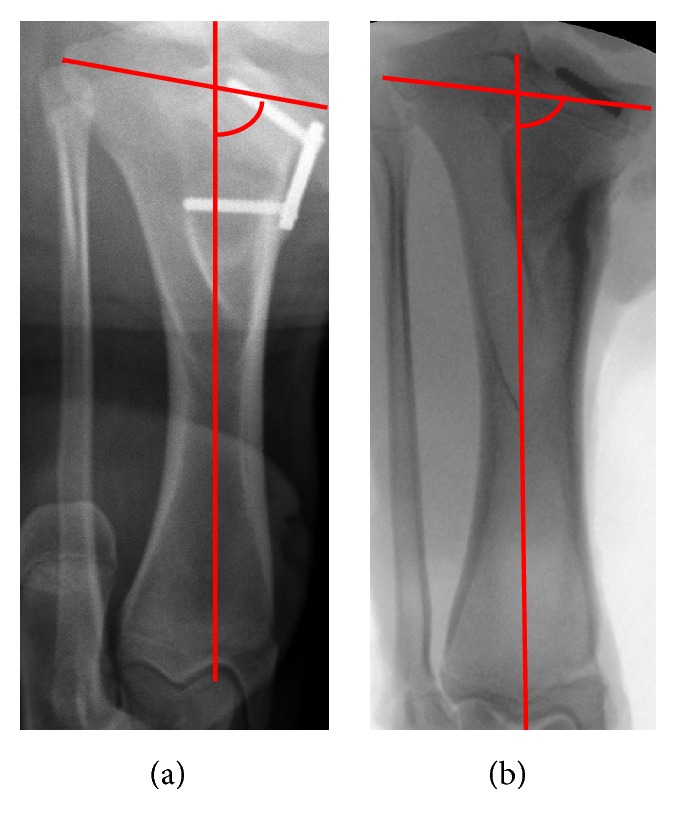
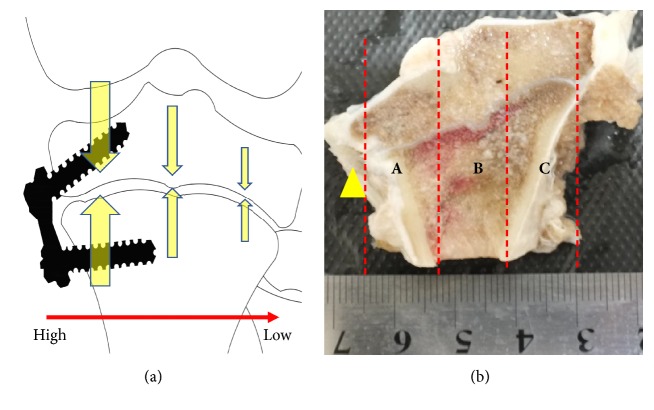
Eight 3-month-old male Bama miniature pigs sustained surgeries on the bilateral medial hind leg proximal tibia as the intervention group (n=16), and four pigs sustained bilateral sham surgeries as the control (n=8). In the 18 week after surgeries, hardware was removed in the unilateral leg of each animal in the intervention group. In the 24th week of the study, all animals were euthanized. A total of 24 samples were obtained and stained with H&E, TUNEL, and immunohistochemistry. Sixteen samples in the intervention group were divided into two subgroups. The tibias without an implant were included in the implant removal group (IR group), while the tibias with an implant were included in the implant persist group (IP group). The proximal tibia specimens were divided into 3 equidistant parts from medial to lateral, named as area A, area B, and area C, respectively. The change of thickness of growth plates, chondral apoptosis index, and the expression of Caspase-3, Caspase-9, CHOP, and P65 were compared.
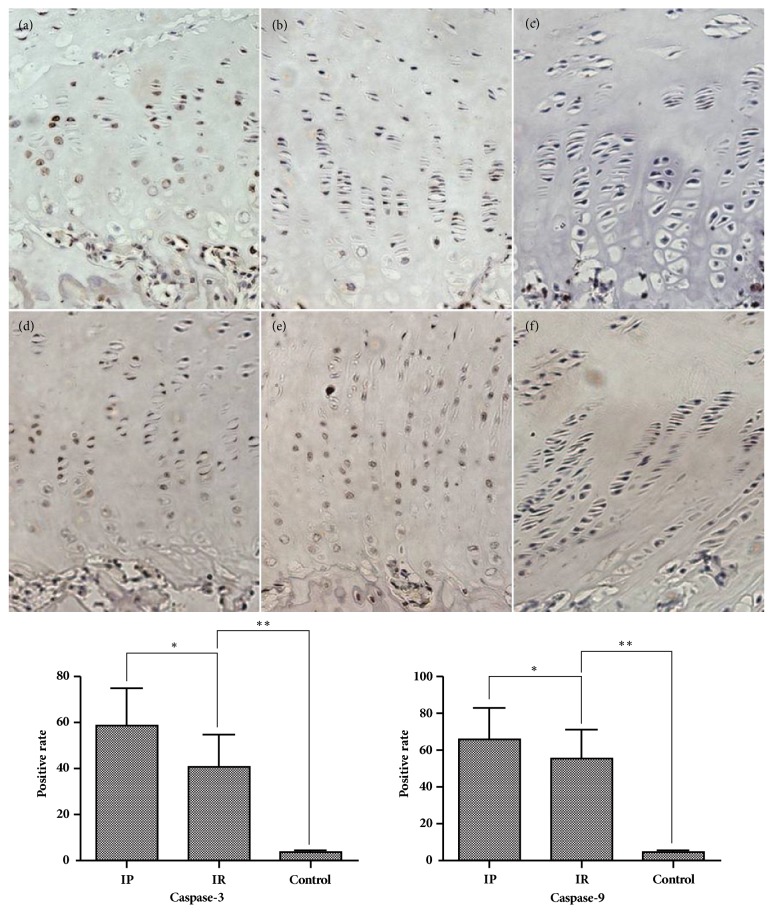
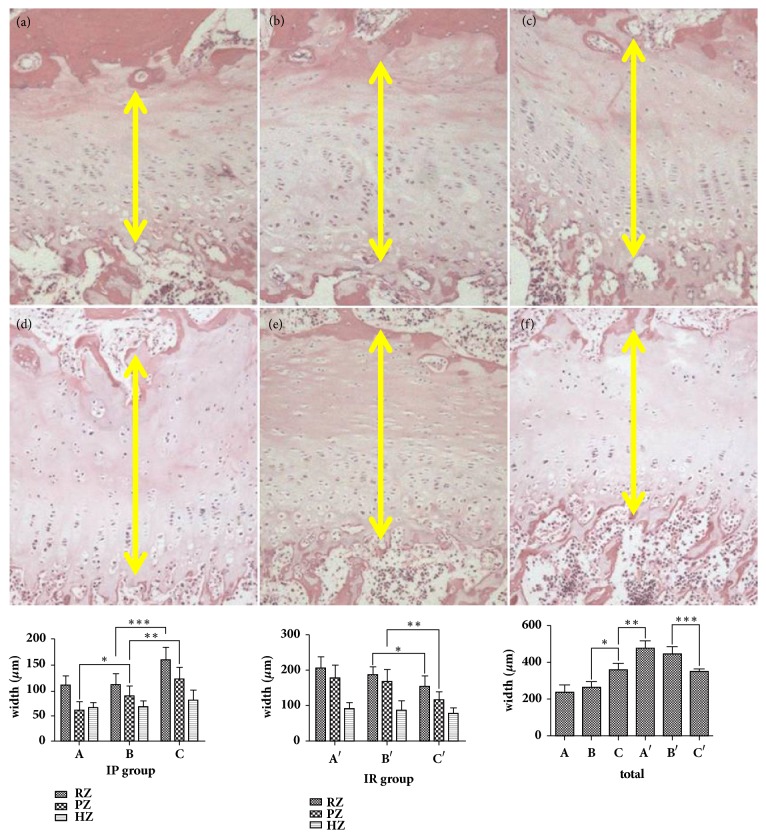
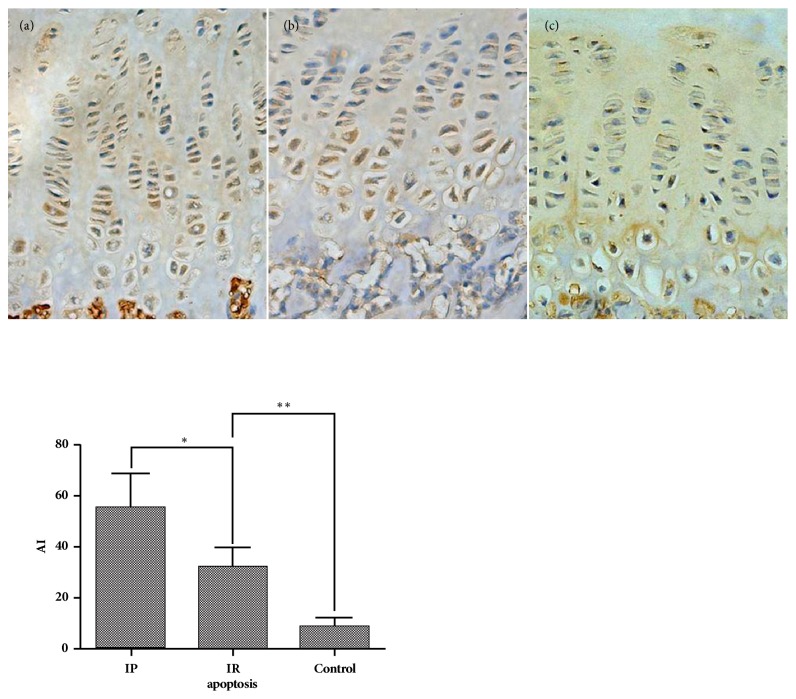
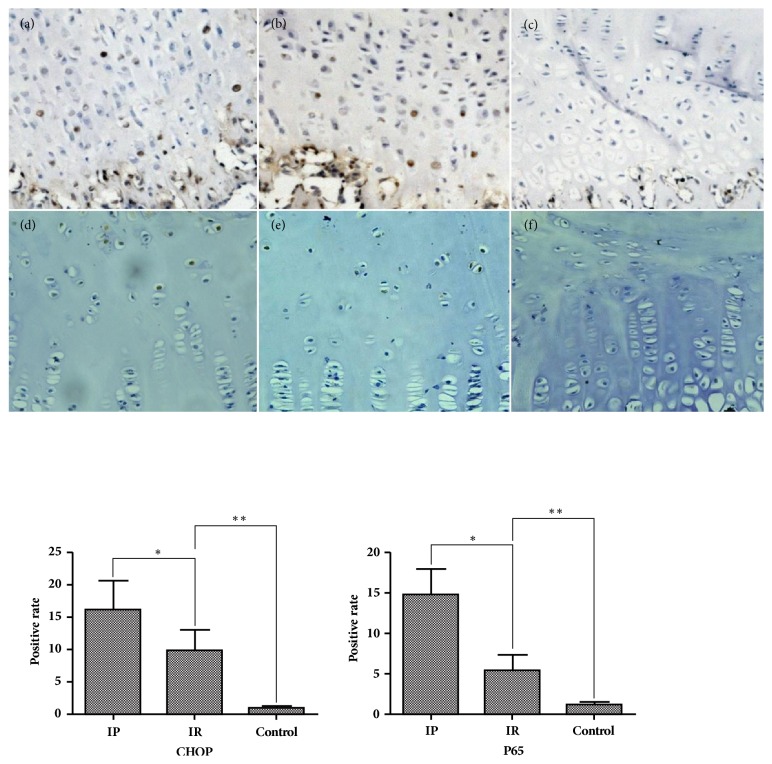
H&E staining showed the thickness of growth plate to be varied in different areas. In the IP group, the thickness of growth plate in areas A and B was statistically significantly thinner than that in area C (p<0.05). In the IR group, the thickness of growth plate in areas A and B was statistically significantly thicker than that in area C (p<0.05). TUNEL staining showed that the apoptosis rate increased significantly after hemiepiphysiodesis and declined after implant removal (p<0.05). Immunohistochemical staining suggested that the expression of Caspase-3, Caspase-9, P65, and CHOP protein was upregulated in the experimental group and downregulated after implant removal.
The thickness parameter of the growth plate changes with asymmetric pressure. When the pressure is relieved, the recurrence of malformation is related to the thickening of the growth plate.
骺环截骨术已广泛应用于矫正未成年患者长骨的成角畸形。然而,对于该技术对生长板的组织病理学变化以及植入物去除后畸形复发的机制的生物力学影响,我们知之甚少。我们旨在评估骺环截骨术对巴马小型猪生长板组织病理学变化以及植入物去除后畸形复发的生物力学影响,并探讨在此过程中不对称压力的作用。
8 只 3 月龄雄性巴马小型猪双侧后腿近端胫骨接受手术作为干预组(n=16),4 只猪双侧接受假手术作为对照组(n=8)。手术后 18 周,干预组单侧腿的硬件被移除。研究的第 24 周,所有动物被安乐死。共获得 24 个样本并进行 H&E、TUNEL 和免疫组织化学染色。干预组中的 16 个样本分为两个亚组。无植入物的胫骨纳入植入物去除组(IR 组),而有植入物的胫骨纳入植入物持续组(IP 组)。将近端胫骨标本从内侧到外侧等分为 3 个相等的部分,分别命名为 A 区、B 区和 C 区。比较生长板厚度变化、软骨细胞凋亡指数以及 Caspase-3、Caspase-9、CHOP 和 P65 的表达。
H&E 染色显示生长板厚度在不同区域存在差异。在 IP 组中,A 区和 B 区的生长板厚度明显比 C 区薄(p<0.05)。在 IR 组中,A 区和 B 区的生长板厚度明显比 C 区厚(p<0.05)。TUNEL 染色显示骺环截骨术后软骨细胞凋亡率显著增加,植入物去除后凋亡率下降(p<0.05)。免疫组织化学染色表明,实验组 Caspase-3、Caspase-9、P65 和 CHOP 蛋白表达上调,植入物去除后表达下调。
生长板的厚度参数随不对称压力而变化。当压力缓解时,畸形的复发与生长板的增厚有关。