Institute of Biomedicine, University of Turku, Turku, Finland.
Department of Oral Medicine, Infection and Immunity, Harvard School of Dental Medicine, Harvard University, Boston, MA, USA.
J Bone Miner Res. 2019 Jun;34(6):1129-1142. doi: 10.1002/jbmr.3680. Epub 2019 Mar 7.
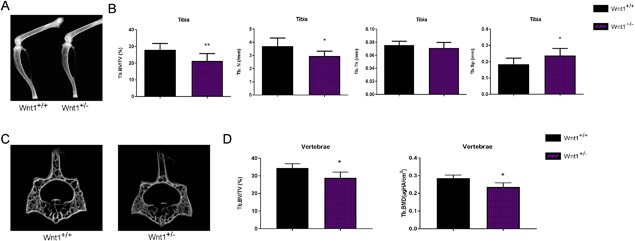
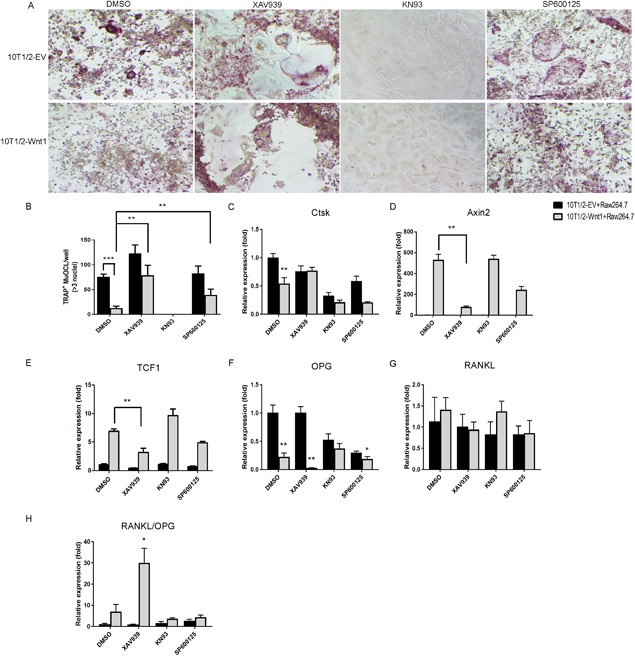
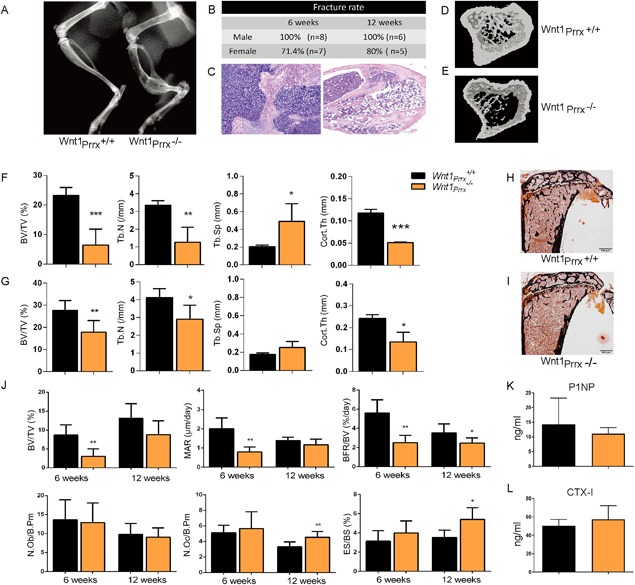
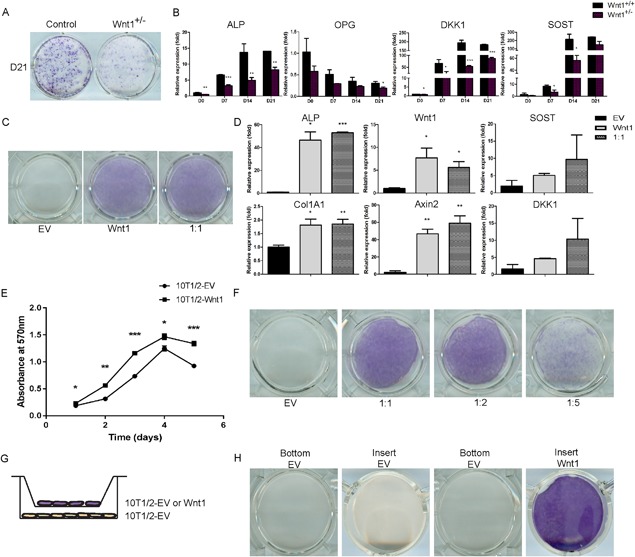
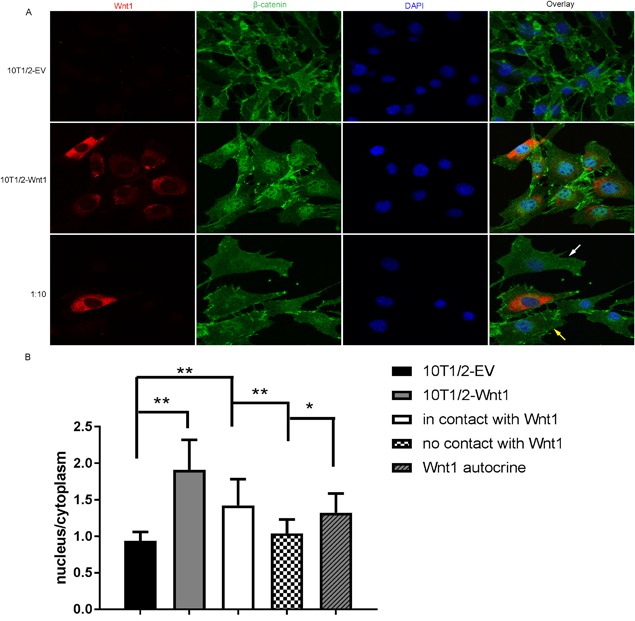
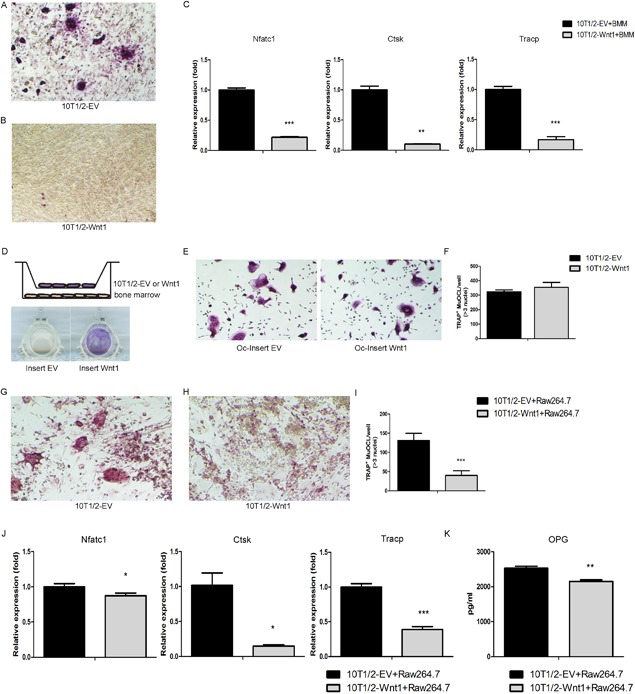
Human genetic evidence demonstrates that WNT1 mutations cause osteogenesis imperfecta (OI) and early-onset osteoporosis, implicating WNT1 as a major regulator of bone metabolism. However, its main cellular source and mechanisms of action in bone remain elusive. We generated global and limb bud mesenchymal cell-targeted deletion of Wnt1 in mice. Heterozygous deletion of Wnt1 resulted in mild trabecular osteopenia due to decreased osteoblast function. Targeted deletion of Wnt1 in mesenchymal progenitors led to spontaneous fractures due to impaired osteoblast function and increased bone resorption, mimicking the severe OI phenotype in humans with homozygous WNT1 mutations. Importantly, we showed for the first time that Wnt1 signals strictly in a juxtacrine manner to induce osteoblast differentiation and to suppress osteoclastogenesis, in part via canonical Wnt signaling. In conclusion, mesenchymal cell-derived Wnt1, acting in short range, is an essential regulator of bone homeostasis and an intriguing target for therapeutic interventions for bone diseases. © 2019 The Authors. Journal of Bone and Mineral Research Published by Wiley Periodicals, Inc.
人类遗传学证据表明,WNT1 突变导致成骨不全症(OI)和早发性骨质疏松症,表明 WNT1 是骨代谢的主要调节剂。然而,其在骨骼中的主要细胞来源和作用机制仍不清楚。我们在小鼠中生成了 Wnt1 的全局和肢芽间充质细胞靶向缺失。Wnt1 的杂合缺失导致成骨细胞功能下降导致轻微的小梁骨质疏松症。Wnt1 在间充质祖细胞中的靶向缺失导致自发性骨折,原因是成骨细胞功能受损和骨吸收增加,模拟了具有纯合 WNT1 突变的人类的严重 OI 表型。重要的是,我们首次表明,Wnt1 信号严格以旁分泌方式诱导成骨细胞分化并抑制破骨细胞生成,部分通过经典 Wnt 信号通路。总之,间充质细胞衍生的 Wnt1 以短程方式发挥作用,是骨稳态的必需调节剂,也是治疗骨骼疾病的有吸引力的靶点。 © 2019 作者。由 Wiley Periodicals, Inc. 出版的《骨与矿物研究杂志》