REQUIMTE/LAQV, Department of Chemistry and Biochemistry, Faculty of Sciences, University of Porto, 4169-007, Porto, Portugal.
UCIBIO, Departamento de Ciências da Vida, Faculdade de Ciências e Tecnologia, Universidade Nova de Lisboa, Campus de Caparica, 2829-516, Caparica, Portugal.
Sci Rep. 2019 Jan 28;9(1):789. doi: 10.1038/s41598-018-37283-2.
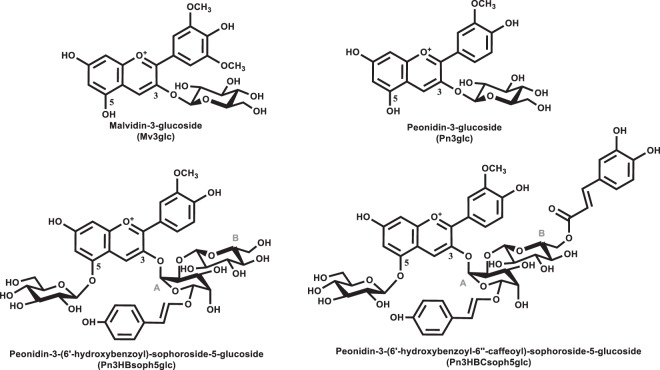
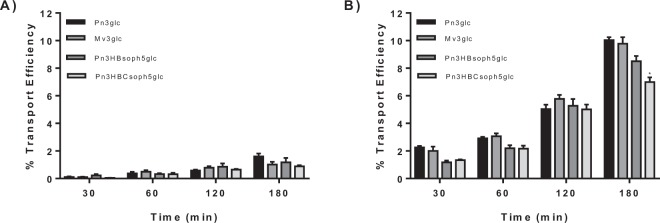
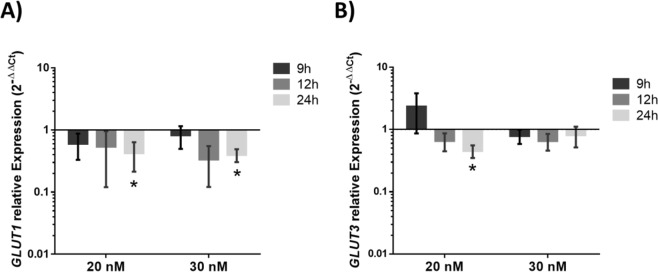
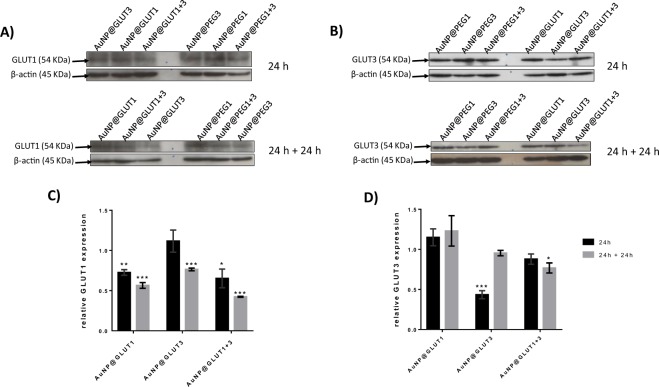
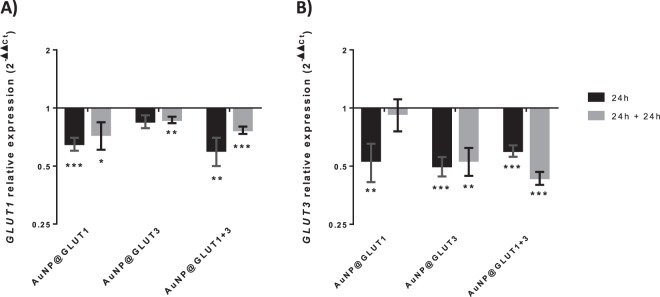
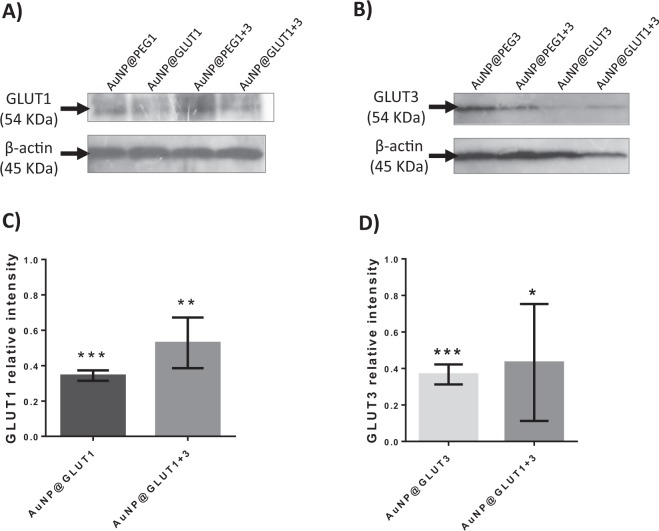
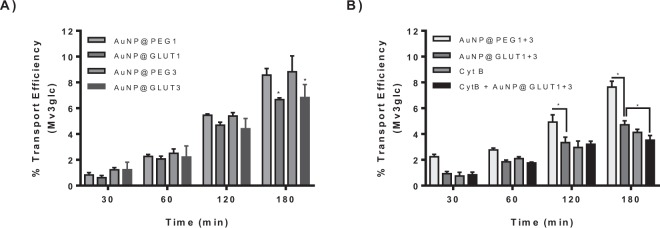
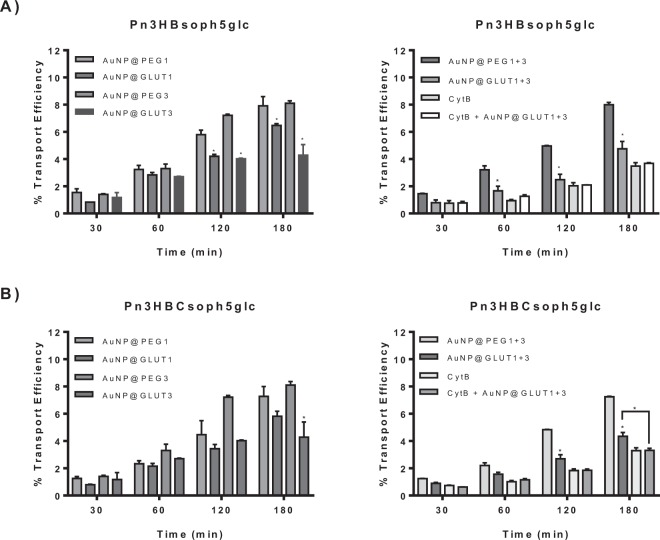
Anthocyanins may protect against a myriad of human diseases. However few studies have been conducted to evaluate their bioavailability so their absorption mechanism remains unclear. This study aimed to evaluate the role of two glucose transporters (GLUT1 and GLUT3) in anthocyanins absorption in the human gastric epithelial cells (MKN-28) by using gold nanoparticles to silence these transporters. Anthocyanins were purified from purple fleshed sweet potatoes and grape skin. Silencing of GLUT1 and/or GLUT3 mRNA was performed by adding AuNP@GLUT1 and/or AuNP@GLUT3 to MKN-28 cells. Downregulation of mRNA expression occurred concomitantly with the reduction in protein expression. Malvidin-3-O-glucoside (Mv3glc) transport was reduced in the presence of either AuNP@GLUT1 and AuNP@GLUT3, and when both transporters were blocked simultaneously. Peonidin-3-(6'-hydroxybenzoyl)-sophoroside-5-glucoside (Pn3HBsoph5glc) and Peonidin-3-(6'-hydroxybenzoyl-6″-caffeoyl)-sophoroside-5-glucoside (Pn3HBCsoph5glc) were assayed to verify the effect of the sugar moiety esterification at glucose B in transporter binding. Both pigments were transported with a lower transport efficiency compared to Mv3glc, probably due to steric hindrance of the more complex structures. Interestingly, for Pn3HBCsoph5glc although the only free glucose is at C5 and the inhibitory effect of the nanoparticles was also observed, reinforcing the importance of glucose on the transport regardless of its position or substitution pattern. The results support the involvement of GLUT1 and GLUT3 in the gastric absorption of anthocyanins.
花色苷可能对多种人类疾病具有保护作用。然而,目前研究花色苷生物利用度的工作还很少,因此其吸收机制尚不清楚。本研究旨在通过使用金纳米粒子沉默两种葡萄糖转运蛋白(GLUT1 和 GLUT3),评估它们在人胃上皮细胞(MKN-28)中花色苷吸收的作用。花色苷从紫色果肉甜薯和葡萄皮中纯化得到。通过向 MKN-28 细胞中添加 AuNP@GLUT1 和/或 AuNP@GLUT3 来沉默 GLUT1 和/或 GLUT3mRNA。mRNA 表达的下调与蛋白表达的减少同时发生。当同时存在 AuNP@GLUT1 和 AuNP@GLUT3 或同时阻断两种转运体时,矢车菊素-3-O-葡萄糖苷(Mv3glc)的转运减少。还检测了芍药素-3-(6′-羟基苯甲酰基)-槐糖苷-5-葡萄糖苷(Pn3HBsoph5glc)和芍药素-3-(6′-羟基苯甲酰基-6″-咖啡酰基)-槐糖苷-5-葡萄糖苷(Pn3HBCsoph5glc)以验证糖基酯化在葡萄糖 B 对转运体结合的影响。与 Mv3glc 相比,这两种色素的转运效率都较低,这可能是由于结构更复杂造成的空间位阻。有趣的是,对于 Pn3HBCsoph5glc,尽管只有游离的葡萄糖位于 C5 位,并且观察到纳米粒子的抑制作用,但仍证实了葡萄糖在转运过程中的重要性,而不论其位置或取代模式如何。这些结果支持 GLUT1 和 GLUT3 参与花色苷的胃吸收。