Chow Julie Y L, Colagiuri Ben, Livesey Evan J
School of Psychology, University of Sydney, Sydney, NSW, 2006, Australia.
Cogn Res Princ Implic. 2019 Jan 28;4(1):1. doi: 10.1186/s41235-018-0149-9.
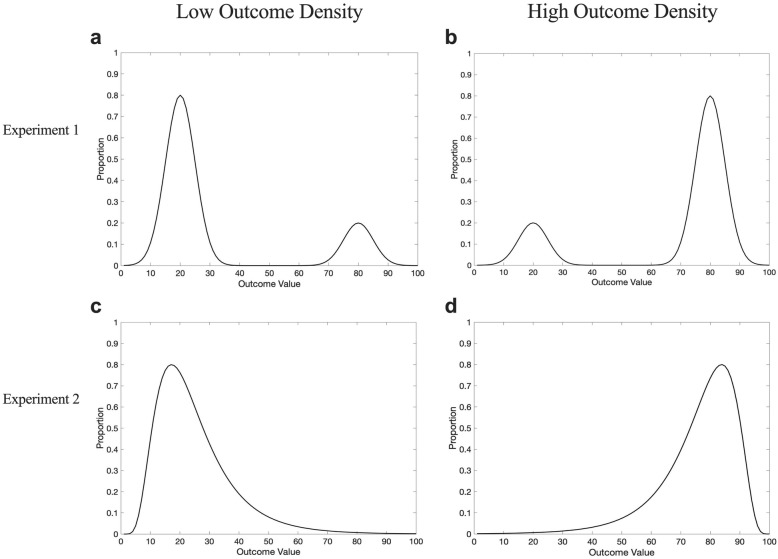
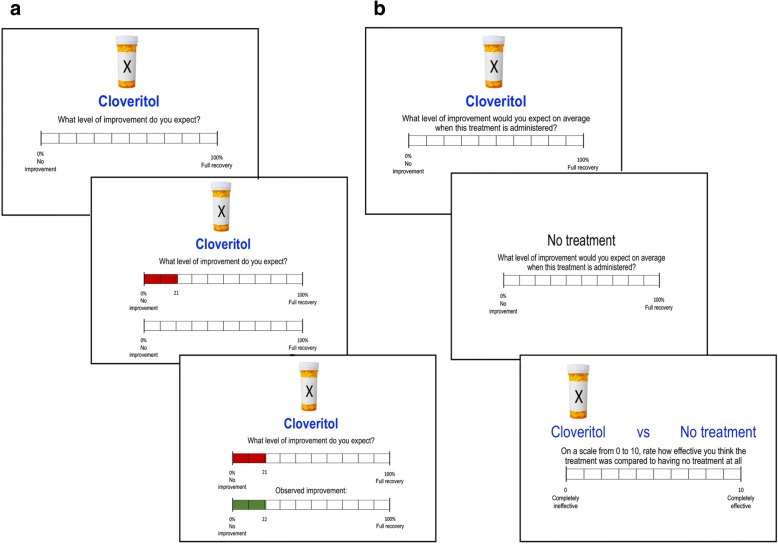
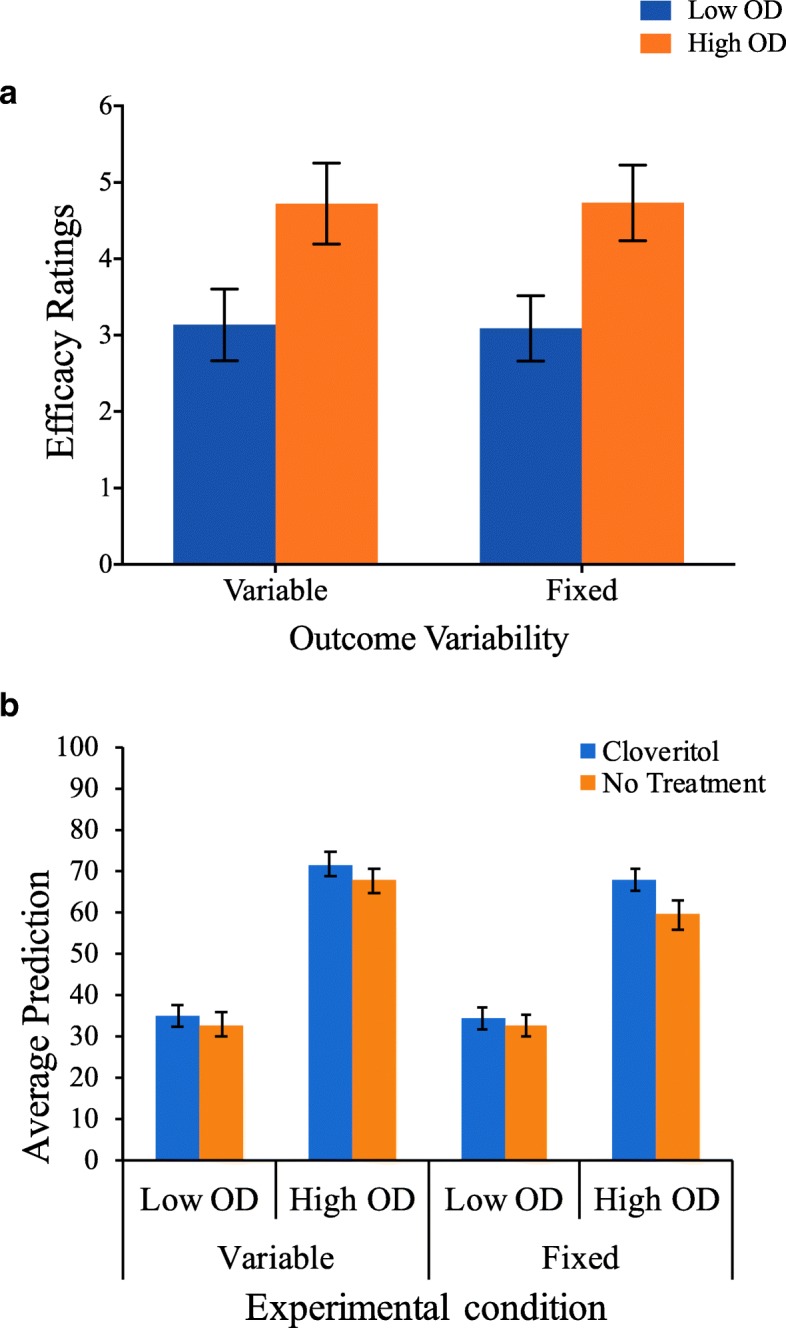
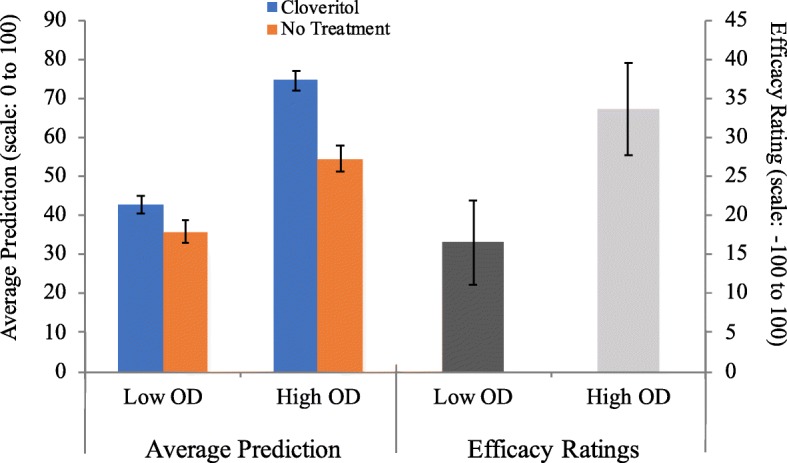
Illusory causation refers to a consistent error in human learning in which the learner develops a false belief that two unrelated events are causally associated. Laboratory studies usually demonstrate illusory causation by presenting two events-a cue (e.g., drug treatment) and a discrete outcome (e.g., patient has recovered from illness)-probabilistically across many trials such that the presence of the cue does not alter the probability of the outcome. Illusory causation in these studies is further augmented when the base rate of the outcome is high, a characteristic known as the outcome density effect. Illusory causation and the outcome density effect provide laboratory models of false beliefs that emerge in everyday life. However, unlike laboratory research, the real-world beliefs to which illusory causation is most applicable (e.g., ineffective health therapies) often involve consequences that are not readily classified in a discrete or binary manner. This study used a causal learning task framed as a medical trial to investigate whether similar outcome density effects emerged when using continuous outcomes. Across two experiments, participants observed outcomes that were either likely to be relatively low (low outcome density) or likely to be relatively high (high outcome density) along a numerical scale from 0 (no health improvement) to 100 (full recovery). In Experiment 1, a bimodal distribution of outcome magnitudes, incorporating variance around a high and low modal value, produced illusory causation and outcome density effects equivalent to a condition with two fixed outcome values. In Experiment 2, the outcome density effect was evident when using unimodal skewed distributions of outcomes that contained more ambiguous values around the midpoint of the scale. Together, these findings provide empirical support for the relevance of the outcome density bias to real-world situations in which outcomes are not binary but occur to differing degrees. This has implications for the way in which we apply our understanding of causal illusions in the laboratory to the development of false beliefs in everyday life.
错觉因果关系指的是人类学习过程中一种持续存在的错误,即学习者错误地认为两个不相关的事件存在因果关联。实验室研究通常通过在多次试验中概率性地呈现两个事件——一个线索(如药物治疗)和一个离散结果(如患者已康复)——来证明错觉因果关系,使得线索的出现并不会改变结果的概率。当结果的基础概率较高时,这些研究中的错觉因果关系会进一步增强,这一特征被称为结果密度效应。错觉因果关系和结果密度效应提供了在日常生活中出现的错误信念的实验室模型。然而,与实验室研究不同的是,错觉因果关系最适用的现实世界信念(如无效的健康疗法)往往涉及那些不容易以离散或二元方式分类的后果。本研究使用了一个被构建为医学试验的因果学习任务,以调查在使用连续结果时是否会出现类似的结果密度效应。在两个实验中,参与者观察到的结果在从0(健康无改善)到100(完全康复)的数值范围内,要么可能相对较低(低结果密度),要么可能相对较高(高结果密度)。在实验1中,结果大小的双峰分布,包含围绕高、低模态值的方差,产生了与具有两个固定结果值的条件相当的错觉因果关系和结果密度效应。在实验2中,当使用包含更多尺度中点附近模糊值的结果单峰偏态分布时,结果密度效应很明显。总之,这些发现为结果密度偏差与现实世界情况的相关性提供了实证支持,在现实世界中结果不是二元的,而是以不同程度出现的。这对我们将在实验室中对因果错觉的理解应用于日常生活中错误信念的形成方式具有启示意义。