Departamento de Psicología, Universidad de Deusto, Apartado 1, 48080, Bilbao, Spain.
Universidad de Granada, Granada, Spain.
Cogn Res Princ Implic. 2023 Jan 26;8(1):8. doi: 10.1186/s41235-023-00463-4.
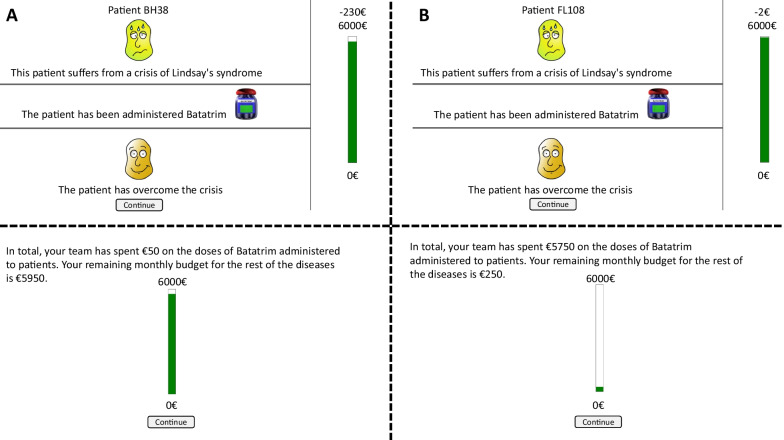
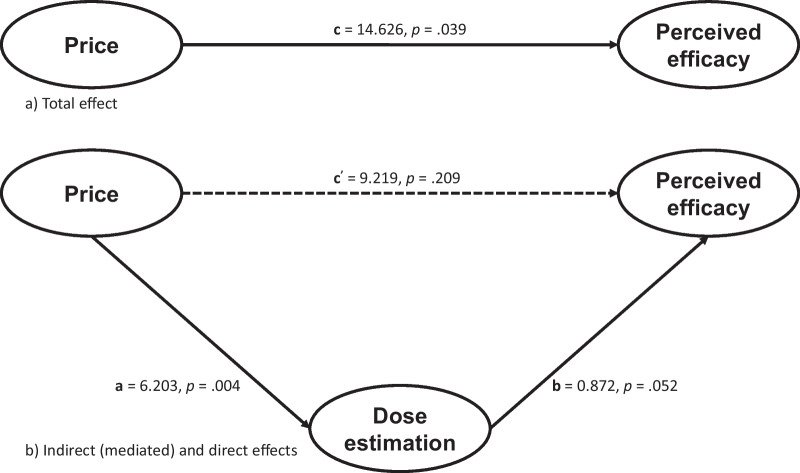
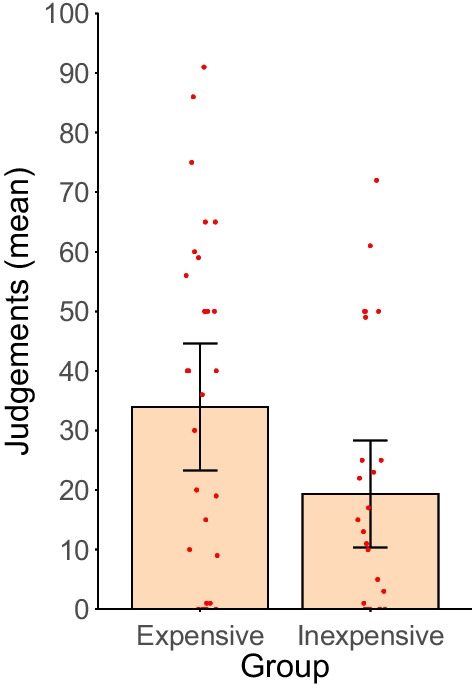
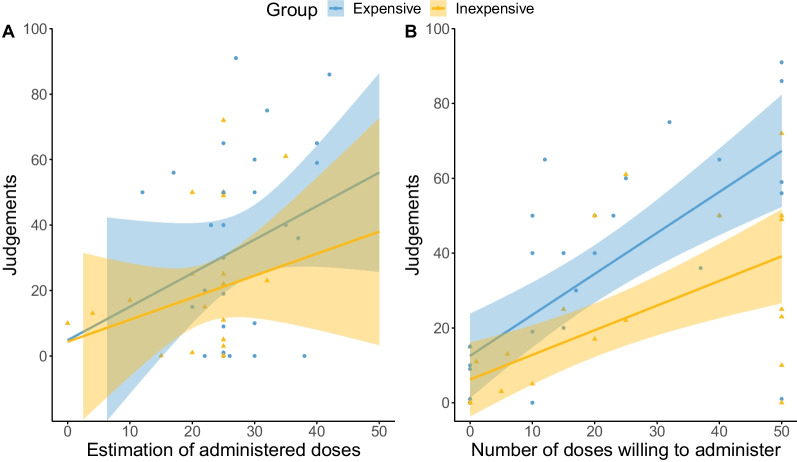
Previous studies have shown that the price of a given product impacts the perceived quality of such product. This finding was also observed in medical contexts, showing that expensive drugs increase the placebo effect compared to inexpensive ones. However, addressing a drug's efficacy requires making causal inferences between the drug and the healing. These inferences rely on the contingency between these two events, a factor that is difficult to control in the placebo research. The present study aimed to test whether the price of a given drug modulates its perceived efficacy using a proper (though fictitious) non-effective drug, so that not only the objective contingency, but also the probability of the cause and the probability of the effect could be adequately controlled for. We expected higher efficacy judgements for the expensive non-effective drug than for the inexpensive one. To test this hypothesis, 60 volunteers participated in a contingency learning task that was programmed so that 72% of the patients healed regardless of whether they took the drug. Approximately one-half of the participants were told that the drug was expensive, whereas the other half were told that it was inexpensive. As expected, the efficacy judgements of participants who saw the expensive drug were significantly higher than those who saw the inexpensive one. Overall, our results showed that the price of a non-effective drug modulates its perceived efficacy, an effect that seems to be mediated by the estimated number of doses administered. This result parallels findings in the placebo literature but using a laboratory methodology that allows stronger control of the variables, suggesting that the illusory overestimation produced by the more expensive treatments might be on the basis of the greater efficacy of the more expensive placebos.
先前的研究表明,给定产品的价格会影响人们对该产品质量的感知。这一发现也在医学领域得到了观察,表明昂贵的药物比便宜的药物更能提高安慰剂效应。然而,要确定药物的疗效,就需要在药物和治疗效果之间做出因果推断。这些推断依赖于这两个事件之间的偶然性,而在安慰剂研究中,很难控制这一因素。本研究旨在测试给定药物的价格是否会通过使用一种适当的(尽管是虚构的)无效药物来调节其感知疗效,从而不仅可以充分控制客观偶然性,还可以控制原因的可能性和效果的可能性。我们预计昂贵的无效药物的疗效判断会高于便宜的药物。为了检验这一假设,60 名志愿者参与了一项偶然性学习任务,该任务的编程使得无论患者是否服用药物,有 72%的患者可以痊愈。大约一半的参与者被告知药物昂贵,而另一半则被告知药物便宜。正如预期的那样,看到昂贵药物的参与者的疗效判断明显高于看到便宜药物的参与者。总的来说,我们的研究结果表明,无效药物的价格会调节其感知疗效,这种效应似乎是由估计的给药剂量数介导的。这一结果与安慰剂文献中的发现相似,但使用了一种实验室方法,可以更严格地控制变量,这表明更昂贵的治疗方法产生的虚幻高估可能是基于更昂贵的安慰剂的更高疗效。