Department of Nephrology, Wollongong Hospital, Wollongong, NSW, Australia.
Centre for Health Research Illawarra Shoalhaven Population (CHRISP), University of Wollongong, Wollongong, NSW, Australia.
PLoS One. 2019 Jan 29;14(1):e0211479. doi: 10.1371/journal.pone.0211479. eCollection 2019.
In patients with end stage kidney disease (ESKD) on dialysis, treatment non-adherence is common and results in poor health outcomes. However, the clinical benefits of interventions to improve adherence in dialysis patients are difficult to evaluate since trialled interventions and reported outcomes are highly diverse/ heterogeneous. This review summarizes existing literature on randomized controlled trials (RCTs) evaluating adherence interventions in ESKD patients focusing on the intervention category, outcome efficacy and persistence of benefit beyond the intervention.
We performed electronic database searches in Medline, Embase & Cochrane CENTRAL upto 1st July 2018 for RCTs evaluating interventions to improve diet, fluid, medication or dialysis adherence in ESKD patients. Study characteristics including category of interventions, outcomes, efficacy and follow-up were assessed. Meta-analysis was used to compute pooled estimates of the effects on the commonest reported outcome measures.
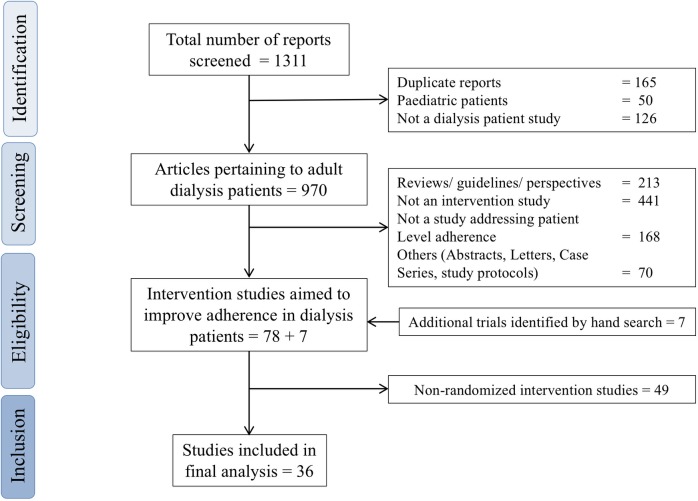
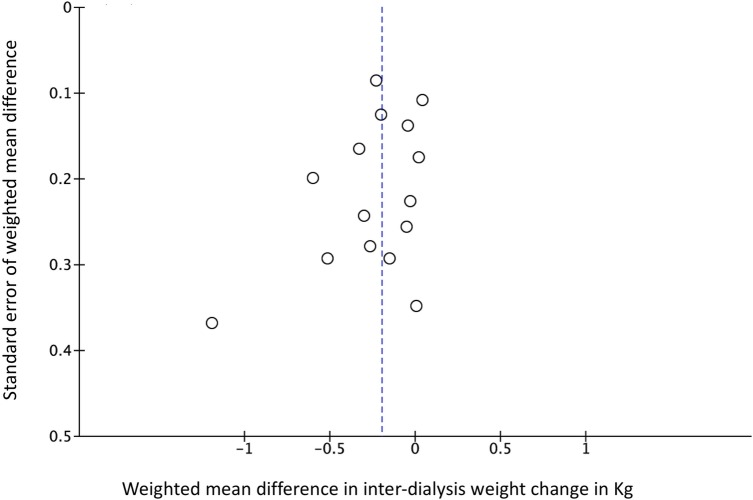
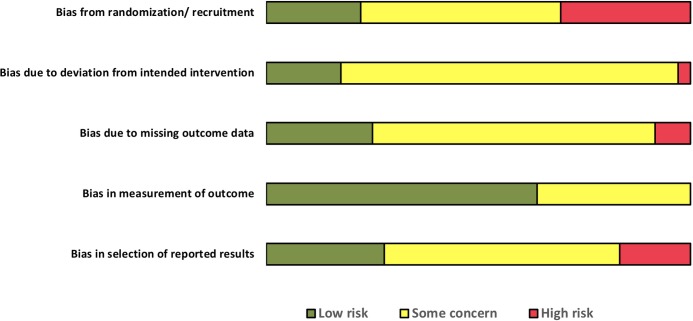
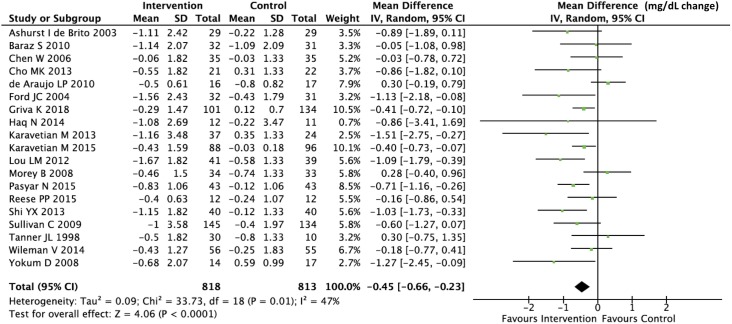
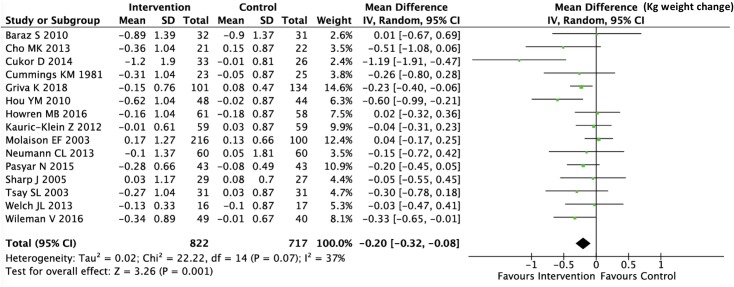
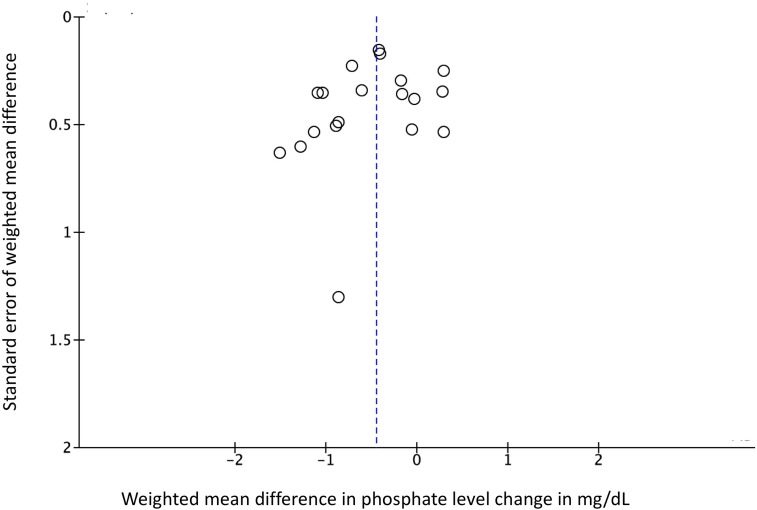
From 1311 citations, we included 36 RCTs (13 cluster-randomized trials), recruiting a total of 3510 dialysis patients (mean age 55.1 ± 5.8 years, males 58.1%). Overall risk of bias was 'high' for 24 and of 'some concern' for 12 studies. Most interventions (33 trials, 92%) addressed patient related factors, and included educational/cognitive (N = 11), behavioural / counselling (N = 4), psychological/affective (N = 4) interventions or a combination (N = 14) of the above. A majority of (28/36) RCTs showed improvement in some reported outcomes. Surrogate measures like changes in phosphate (N = 19) and inter-dialytic weight gain (N = 15) were the most common reported outcomes and both showed significant improvement in the meta-analysis. Sixteen trials reported follow-up (1-12 months) beyond intervention and the benefits waned or were absent in nine trials within 12 months post-intervention.
Interventions to improve treatment adherence result in modest short-term benefits in surrogate outcome measures in dialysis patients, but significant improvements in trial design and outcome reporting are warranted to identify strategies that would achieve meaningful and sustainable clinical benefits.
Poor methodological quality of trials. Frequent use of surrogate outcomes measures. Low certainly of evidence.
在接受透析治疗的终末期肾病(ESKD)患者中,治疗不依从的情况很常见,这会导致不良的健康结果。然而,评估提高透析患者依从性的干预措施的临床益处是困难的,因为试验干预措施和报告的结果差异很大。本综述总结了现有关于评估 ESKD 患者依从性干预措施的随机对照试验(RCT)的文献,重点关注干预类别、结局疗效以及干预结束后获益的持久性。
我们对 Medline、Embase 和 Cochrane CENTRAL 数据库进行了电子检索,检索时间截至 2018 年 7 月 1 日,以评估改善 ESKD 患者饮食、液体、药物或透析依从性的干预措施的 RCT。评估了研究特征,包括干预措施类别、结局、疗效和随访。使用荟萃分析计算了最常见报告结局测量指标的效果的汇总估计值。
从 1311 条引文,我们纳入了 36 项 RCT(13 项聚类随机试验),共纳入 3510 名透析患者(平均年龄 55.1±5.8 岁,男性 58.1%)。24 项研究的整体偏倚风险为“高”,12 项研究的偏倚风险为“存在一定担忧”。大多数干预措施(33 项研究,92%)针对患者相关因素,包括教育/认知干预(N=11)、行为/咨询干预(N=4)、心理/情感干预(N=4)或上述干预措施的组合(N=14)。大多数 RCT(28/36)显示在一些报告结局方面有所改善。替代指标如磷酸盐的变化(N=19)和透析间体重增加(N=15)是最常见的报告结局,荟萃分析显示这两项指标都有显著改善。16 项试验报告了干预结束后(1-12 个月)的随访情况,9 项试验在干预结束后 12 个月内,获益减弱或不存在。
改善治疗依从性的干预措施可使透析患者的替代结局测量指标在短期内获得适度的益处,但需要在试验设计和结局报告方面进行重大改进,以确定能够实现有意义和可持续临床获益的策略。
试验的方法学质量较差。经常使用替代结局测量指标。证据确定性低。