Sunwoo Sun-Young, Pérez-Núñez Daniel, Morozov Igor, Sánchez Elena G, Gaudreault Natasha N, Trujillo Jessie D, Mur Lina, Nogal Marisa, Madden Daniel, Urbaniak Kinga, Kim In Joong, Ma Wenjun, Revilla Yolanda, Richt Juergen A
Department of Diagnostic Medicine & Pathobiology, College of Veterinary Medicine, Kansas State University, K2224 Mosier Hall, 1800 Denison Ave, Manhattan, KS 66506, USA.
CBMSO-CSIC-UAM, C/Nicolás Cabrera 1, Campus de Cantoblanco, 28049 Madrid, Spain.
Vaccines (Basel). 2019 Jan 28;7(1):12. doi: 10.3390/vaccines7010012.
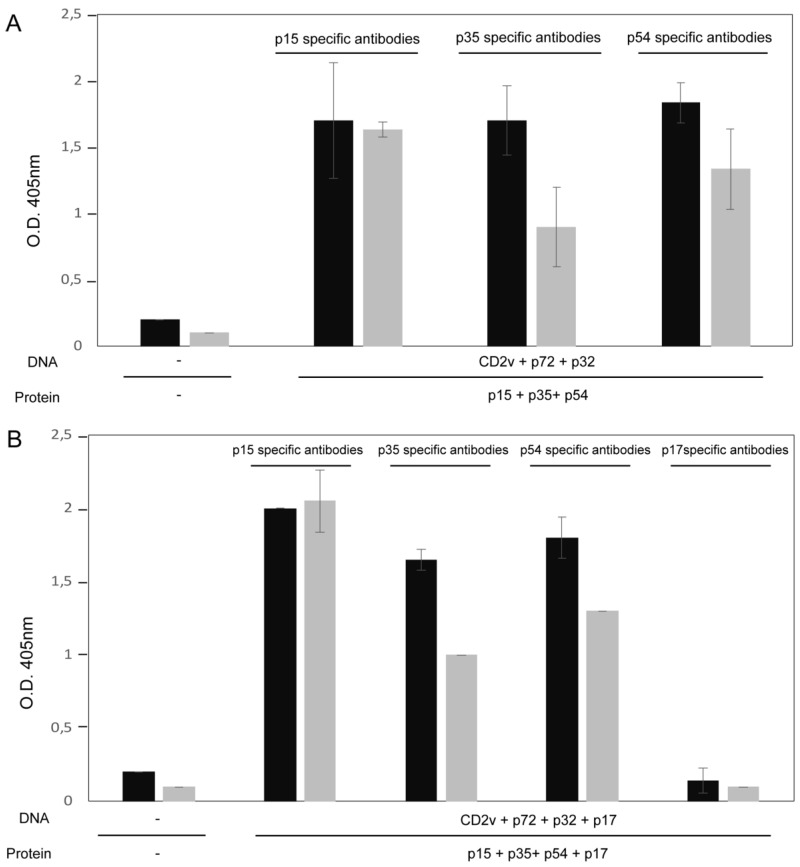
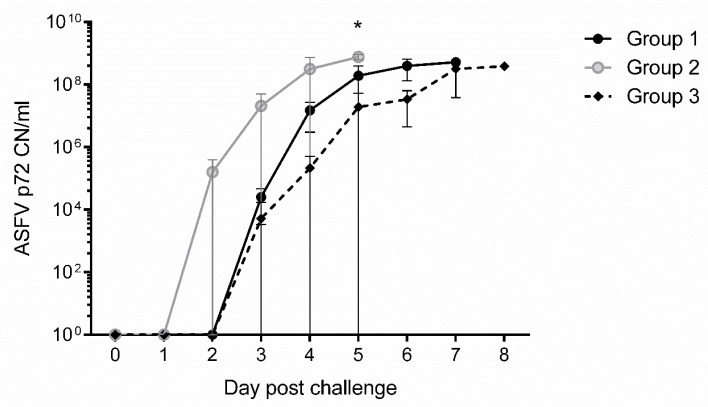
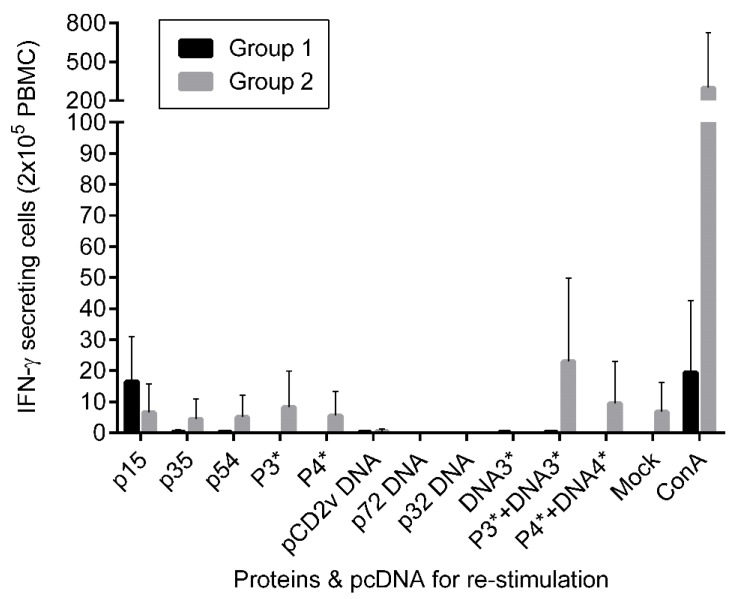
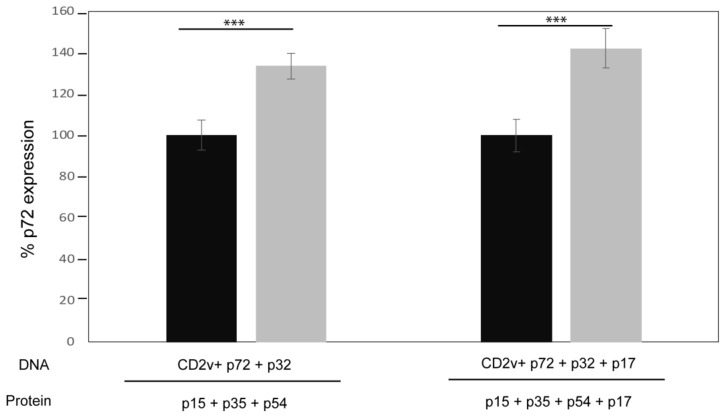
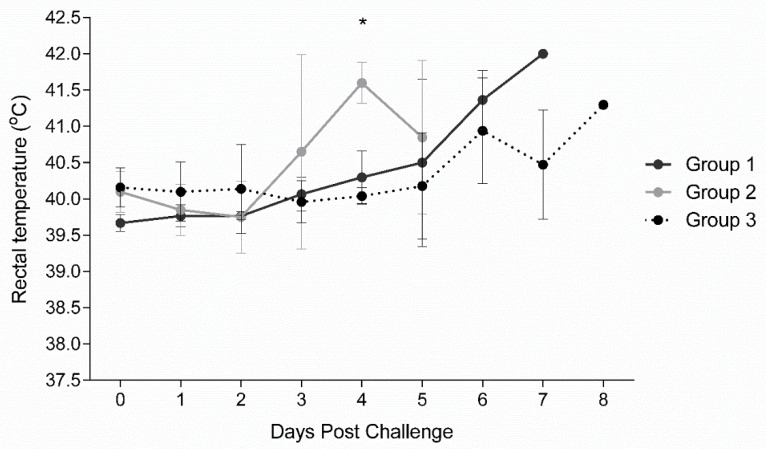
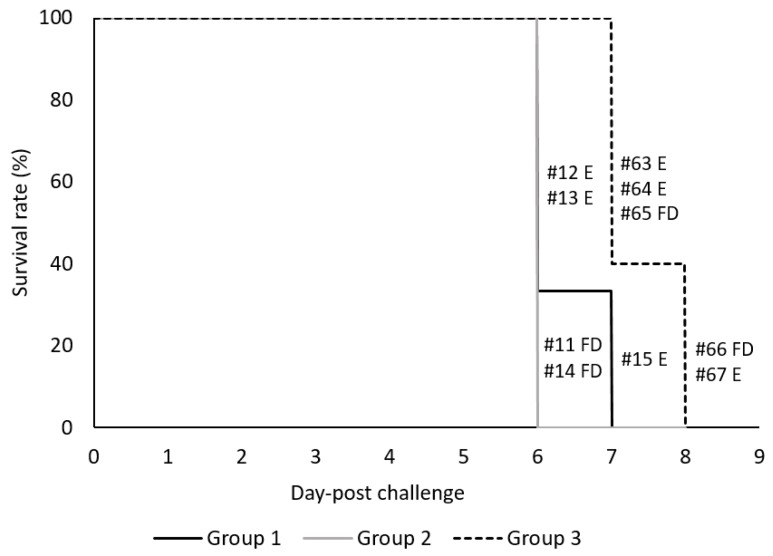
African swine fever virus (ASFV) causes high morbidity and mortality in swine (), for which there is no commercially available vaccine. Recent outbreaks of the virus in Trans-Caucasus countries, Eastern Europe, Belgium and China highlight the urgent need to develop effective vaccines against ASFV. Previously, we evaluated the immunogenicity of a vaccination strategy designed to test various combinations of ASFV antigens encoded by DNA plasmids and recombinant proteins with the aim to activate both humoral and cellular immunity. Based on our previous results, the objective of this study was to test the combined DNA-protein vaccine strategy using a cocktail of the most immunogenic antigens against virulent ASFV challenge. Pigs were vaccinated three times with a cocktail that included ASFV plasmid DNA (CD2v, p72, p32, +/-p17) and recombinant proteins (p15, p35, p54, +/-p17). Three weeks after the third immunization, all pigs were challenged with the virulent ASFV Armenia 2007 strain. The results showed that vaccinated pigs were not protected from ASFV infection or disease. Compared to the non-vaccinated controls, earlier onset of clinical signs, viremia, and death were observed for the vaccinated animals following virulent ASFV challenge. ASFV induced pathology was also enhanced in the vaccinated pigs. Furthermore, while the vaccinated pigs developed antigen-specific antibodies, immunized pig sera at the time of challenge lacked the capacity to neutralize virus, and instead was observed to enhance ASFV infection in vitro. The results of this work points to a putative immune enhancement mechanism involved in ASFV pathogenesis that warrants further investigation. This pilot study provides insight for the selection of appropriate combinations of ASFV antigens for the development of a rationally-designed, safe, and efficacious vaccine for ASF.
非洲猪瘟病毒(ASFV)可导致猪的高发病率和死亡率(),目前尚无市售疫苗。最近该病毒在跨高加索国家、东欧、比利时和中国爆发,凸显了开发针对ASFV的有效疫苗的迫切需求。此前,我们评估了一种疫苗接种策略的免疫原性,该策略旨在测试由DNA质粒和重组蛋白编码的ASFV抗原的各种组合,以激活体液免疫和细胞免疫。基于我们之前的结果,本研究的目的是使用针对强毒ASFV攻击的最具免疫原性的抗原混合物来测试联合DNA-蛋白疫苗策略。用包含ASFV质粒DNA(CD2v、p72、p32、+/-p17)和重组蛋白(p15、p35、p54、+/-p17)的混合物对猪进行三次接种。第三次免疫三周后,所有猪均用强毒ASFV亚美尼亚2007株进行攻击。结果表明,接种疫苗的猪未受到ASFV感染或疾病的保护。与未接种疫苗的对照组相比,接种疫苗的动物在受到强毒ASFV攻击后出现临床症状、病毒血症和死亡的时间更早。接种疫苗的猪中ASFV诱导的病理学也有所增强。此外,虽然接种疫苗的猪产生了抗原特异性抗体,但攻击时免疫猪的血清缺乏中和病毒的能力,反而在体外观察到增强了ASFV感染。这项工作的结果指出了一种可能参与ASFV发病机制的免疫增强机制,值得进一步研究。这项初步研究为选择合适的ASFV抗原组合以开发用于非洲猪瘟的合理设计、安全且有效的疫苗提供了见解。