KABEG Klinikum Klagenfurt, Institute of Radiation Oncology, Feschnigstraße 11, 9020, Klagenfurt am Wörthersee, Austria.
Medical University of Graz, Diagnostic and Research Institute of Pathology, Neue Stiftingtalstrasse 6, 8036, Graz, Austria.
Radiat Oncol. 2019 Jan 29;14(1):21. doi: 10.1186/s13014-019-1227-y.
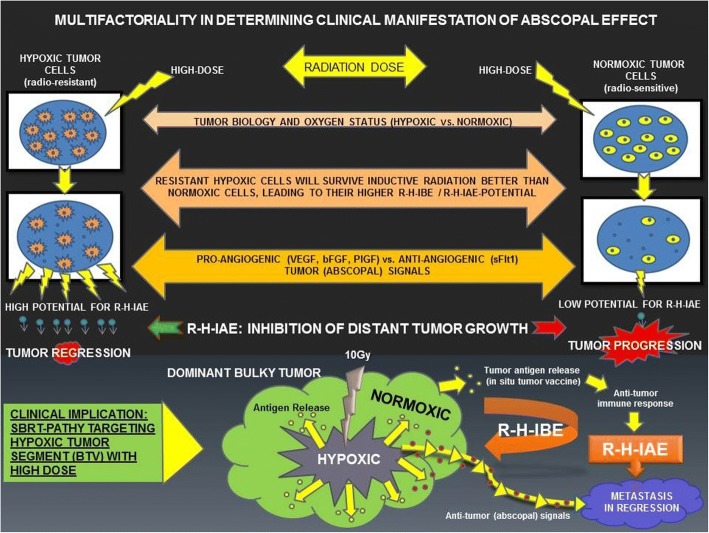
Despite the advances in oncology, patients with bulky tumors have worse prognosis and often receive only palliative treatments. Bulky disease represents an important challenging obstacle for all currently available radical treatment options including conventional radiotherapy. The purpose of this study was to assess a retrospective outcome on the use of a newly developed unconventional stereotactic body radiation therapy (SBRT) for PArtial Tumor irradiation of unresectable bulky tumors targeting exclusively their HYpoxic segment (SBRT-PATHY) that exploits the non-targeted effects of radiotherapy: bystander effects (local) and the abscopal effects (distant).
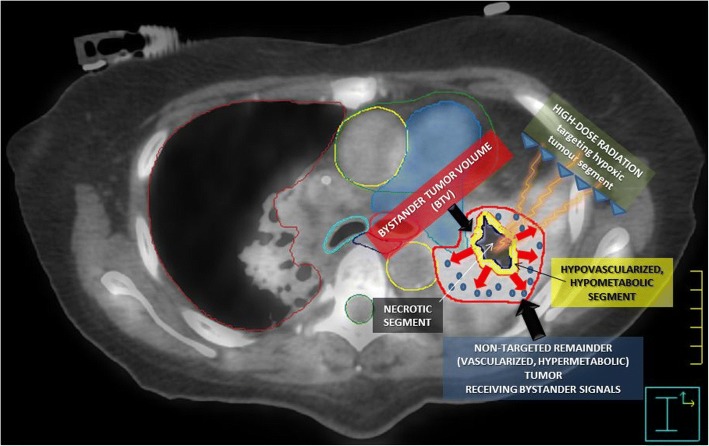
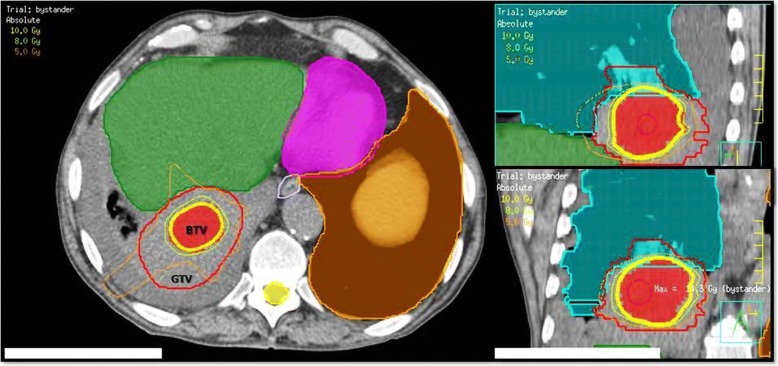
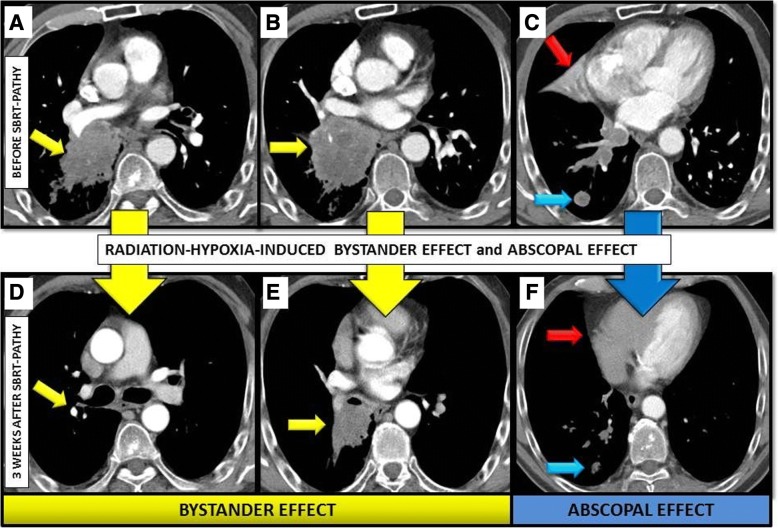
Twenty-three patients with bulky tumors received partial bulky irradiation in order to induce the local non-targeted effect of radiation (bystander effect). The hypoxic tumor segment, called the bystander tumor volume (BTV), was defined using PET and contrast-enhanced CT, as a hypovascularized-hypometabolic junctional zone between the central necrotic and peripheral hypervascularized-hypermetabolic tumor segment. Based on tumor site and volume, the BTV was irradiated with 1-3 fractions of 10-12 Gy prescribed to 70% isodose-line. The pathologic lymph nodes and metastases were not irradiated in order to assess the distant non-targeted effects of radiation (abscopal effect). No patient received any systemic therapy.
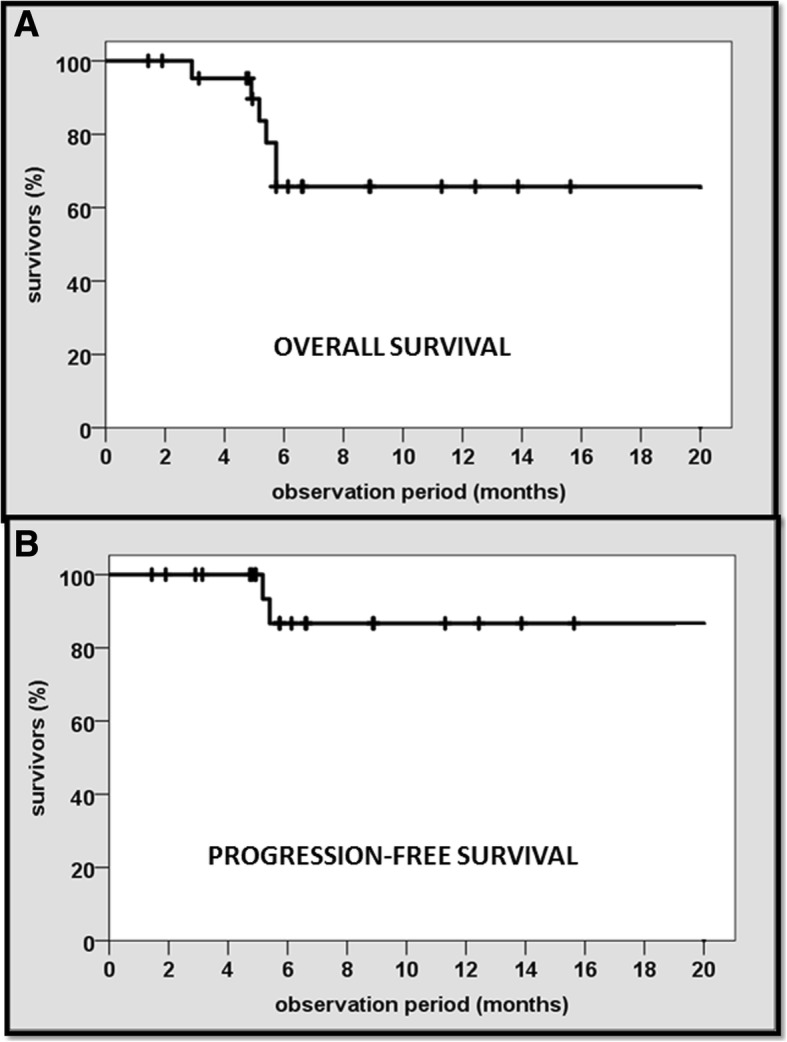
At the time of analysis, with median follow-up of 9.4 months (range: 4-20), 87% of patients remained progression-free. The bystander and abscopal response rates were 96 and 52%, respectively. Median shrinkage of partially irradiated bulky tumor expressing intensity of the bystander effect was 70% (range 30-100%), whereas for the non-irradiated metastases (intensity of the abscopal effect), it was 50% (range 30-100%). No patient experienced acute or late toxicity of any grade.
SBRT-PATHY showed very inspiring results on exploitation of the radiation-hypoxia-induced non-targeted effects that need to be confirmed through our ongoing prospective trial. Present study has been retrospectively registered by the local ethic committee under study number A 26/18.
尽管肿瘤学取得了进步,但肿瘤体积较大的患者预后较差,往往只能接受姑息性治疗。大块疾病是所有目前可用的根治性治疗方法(包括常规放疗)的一个重要挑战障碍。本研究的目的是评估一种新开发的非常规立体定向体部放疗(SBRT)治疗不可切除的大块肿瘤的回顾性结果,该方法专门针对其乏氧节段进行部分肿瘤照射(SBRT-PATHY),利用放疗的非靶向效应:旁观者效应(局部)和远隔效应(远处)。
23 例大块肿瘤患者接受部分大块照射,以诱导放射的局部非靶向效应(旁观者效应)。乏氧肿瘤节段,称为旁观者肿瘤体积(BTV),使用 PET 和对比增强 CT 定义,作为中央坏死区与外周富血管高代谢肿瘤节段之间的低血管化低代谢交界区。根据肿瘤部位和体积,BTV 接受 1-3 次 10-12Gy 的分次照射,规定为 70%等剂量线。未对病理淋巴结和转移灶进行照射,以评估放疗的远隔非靶向效应(远隔效应)。没有患者接受任何系统治疗。
在分析时,中位随访 9.4 个月(范围:4-20),87%的患者仍无进展。旁观者效应和远隔效应的反应率分别为 96%和 52%。表达旁观者效应强度的部分照射的大块肿瘤的平均退缩率为 70%(范围 30-100%),而非照射的转移灶(远隔效应强度)的平均退缩率为 50%(范围 30-100%)。没有患者出现任何等级的急性或迟发性毒性。
SBRT-PATHY 在利用放疗诱导的乏氧非靶向效应方面取得了非常鼓舞人心的结果,这需要通过我们正在进行的前瞻性试验来证实。本研究已由当地伦理委员会回顾性注册,注册号为 A 26/18。