Oncogenomic and Epigenetic Unit, IRCCS - Regina Elena National Cancer Institute, Via Elio Chianesi 53, Rome 00144, Italy.
SAFU, IRCCS - Regina Elena National Cancer Institute, Via Elio Chianesi 53, Rome 00144, Italy.
Nucleic Acids Res. 2019 Apr 23;47(7):3365-3382. doi: 10.1093/nar/gkz041.
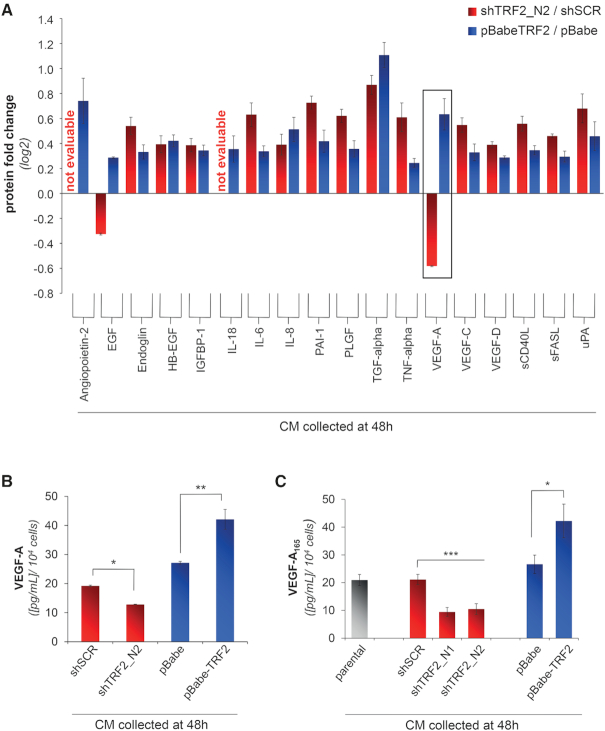
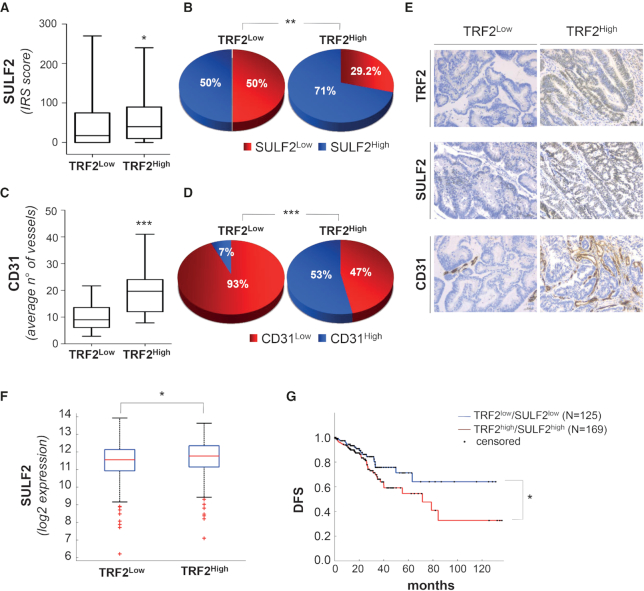
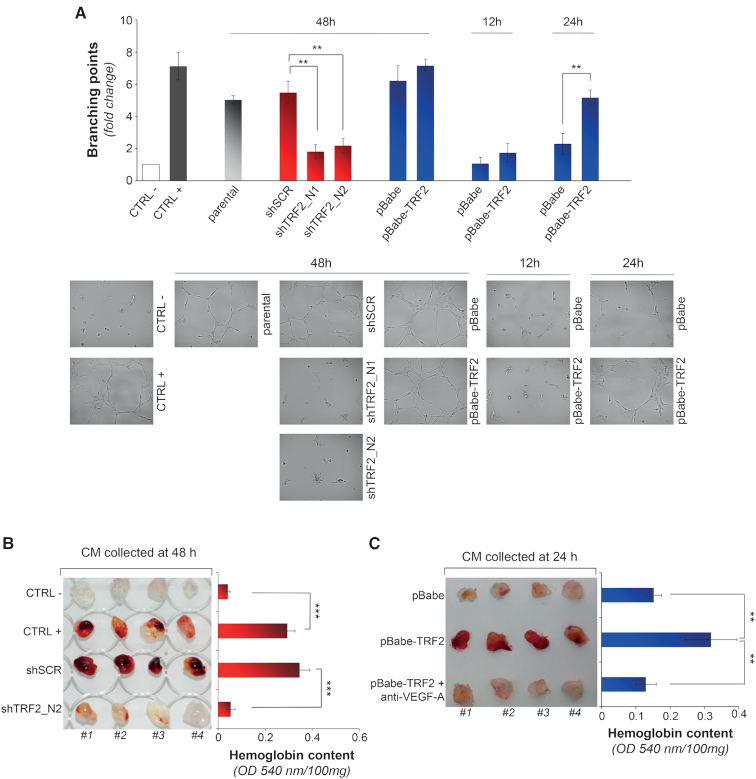
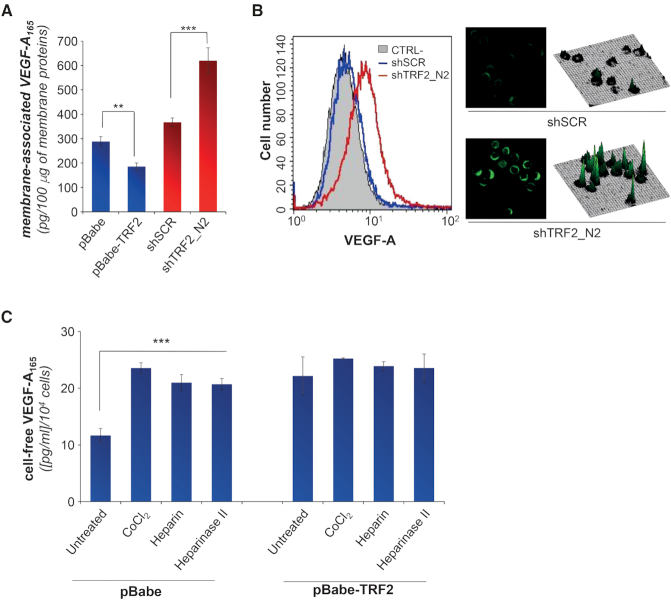
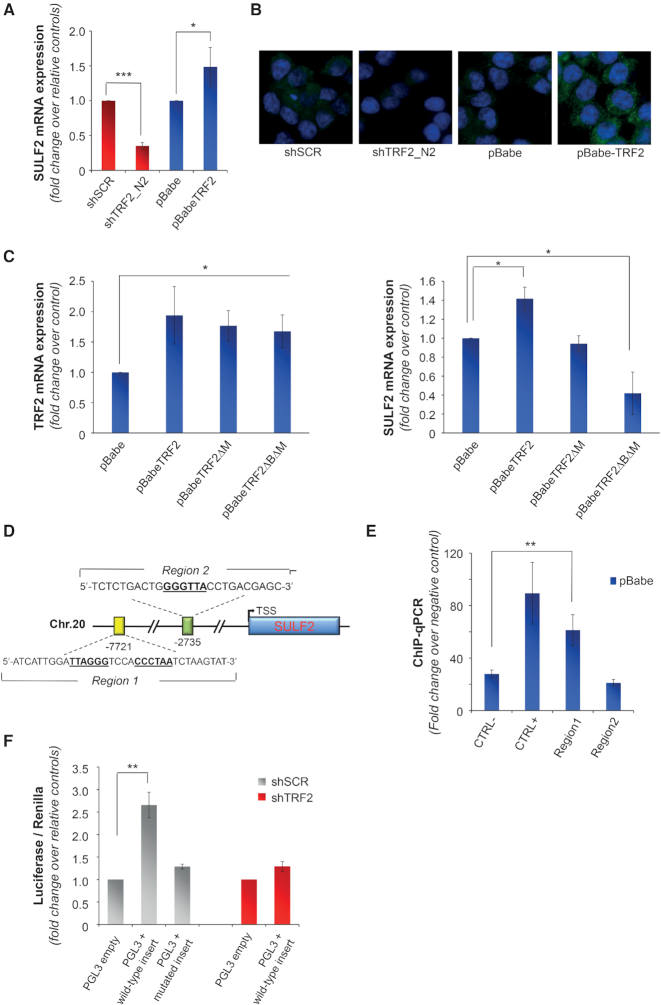
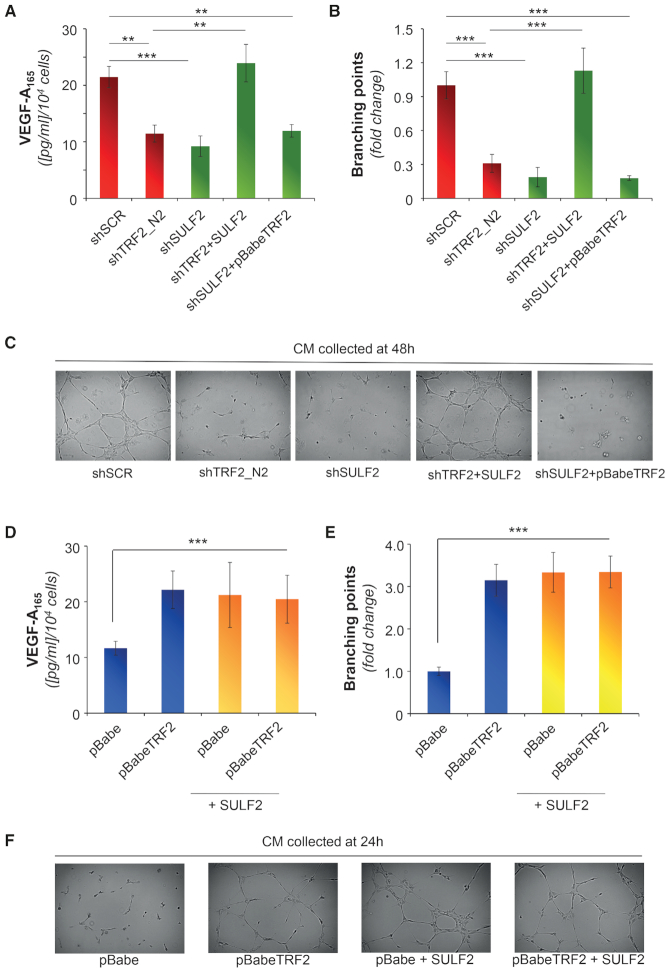
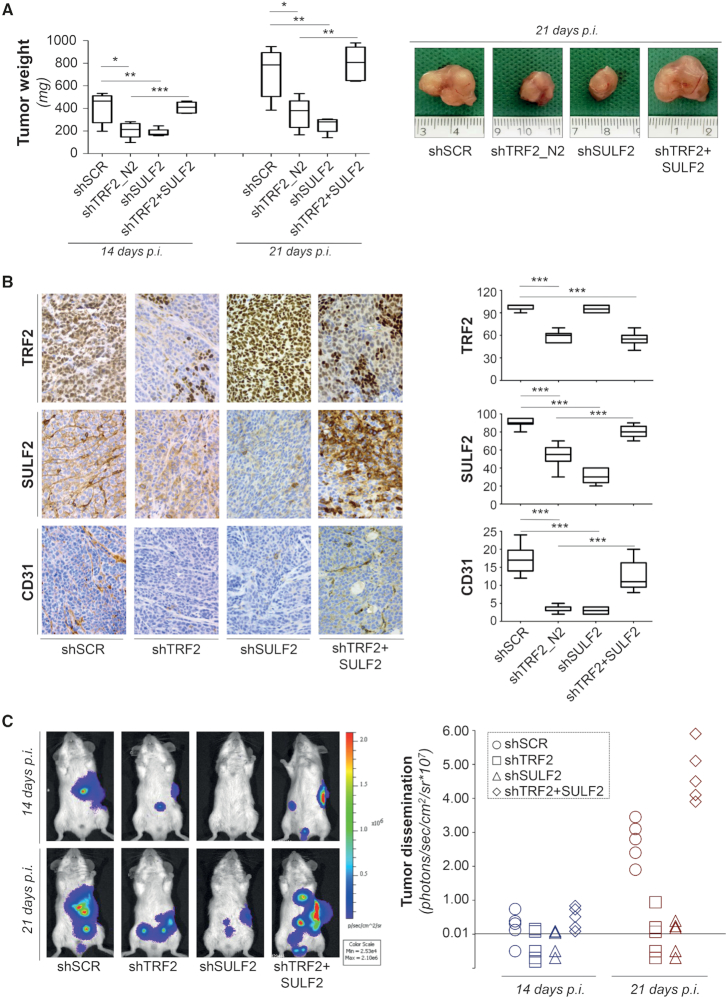
The telomeric protein TRF2 is overexpressed in several human malignancies and contributes to tumorigenesis even though the molecular mechanism is not completely understood. By using a high-throughput approach based on the multiplexed Luminex X-MAP technology, we demonstrated that TRF2 dramatically affects VEGF-A level in the secretome of cancer cells, promoting endothelial cell-differentiation and angiogenesis. The pro-angiogenic effect of TRF2 is independent from its role in telomere capping. Instead, TRF2 binding to a distal regulatory element promotes the expression of SULF2, an endoglucosamine-6-sulfatase that impairs the VEGF-A association to the plasma membrane by inducing post-synthetic modification of heparan sulfate proteoglycans (HSPGs). Finally, we addressed the clinical relevance of our findings showing that TRF2/SULF2 expression is a worse prognostic biomarker in colorectal cancer (CRC) patients.
端粒蛋白 TRF2 在几种人类恶性肿瘤中过表达,尽管其分子机制尚不完全清楚,但它有助于肿瘤的发生。通过使用基于多重 Luminex X-MAP 技术的高通量方法,我们证明 TRF2 可显著影响癌细胞分泌组中 VEGF-A 的水平,促进内皮细胞分化和血管生成。TRF2 的促血管生成作用与其在端粒盖帽中的作用无关。相反,TRF2 与远端调节元件结合可促进 SULF2 的表达,SULF2 是一种内葡糖胺-6-硫酸酯酶,通过诱导硫酸乙酰肝素蛋白聚糖 (HSPGs) 的翻译后修饰,从而破坏 VEGF-A 与质膜的结合,从而发挥促血管生成作用。最后,我们研究了我们的发现的临床相关性,表明 TRF2/SULF2 的表达是结直肠癌 (CRC) 患者更差的预后生物标志物。