
呼吁开展系统流行病学以应对血吸虫病的复杂性、其控制及消除工作。
A Call for Systems Epidemiology to Tackle the Complexity of Schistosomiasis, Its Control, and Its Elimination.
作者信息
Krauth Stefanie J, Balen Julie, Gobert Geoffrey N, Lamberton Poppy H L
机构信息
Institute for Biodiversity, Animal Health and Comparative Medicine, University of Glasgow, Glasgow G12 8QQ, UK.
School of Health and Related Research, University of Sheffield, Sheffield S1 4DA, UK.
出版信息
Trop Med Infect Dis. 2019 Jan 29;4(1):21. doi: 10.3390/tropicalmed4010021.
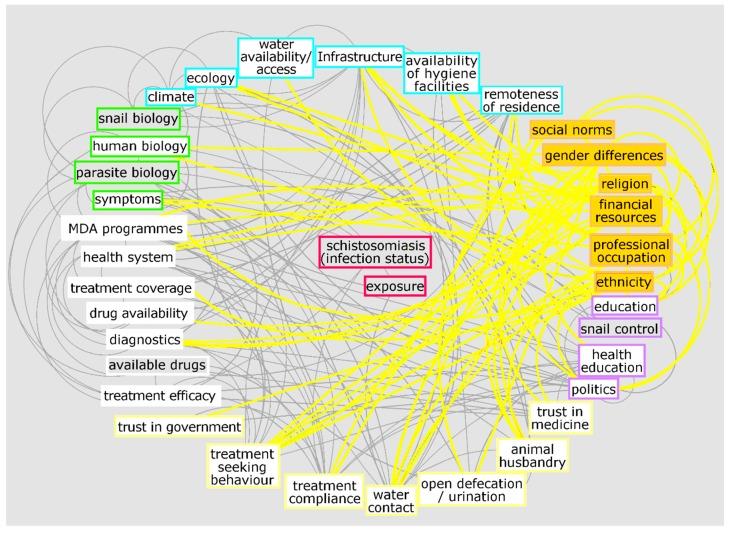
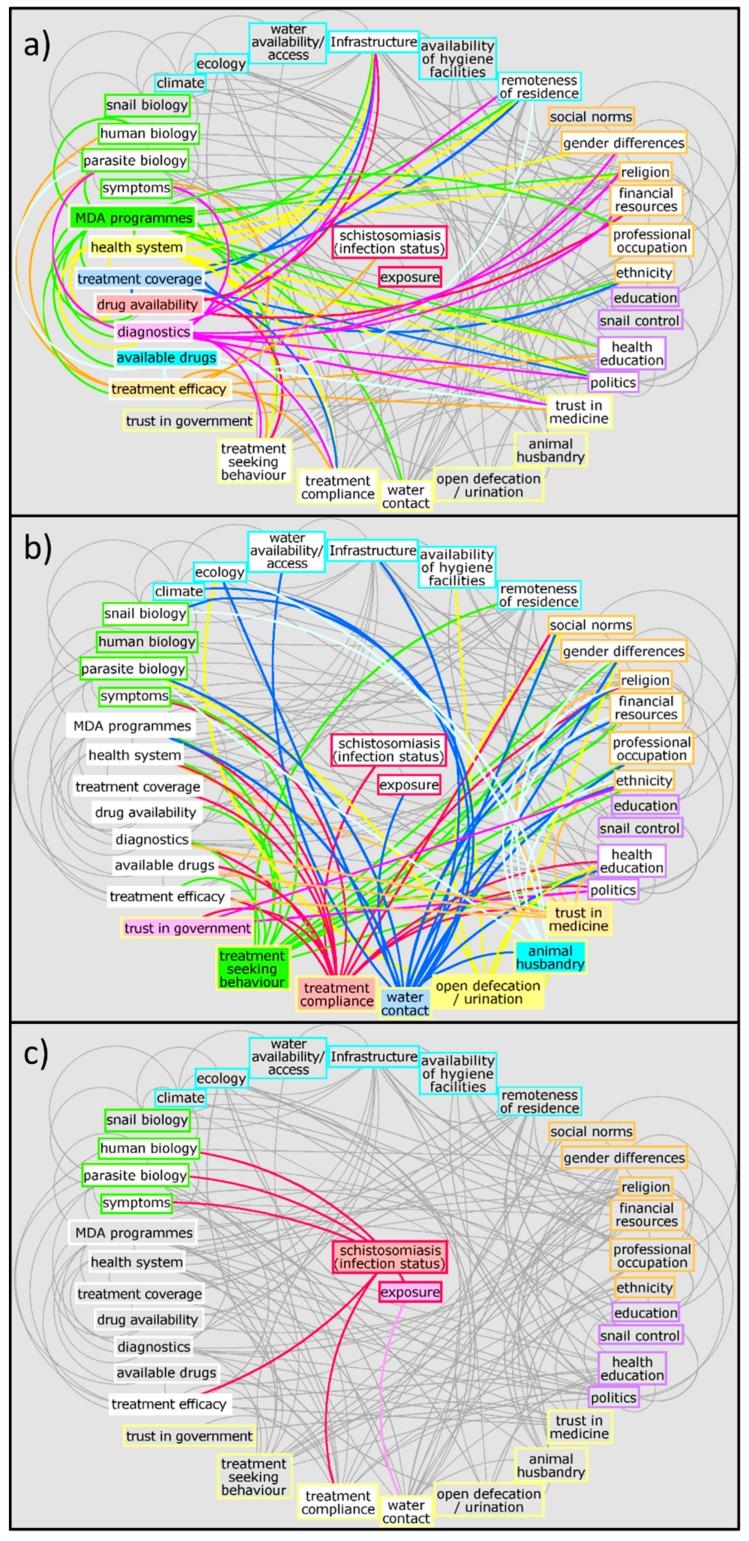
Ever since the first known written report of schistosomiasis in the mid-19th century, researchers have aimed to increase knowledge of the parasites, their hosts, and the mechanisms contributing to infection and disease. This knowledge generation has been paramount for the development of improved intervention strategies. Yet, despite a broad knowledge base of direct risk factors for schistosomiasis, there remains a paucity of information related to more complex, interconnected, and often hidden drivers of transmission that hamper intervention successes and sustainability. Such complex, multidirectional, non-linear, and synergistic interdependencies are best understood by looking at the integrated system as a whole. A research approach able to address this complexity and find previously neglected causal mechanisms for transmission, which include a wide variety of influencing factors, is needed. Systems epidemiology, as a holistic research approach, can integrate knowledge from classical epidemiology, with that of biology, ecology, social sciences, and other disciplines, and link this with informal, tacit knowledge from experts and affected populations. It can help to uncover wider-reaching but difficult-to-identify processes that directly or indirectly influence exposure, infection, transmission, and disease development, as well as how these interrelate and impact one another. Drawing on systems epidemiology to address persisting disease hotspots, failed intervention programmes, and systematically neglected population groups in mass drug administration programmes and research studies, can help overcome barriers in the progress towards schistosomiasis elimination. Generating a comprehensive view of the schistosomiasis system as a whole should thus be a priority research agenda towards the strategic goal of morbidity control and transmission elimination.
自19世纪中叶首次出现已知的血吸虫病书面报告以来,研究人员一直致力于增进对寄生虫、其宿主以及导致感染和疾病的机制的了解。这种知识的积累对于制定更好的干预策略至关重要。然而,尽管对血吸虫病的直接风险因素有广泛的了解,但对于更复杂、相互关联且往往隐藏的传播驱动因素的信息仍然匮乏,这些因素阻碍了干预措施的成功实施和可持续性。只有将整个综合系统视为一个整体,才能最好地理解这种复杂、多向、非线性和协同的相互依存关系。需要一种能够应对这种复杂性并找到先前被忽视的传播因果机制的研究方法,这些机制包括各种各样的影响因素。系统流行病学作为一种整体研究方法,可以将经典流行病学的知识与生物学、生态学、社会科学及其他学科的知识整合起来,并将其与专家和受影响人群的非正式隐性知识联系起来。它有助于揭示直接或间接影响接触、感染、传播和疾病发展的更广泛但难以识别的过程,以及这些过程如何相互关联和相互影响。利用系统流行病学来解决持续存在的疾病热点问题、失败的干预项目以及在大规模药物管理项目和研究中被系统忽视的人群,可以帮助克服在消除血吸虫病进程中遇到的障碍。因此,对血吸虫病系统形成一个全面的整体认识,应成为实现发病率控制和传播消除这一战略目标的优先研究议程。

 Zotero 插件