Oxford Radiocarbon Accelerator Unit, Research Laboratory for Archaeology and the History of Art, University of Oxford, Dyson Perrins Building, South Parks Road, Oxford, OX1 3QY, UK.
Max-Planck-Institute for Evolutionary Anthropology, Deutscher Platz 6, D-04103, Leipzig, Germany.
Nat Commun. 2019 Jan 30;10(1):274. doi: 10.1038/s41467-018-08018-8.
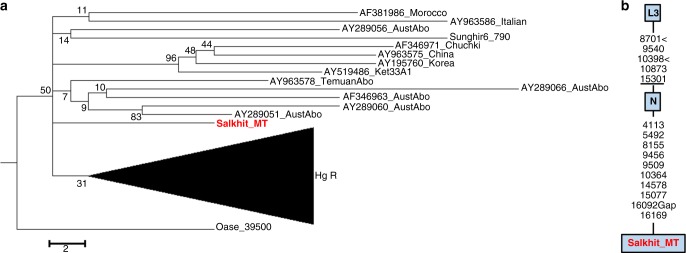
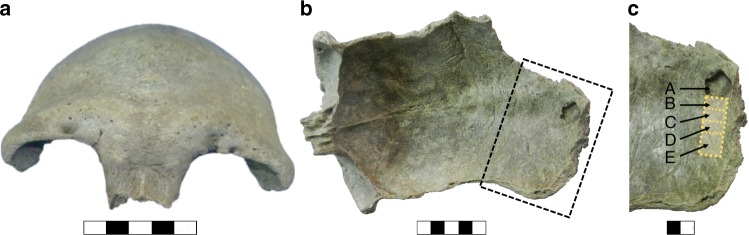
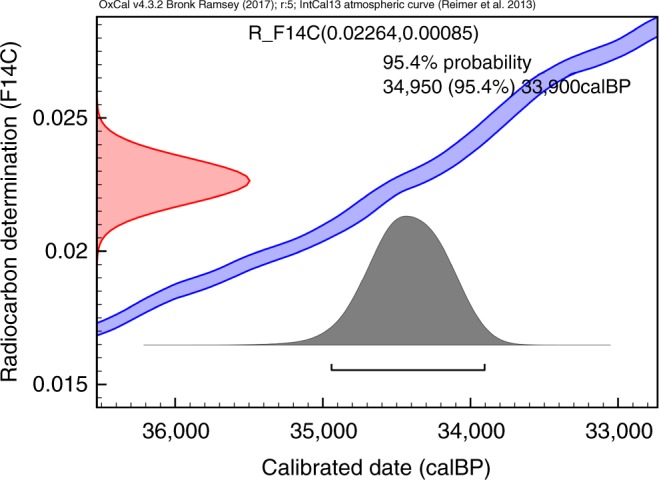
A skullcap found in the Salkhit Valley in northeast Mongolia is, to our knowledge, the only Pleistocene hominin fossil found in the country. It was initially described as an individual with possible archaic affinities, but its ancestry has been debated since the discovery. Here, we determine the age of the Salkhit skull by compound-specific radiocarbon dating of hydroxyproline to 34,950-33,900 Cal. BP (at 95% probability), placing the Salkhit individual in the Early Upper Paleolithic period. We reconstruct the complete mitochondrial genome (mtDNA) of the specimen. It falls within a group of modern human mtDNAs (haplogroup N) that is widespread in Eurasia today. The results now place the specimen into its proper chronometric and biological context and allow us to begin integrating it with other evidence for the human occupation of this region during the Paleolithic, as well as wider Pleistocene sequences across Eurasia.
在蒙古东北部的萨尔希特山谷发现的一顶头盖骨,据我们所知,是该国唯一发现的更新世古人类化石。它最初被描述为一个可能具有古老亲缘关系的个体,但自发现以来,其祖先一直存在争议。在这里,我们通过对羟基脯氨酸进行特定于化合物的放射性碳测年,将萨尔希特头骨的年龄确定为 34950-33900 calibrated BP(在 95%的概率下),将萨尔希特个体置于旧石器时代早期。我们重建了该标本的完整线粒体基因组(mtDNA)。它属于当今欧亚大陆广泛存在的现代人类 mtDNA(单倍群 N)群体。这一结果现在将标本置于适当的年代和生物学背景下,使我们能够开始将其与该地区旧石器时代人类居住的其他证据以及整个欧亚大陆更广泛的更新世序列进行整合。