School of Post-Baccalaureate Chinese Medicine, Tzu Chi University, Hualien 970, Taiwan.
Department of Molecular Biology and Human Genetics, Tzu Chi University, Hualien 970, Taiwan.
Molecules. 2019 Jan 30;24(3):493. doi: 10.3390/molecules24030493.
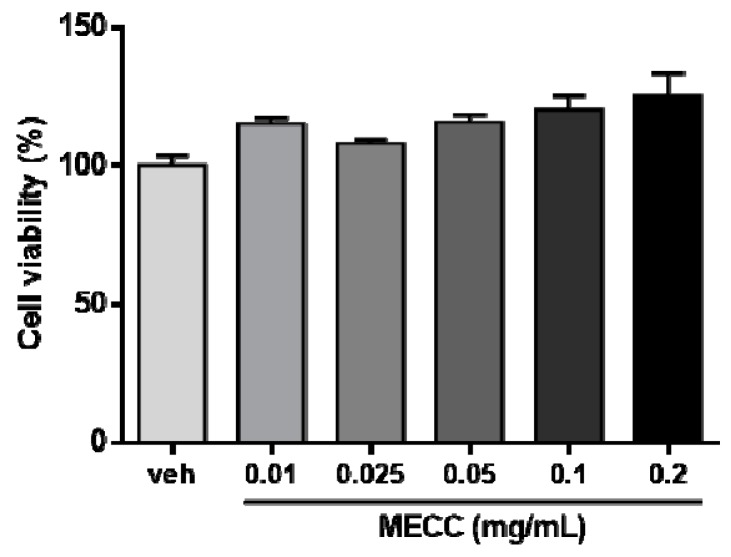
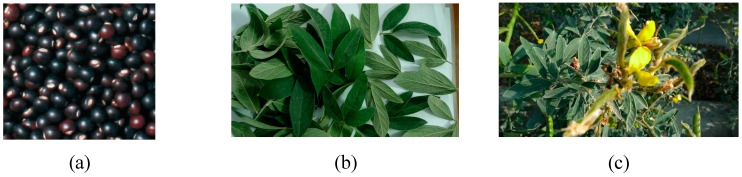
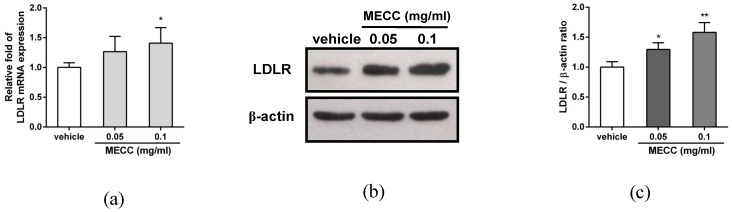
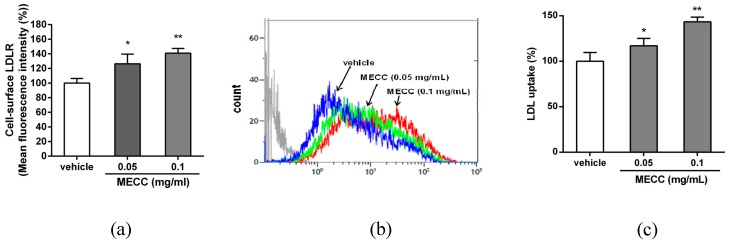
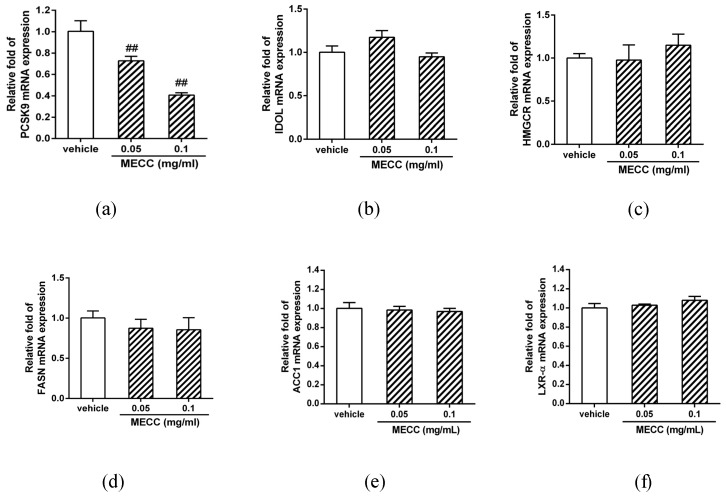
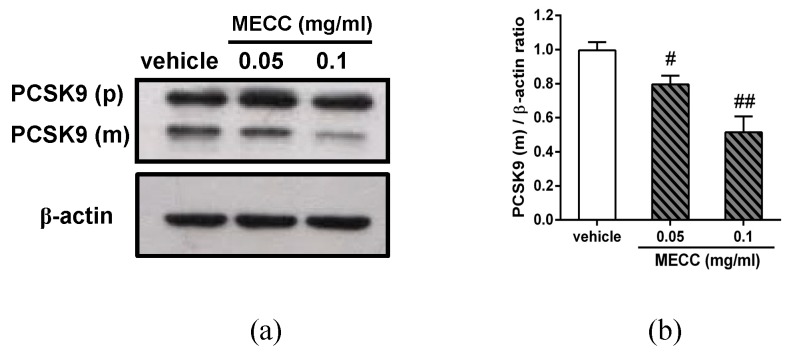
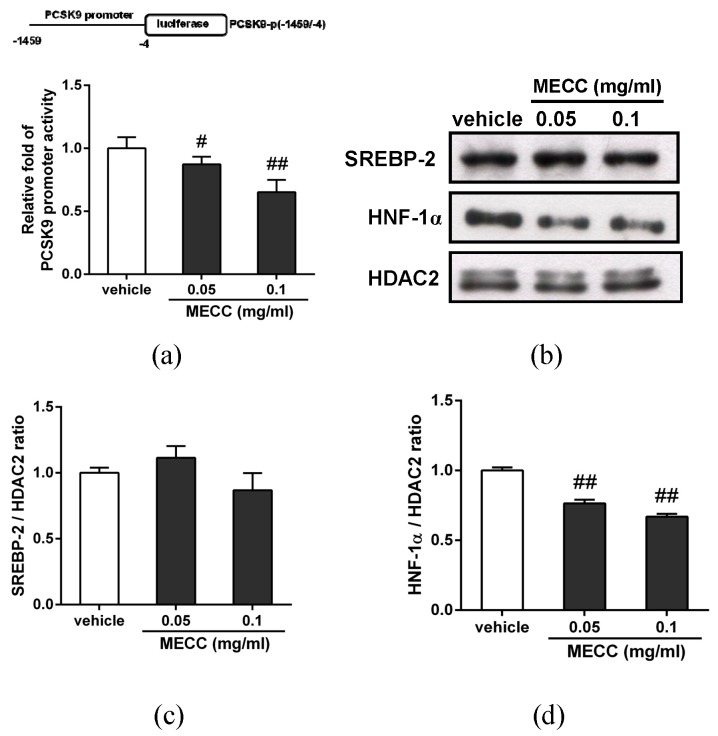
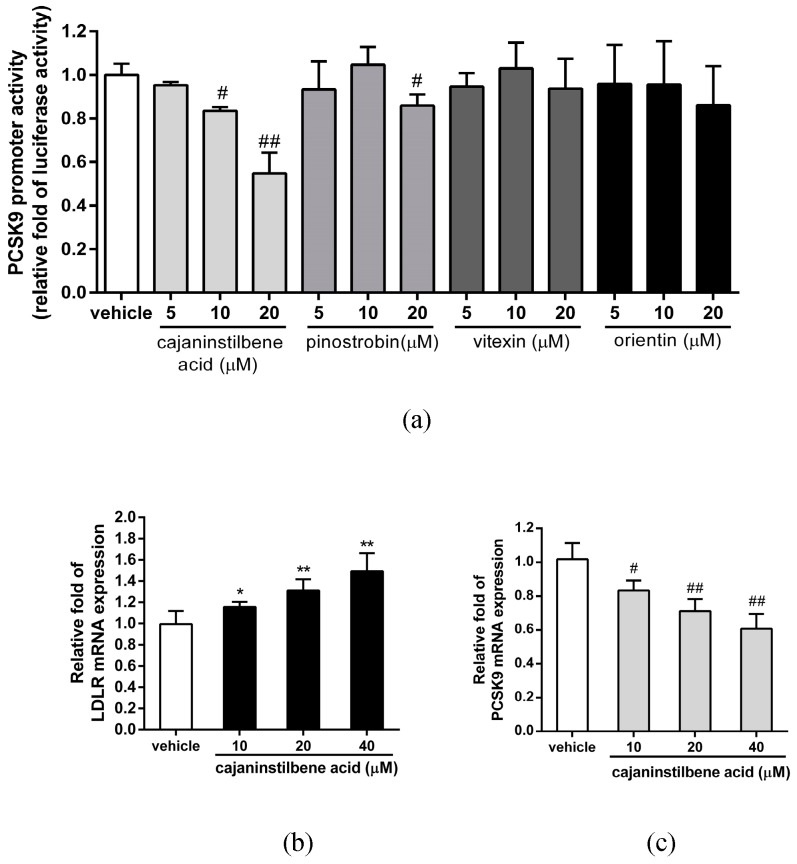
Pigeon pea ( (L.) Millsp.) is a legume crop consumed as an indigenous vegetable in the human diet and a traditional medicinal plant with therapeutic properties. The current study highlights the cholesterol-modulating effect and underlying mechanisms of the methanol extract of L. leaves (MECC) in HepG2 cells. We found that MECC increased the LDLR expression, the cell-surface LDLR levels and the LDL uptake activity in HepG2 cells. We further demonstrated that MECC suppressed the proprotein convertase subtilisin/kexin type 9 (PCSK9) mRNA and protein expression, but not affected the expression of other cholesterol or lipid metabolism-related genes including inducible degrader of LDLR (IDOL), HMG-CoA reductase (HMGCR), fatty acid synthase (FASN), acetyl-CoA carboxylase (ACC1), and liver X receptor-α (LXR-α) in HepG2 cells. Furthermore, we demonstrated that MECC down-regulated the PCSK9 gene expression through reducing the amount of nuclear hepatocyte nuclear factor-1α (HNF-1α), a major transcriptional regulator for activation of PCSK9 promoter, but not that of nuclear sterol-responsive element binding protein-2 (SREBP-2) in HepG2 cells. Finally, we identified the cajaninstilbene acid, a main bioactive stilbene component in MECC, which significantly modulated the LDLR and PCSK9 expression in HepG2 cells. Our current data suggest that the cajaninstilbene acid may contribute to the hypocholesterolemic activity of L. leaves. Our findings support that the extract of L. leaves may serve as a cholesterol-lowering agent.
兵豆((L.)米尔施)是一种豆科作物,作为人类饮食中的本土蔬菜食用,也是一种具有治疗特性的传统药用植物。本研究强调了 L. 叶甲醇提取物(MECC)在 HepG2 细胞中调节胆固醇的作用及其潜在机制。我们发现 MECC 增加了 LDLR 的表达、细胞表面 LDLR 水平和 HepG2 细胞中的 LDL 摄取活性。我们进一步证明,MECC 抑制了前蛋白转化酶枯草杆菌蛋白酶/糜蛋白酶 9(PCSK9)mRNA 和蛋白表达,但不影响其他胆固醇或脂质代谢相关基因的表达,包括 LDLR 诱导降解物(IDOL)、HMG-CoA 还原酶(HMGCR)、脂肪酸合酶(FASN)、乙酰辅酶 A 羧化酶(ACC1)和肝 X 受体-α(LXR-α)。此外,我们证明 MECC 通过减少核转录因子-1α(HNF-1α)的量来下调 PCSK9 基因表达,HNF-1α 是激活 PCSK9 启动子的主要转录调节剂,但不影响核固醇反应元件结合蛋白-2(SREBP-2)在 HepG2 细胞中的表达。最后,我们鉴定出了 MECC 中的主要生物活性芪类成分——冈田酸,它显著调节了 HepG2 细胞中 LDLR 和 PCSK9 的表达。我们目前的数据表明,冈田酸可能是 L. 叶降胆固醇活性的原因之一。我们的研究结果支持将 L. 叶提取物作为降胆固醇药物的应用。