Department of Electrical Engineering, Federal University of Pará, Belém-PA 66075-110, Brazil.
Department of Physics, Pontifical Catholic University of Rio de Janeiro, Rio de Janeiro-RJ 22451-900, Brazil.
Sensors (Basel). 2019 Jan 30;19(3):584. doi: 10.3390/s19030584.
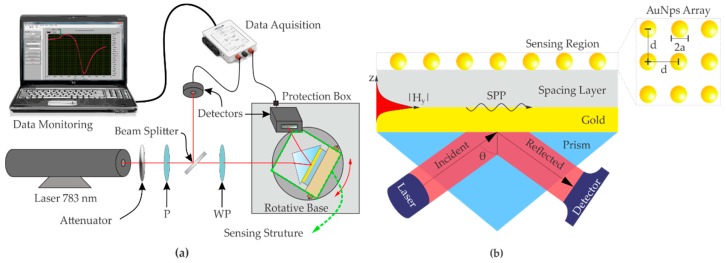
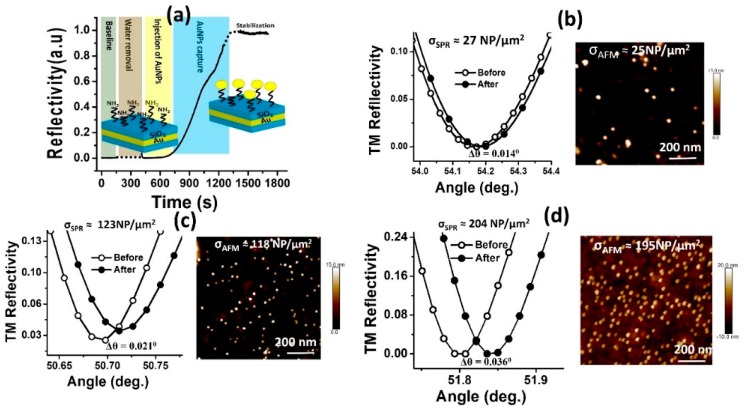
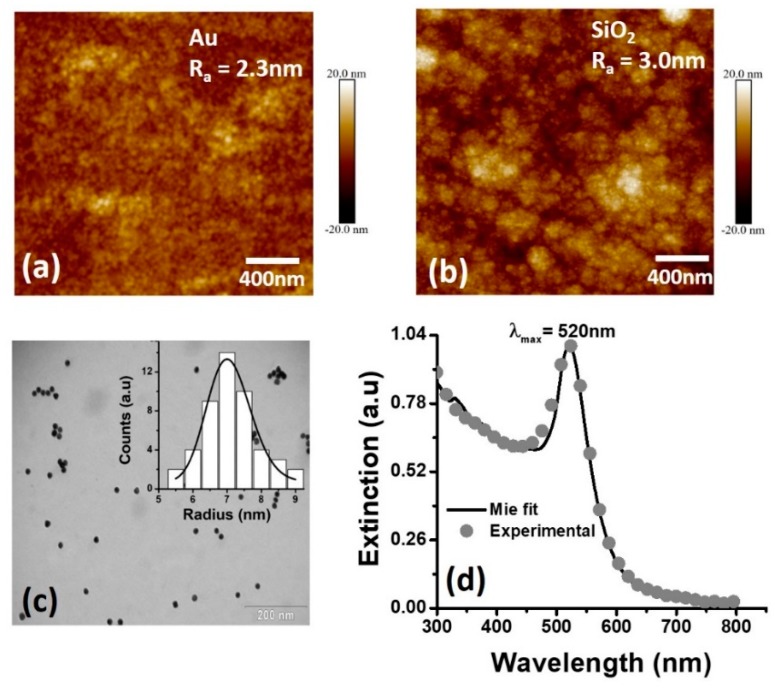
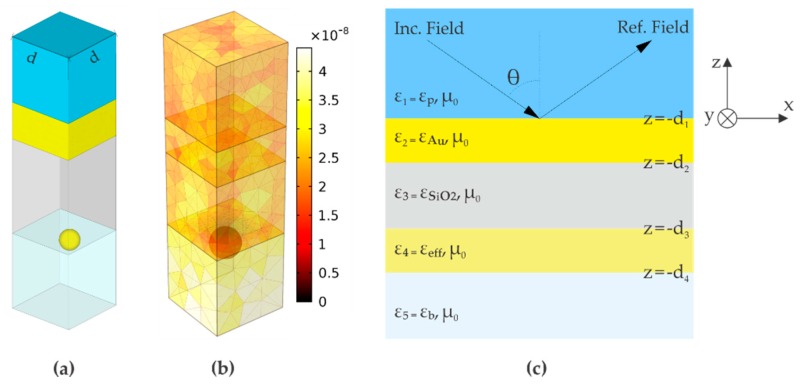
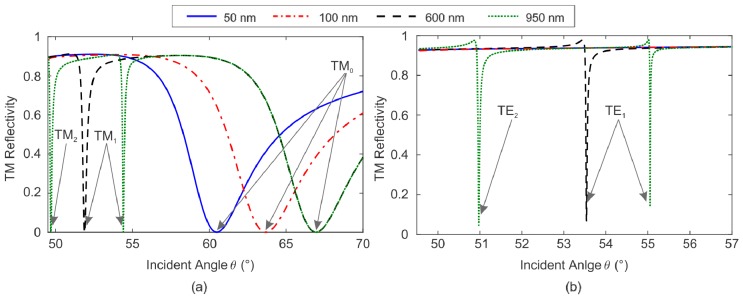
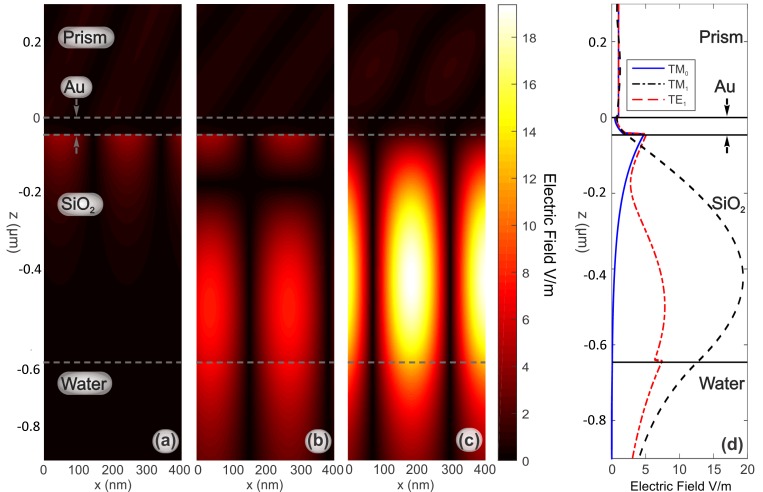
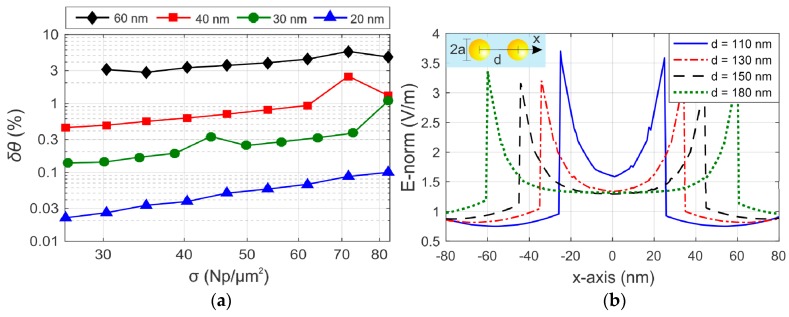
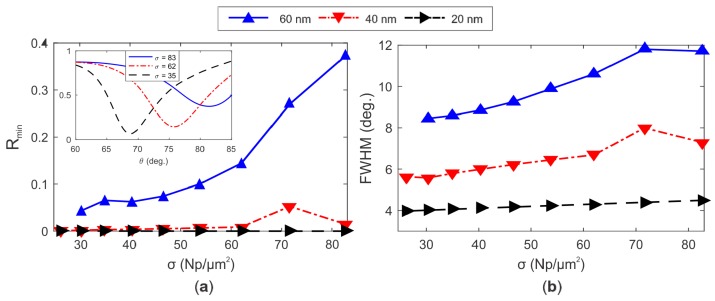
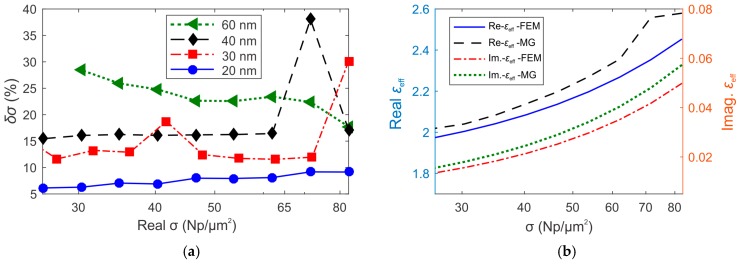
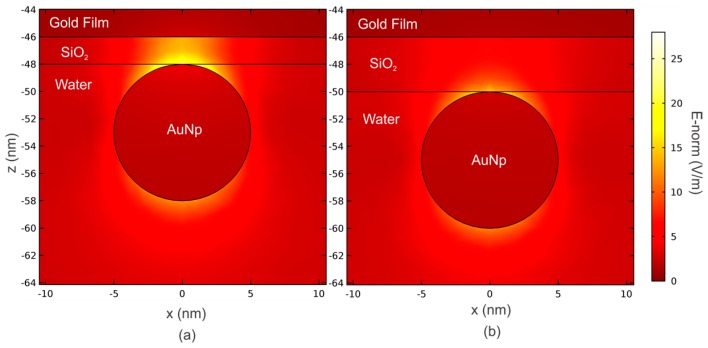
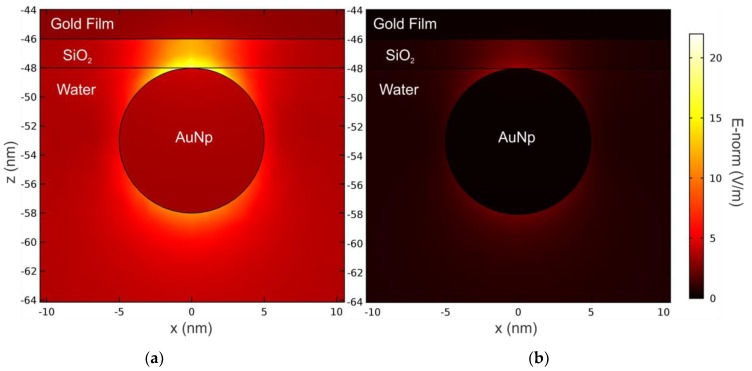
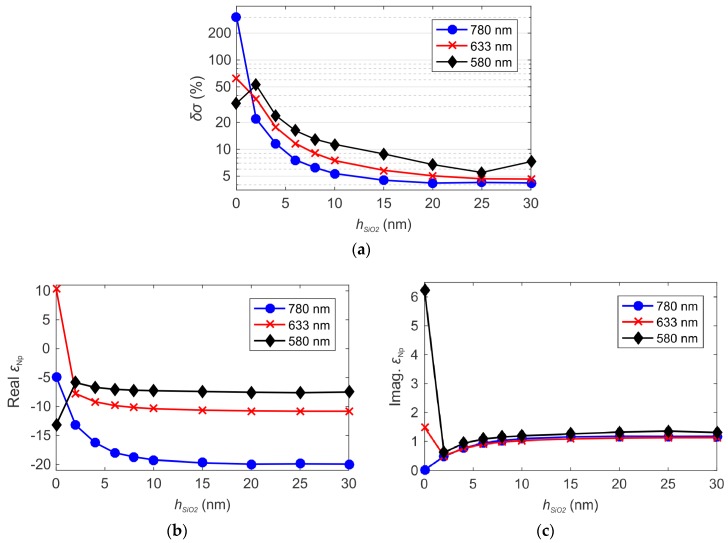
The resonant wave modes in monomodal and multimodal planar Surface Plasmon Resonance (SPR) sensors and their response to a bidimensional array of gold nanoparticles (AuNPs) are analyzed both theoretically and experimentally, to investigate the parameters that rule the correct nanoparticle counting in the emerging metal nanoparticle-amplified surface plasmon resonance (PA-SPR) spectroscopy. With numerical simulations based on the Finite Element Method (FEM), we evaluate the error performed in the determination of the surface density of nanoparticles when the Maxwell-Garnett effective medium theory is used for fast data processing of the SPR reflectivity curves upon nanoparticle detection. The deviation increases directly with the manifestations of non-negligible scattering cross-section of the single nanoparticle, dipole-dipole interactions between adjacent AuNPs and dipolar interactions with the metal substrate. Near field simulations show clearly the set-up of dipolar interactions when the dielectric thickness is smaller than 10 nm and confirm that the anomalous dispersion usually observed experimentally is due to the failure of the effective medium theories. Using citrate stabilized AuNPs with a nominal diameter of about 15 nm, we demonstrate experimentally that Dielectric Loaded Waveguides (DLWGs) can be used as accurate nanocounters in the range of surface density between 20 and 200 NP/µm², opening the way to the use of PA-SPR spectroscopy on systems mimicking the physiological cell membranes on SiO₂ supports.
本文从理论和实验两方面分析了单模和多模平面表面等离子体共振(SPR)传感器中的共振波模式及其对二维金纳米粒子(AuNPs)阵列的响应,以研究在新兴的金属纳米粒子增强表面等离子体共振(PA-SPR)光谱学中正确计数纳米粒子的规则参数。通过基于有限元方法(FEM)的数值模拟,我们评估了当在检测纳米粒子时使用 Maxwell-Garnett 有效介质理论对 SPR 反射率曲线进行快速数据处理时,在确定纳米粒子表面密度方面所产生的误差。当单个纳米粒子的不可忽略的散射截面、相邻 AuNPs 之间的偶极-偶极相互作用以及与金属衬底的偶极相互作用表现明显时,误差会直接增加。近场模拟清楚地显示了当介电厚度小于 10nm 时偶极相互作用的建立,并证实了实验中通常观察到的异常色散是由于有效介质理论的失效。使用具有约 15nm 标称直径的柠檬酸盐稳定的 AuNPs,我们通过实验证明了介电负载波导(DLWG)可以在 20 到 200 NP/µm² 的表面密度范围内用作精确的纳米计数器,为在 SiO₂衬底上模拟生理细胞膜的系统上使用 PA-SPR 光谱学开辟了道路。