Department of Nephrology and DialysisNephroCare-ASST Bergamo-Est, Seriate, Italy.
Fresenius Medical Care Deutschland GmbH, Bad Homburg, Germany.
BMC Nephrol. 2019 Feb 1;20(1):35. doi: 10.1186/s12882-019-1224-2.
Innovative care models such as public-private partnerships (PPPs) may help meet the challenge of providing cost-effective high-quality care for the steadily growing and complex chronic kidney disease population since they combine the expertise and efficiency of a specialized dialysis provider with the population care approach of a public entity. We report the five-years main clinical outcomes of a population of patients treated on hemodialysis within a PPP-care model in Italy.
This descriptive retrospective cohort study consisted of all consecutive hemodialysis patients treated in the NephroCare-operated Nephrology and Dialysis unit of the Seriate Hospital in 2012-2016, which exercises a PPP-care model. Clinical and treatment information was obtained from the European Clinical Database. Hospitalization outcomes and cumulative all-cause mortality incidences that accounted for competing risks were calculated.
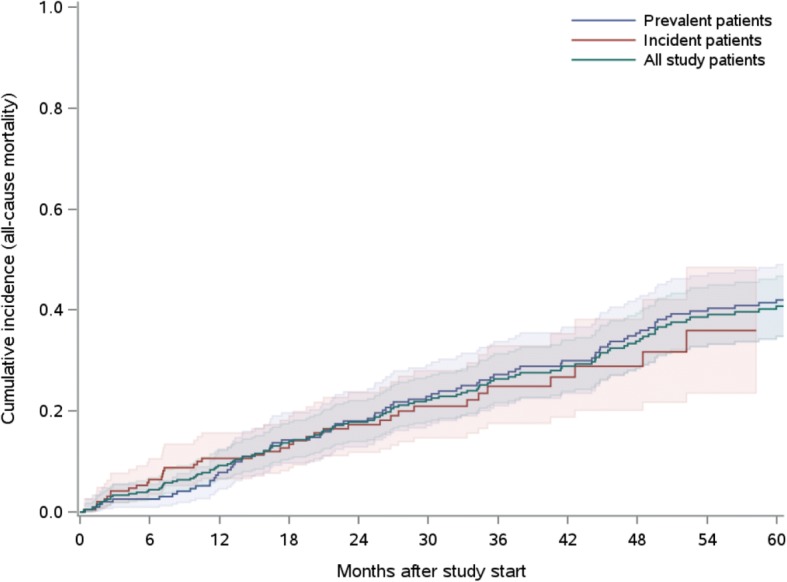
We included 401 hemodialysis patients (197 prevalent and 204 incident patients) in our study. The mean cohort age and age-adjusted Charlson Comorbidity Index were 67.0 years and 6.7, respectively. Patients were treated with online high-volume hemodiafiltration or high-flux hemodialysis. Parameters of treatment efficiency were above the recommended targets throughout the study period. Patients in the PPP experienced benefits in terms of hospitalization (average number of hospital admissions/patient-year: 0.79 and 1.13 for prevalent and incident patients, respectively; average length of hospitalization: 8.9 days for both groups) and had low cumulative all-cause mortality rates (12 months: 10.6 and 7.8%, 5 years: 42.0 and 35.9%, for prevalent and incident patients, respectively).
Results of our descriptive study suggest that hemodialysis patients treated within a PPP-care model framework received care complying with recommended treatment targets and may benefit in terms of hospitalization and mortality outcomes.
创新的护理模式,如公私合作伙伴关系(PPP),可以结合专业透析提供者的专业知识和效率以及公共实体的人群护理方法,帮助应对为不断增长和复杂的慢性肾脏病患者提供具有成本效益的高质量护理的挑战。我们报告了意大利一个 PPP 护理模式下的血液透析患者人群的五年主要临床结果。
这是一项描述性回顾性队列研究,包括 2012 年至 2016 年在塞里亚特医院接受 NephroCare 运营的肾脏病和透析科治疗的所有连续血液透析患者,该科室采用 PPP 护理模式。临床和治疗信息从欧洲临床数据库中获得。计算了住院结局和考虑竞争风险的累积全因死亡率。
我们的研究纳入了 401 名血液透析患者(197 名现患患者和 204 名新发病例患者)。队列的平均年龄和年龄调整后的 Charlson 合并症指数分别为 67.0 岁和 6.7。患者接受在线大容量血液透析滤过或高通量血液透析治疗。整个研究期间,治疗效率参数均高于推荐目标。与 PPP 相关的患者在住院方面受益(现患和新发病例患者的平均住院次数/患者年分别为 0.79 和 1.13,平均住院时间为 8.9 天),且累积全因死亡率较低(12 个月分别为 10.6%和 7.8%,5 年分别为 42.0%和 35.9%,现患和新发病例患者)。
我们的描述性研究结果表明,在 PPP 护理模式框架内接受治疗的血液透析患者接受了符合推荐治疗目标的护理,并且可能在住院和死亡率方面受益。