Thoracic and Gastrointestinal Oncology Branch, NCI, NIH, Bethesda, Maryland.
Surgery Branch, NCI, NIH, Bethesda, Maryland.
Cancer Immunol Res. 2019 Apr;7(4):534-543. doi: 10.1158/2326-6066.CIR-18-0686. Epub 2019 Feb 1.
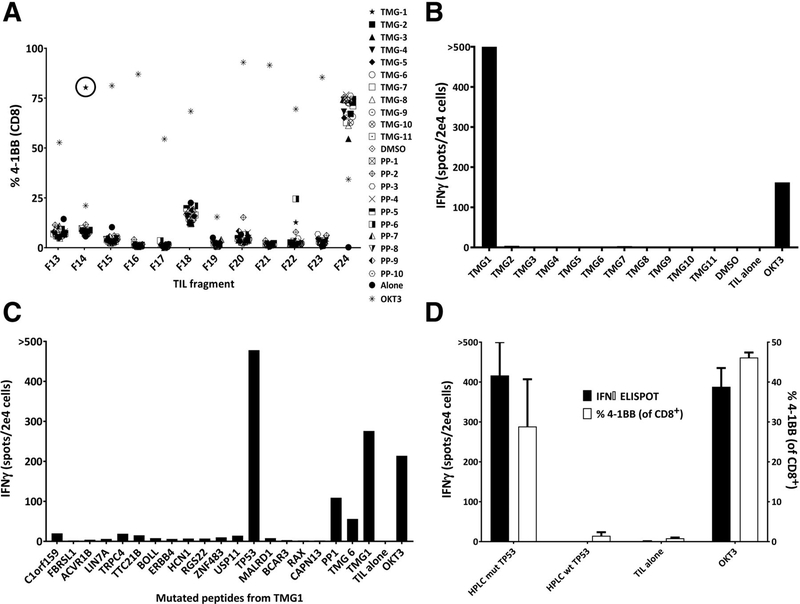
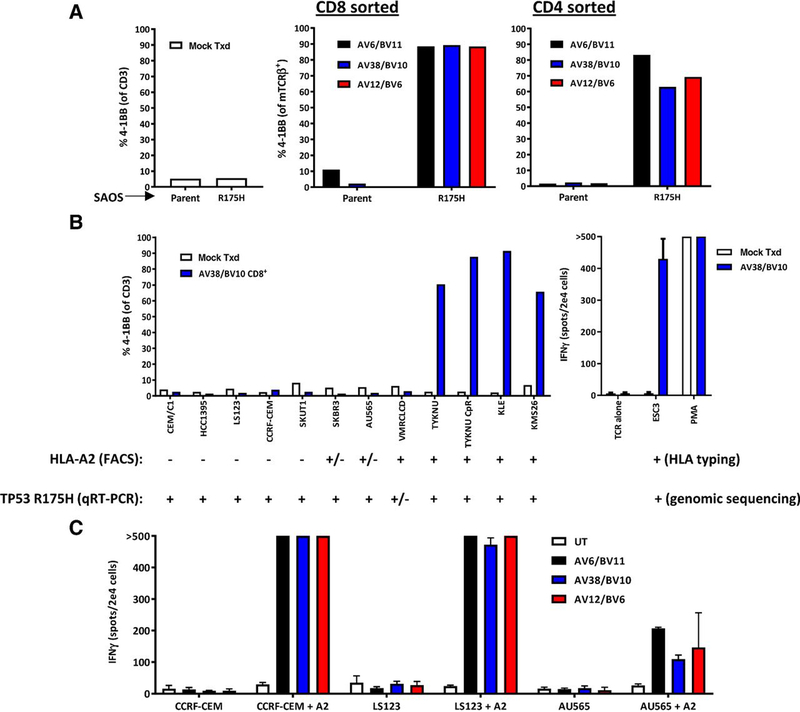
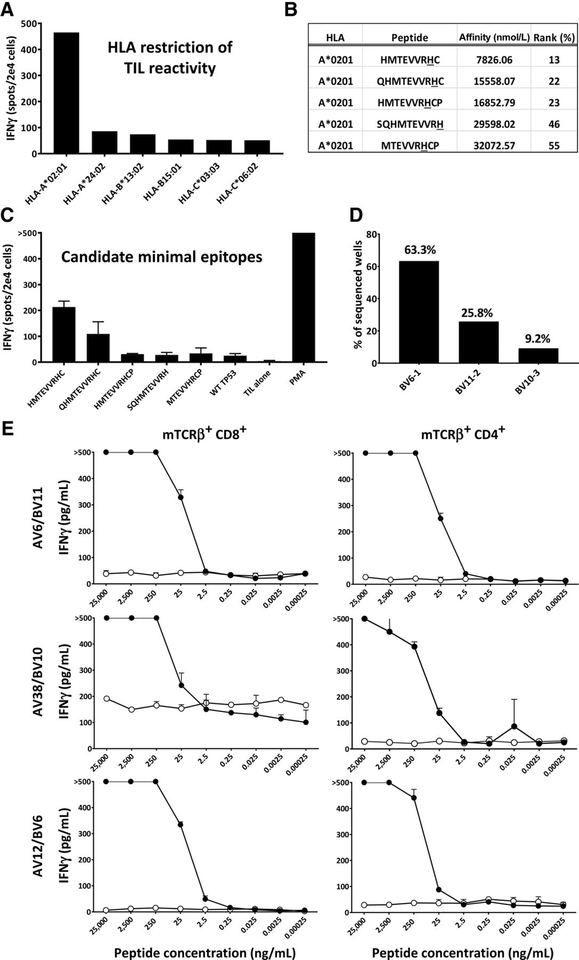
Adoptive cell therapy (ACT) with T cells targeting neoantigens can mediate durable responses in patients with metastatic cancer. Cell therapies targeting common shared antigens for epithelial cancers are not yet broadly available. Here, we report the identification and characterization in one patient of T-cell receptors (TCRs) recognizing mutated p53 p.R175H, which is shared among a subset of patients with cancer. Tumor-infiltrating lymphocytes were screened for recognition of mutated neoantigens in a patient with metastatic colorectal cancer. HLA-A0201-restricted recognition of mutated p53 p.R175H was identified, and the minimal peptide epitope was HMTEVVRC. Reactive T cells were isolated by tetramer sorting, and three TCRs were identified. These TCRs mediated recognition of commercially available ovarian cancer, uterine carcinoma, and myeloma cell lines, as well as an NIH patient-derived esophageal adenocarcinoma line that endogenously expressed p53 p.R175H and HLA-A0201. They also mediated recognition of p53 p.R175H colon, breast, and leukemia cell lines after transduction with a retrovirus encoding HLA-A0201. This work demonstrates that common shared mutated epitopes such as those found in p53 can elicit immunogenic responses and that the application of ACT may be extended to patients with any cancer histology that expresses both HLA-A0201 and the p53 p.R175H mutation.
过继性细胞疗法(ACT)利用靶向新抗原的 T 细胞,可以在转移性癌症患者中介导持久的反应。针对上皮癌常见共享抗原的细胞疗法尚未广泛应用。在这里,我们在一名患者中报告了识别和表征靶向 p53 p.R175H 突变的 T 细胞受体(TCRs)的情况,该突变在一部分癌症患者中共享。筛选转移性结直肠癌患者的肿瘤浸润淋巴细胞,以识别突变的新抗原。鉴定到 HLA-A0201 限制的突变 p53 p.R175H 识别,最小的肽表位为 HMTEVVRC。通过四聚体分选分离出反应性 T 细胞,并鉴定出三种 TCR。这些 TCR 介导对商业上可用的卵巢癌、子宫癌和骨髓瘤细胞系以及内源性表达 p53 p.R175H 和 HLA-A0201 的 NIH 患者来源的食管腺癌系的识别。它们还介导转导 HLA-A0201 编码的逆转录病毒后对 p53 p.R175H 结肠、乳腺和白血病细胞系的识别。这项工作表明,像 p53 中发现的那些常见的共享突变表位可以引发免疫原性反应,并且 ACT 的应用可能扩展到表达 HLA-A0201 和 p53 p.R175H 突变的任何癌症组织学的患者。