Epidemiology and Prevention Group, Center for Public Health Sciences, National Cancer Center.
Department of Hygiene and Preventive Medicine, Iwate Medical University.
J Epidemiol. 2020 Jan 5;30(1):46-54. doi: 10.2188/jea.JE20180182. Epub 2019 Feb 2.
Lifestyle and life-environment factors have undergone drastic changes in Japan over the last few decades. Further, many molecular epidemiologic studies have reported that genetic, epigenetic, and other biomarker information may be useful in predicting individual disease risk.
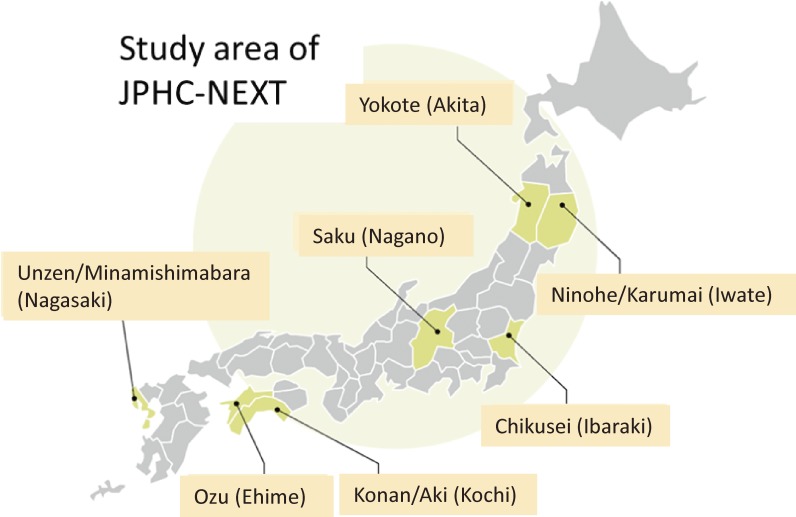
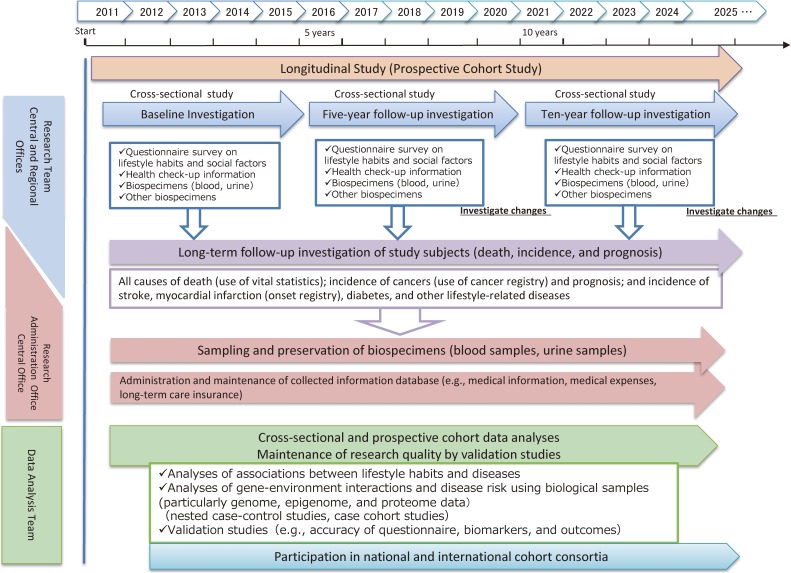
The Japan Public Health Center-based Prospective Study for the Next Generation (JPHC-NEXT) was launched in 2011 to identify risk factors for lifestyle-related disease, elucidate factors that extend healthy life expectancy, and contribute toward personalized healthcare based on our more than 20 years' experience with the JPHC Study. From 2011 through 2016, a baseline survey was conducted at 16 municipalities in seven prefectures across the country. A self-administered questionnaire was distributed to all registered residents aged 40-74, which mainly asked about lifestyle factors, such as socio-demographic situation, personal medical history, smoking, alcohol and dietary habits. We obtained informed consent from each participant to participate in this long follow-up study of at least 20 years, including consent to the potential use of their residence registry, medical records, medical fee receipts, care insurance etc., and to the provision of biospecimens (blood and urine), including genomic analysis.
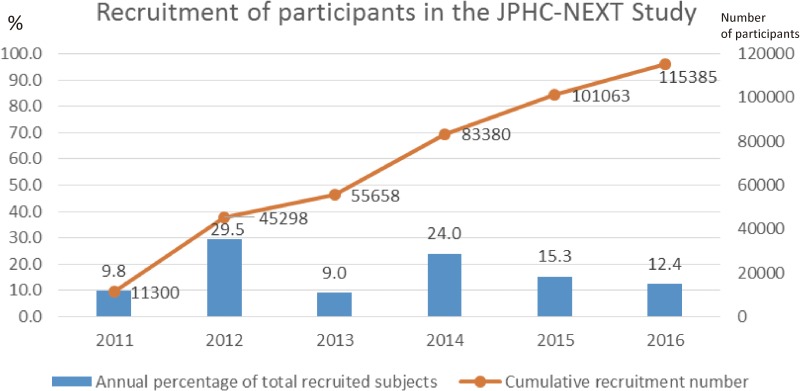
As of December 31, 2016, we have established a population-based cohort of 115,385 persons (Response rate 44.1%), among whom 55,278 (47.9% of participants) have provided blood and urine samples. The participation rate was slightly higher among females and in the older age group.
We have established a large-scale population-based cohort for next-generation epidemiological study in Japan.
在过去几十年中,日本的生活方式和生活环境因素发生了巨大变化。此外,许多分子流行病学研究报告称,遗传、表观遗传和其他生物标志物信息可能有助于预测个体疾病风险。
日本公共卫生中心下一代前瞻性研究(JPHC-NEXT)于 2011 年启动,旨在确定与生活方式相关疾病的风险因素,阐明延长健康预期寿命的因素,并根据我们在 JPHC 研究中超过 20 年的经验,为个性化医疗做出贡献。从 2011 年到 2016 年,在全国七个县的 16 个市町村进行了基线调查。向所有登记的 40-74 岁居民发放了一份自我管理的问卷,主要询问了生活方式因素,如社会人口统计学情况、个人病史、吸烟、饮酒和饮食习惯。我们从每位参与者那里获得了参与这项至少 20 年的长期随访研究的同意,包括同意潜在使用他们的居住登记、医疗记录、医疗费用收据、护理保险等,并同意提供生物样本(血液和尿液),包括基因组分析。
截至 2016 年 12 月 31 日,我们已经建立了一个基于人群的 115385 人的队列(应答率为 44.1%),其中 55278 人(参与者的 47.9%)提供了血液和尿液样本。女性和年龄较大的组中的参与率略高。
我们已经在日本建立了一个大规模的基于人群的下一代流行病学研究队列。