Lian Yuebin, Sun Hao, Wang Xuebin, Qi Pengwei, Mu Qiaoqiao, Chen Yujie, Ye Jing, Zhao Xiaohui, Deng Zhao, Peng Yang
Soochow Institute for Energy and Materials Innovations , College of Energy , Soochow University , Suzhou 215006 , P. R. China.
Key Laboratory of Advanced Carbon Materials and Wearable Energy Technologies of Jiangsu Province , Soochow University , Suzhou 215006 , P. R. China . Email:
Chem Sci. 2018 Oct 15;10(2):464-474. doi: 10.1039/c8sc03877e. eCollection 2019 Jan 14.
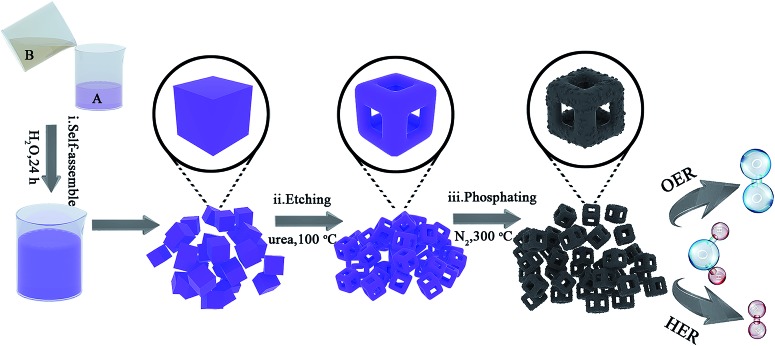
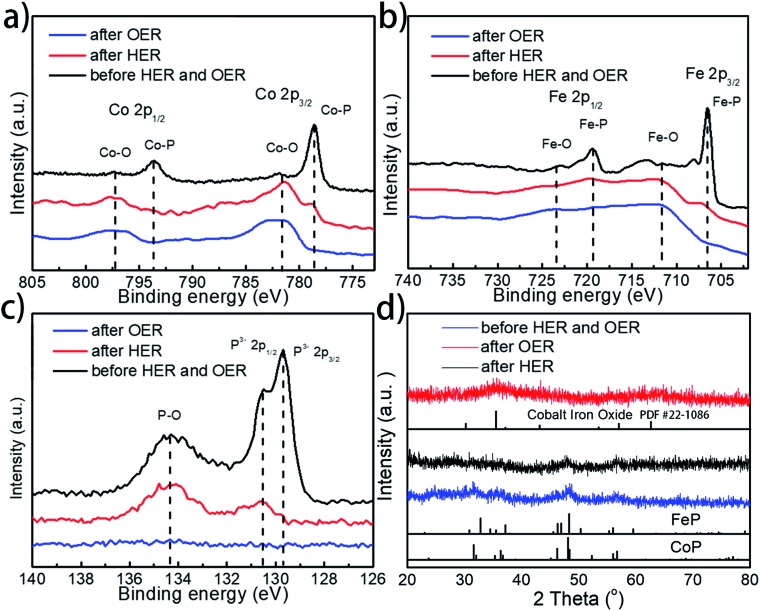
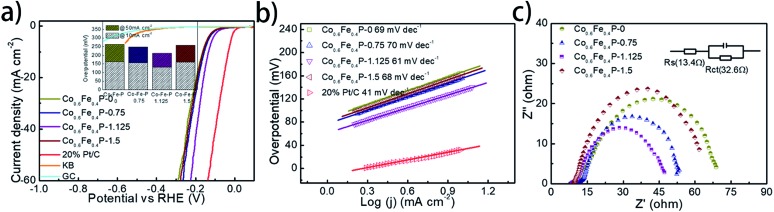
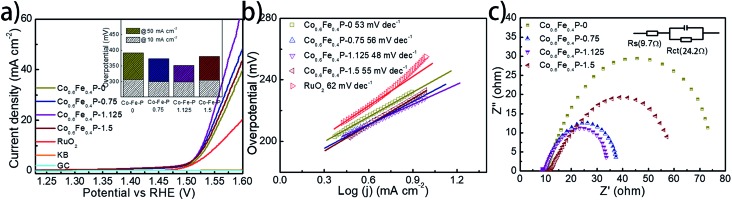
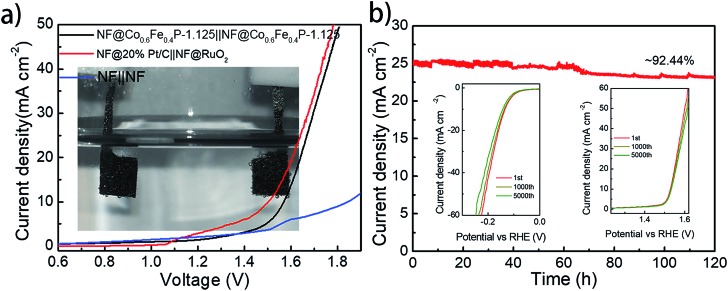
Water electrolysis for hydrogen production has long been regarded as an ideal tactic for renewable energy conversion and storage, but is impeded by the sluggish kinetics of both the hydrogen and oxygen evolution reactions, which are therefore in urgent need for high-performance but low-cost electrocatalysts. Herein, nanoframes of transition metal phosphides (TMPs) with the 3D framework carved open have been demonstrated as highly potent bifunctional catalysts for overall water splitting, reaching the benchmark performance of the Pt/C‖RuO couple, and are much superior to their nanocubic counterparts. This excellent water splitting behavior can be attributed to the enlarged active surface area, less obstructed electrolyte infiltration, promoted charge transfer, and facilitated gas release. Further through in-depth activity analysis and post-electrocatalysis characterization, special attention has been paid to the fate and role of phosphorus in the electrocatalytic process, suggesting that despite the chemical instability of the TMPs (especially under OER conditions), excellent electrocatalytic stability can still be achieved through the amorphous bimetallic hydroxides/oxides formed .
长期以来,水电解制氢一直被视为可再生能源转换和存储的理想策略,但析氢反应和析氧反应的动力学缓慢阻碍了该过程,因此迫切需要高性能且低成本的电催化剂。在此,具有镂空三维框架结构的过渡金属磷化物(TMP)纳米框架已被证明是用于全水分解的高效双功能催化剂,达到了Pt/C‖RuO偶对的基准性能,并且远优于其纳米立方体形的对应物。这种优异的水分解行为可归因于活性表面积的增大、电解质渗透阻碍的减少、电荷转移的促进以及气体释放的便利。通过进一步深入的活性分析和电催化后表征,特别关注了磷在电催化过程中的命运和作用,这表明尽管TMP存在化学不稳定性(尤其是在析氧反应条件下),但通过形成的非晶态双金属氢氧化物/氧化物仍可实现优异的电催化稳定性。