Concina Chiara, Crucil Marina, Fabbro Stefano, Gherlinzoni Franco
St. Polo's Hospital - Monfalcone (GO).
Acta Biomed. 2019 Jan 10;90(1-S):123-129. doi: 10.23750/abm.v90i1-S.8080.
Fast track in total knee replacement (TKR) is a widely used protocol. Tranexamic acid proved to be effective in reducing perioperative bleeding without increasing thromboembolic risk. The aim of this study was to assess if tourniquet and suction drainage might affect perioperative blood loss and postoperative functional recovery after TKR.
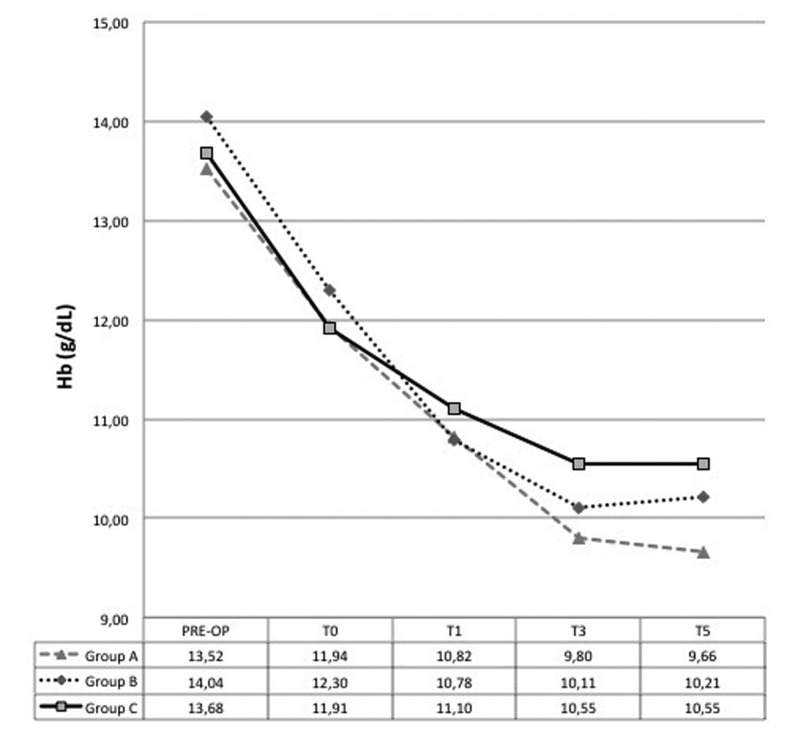
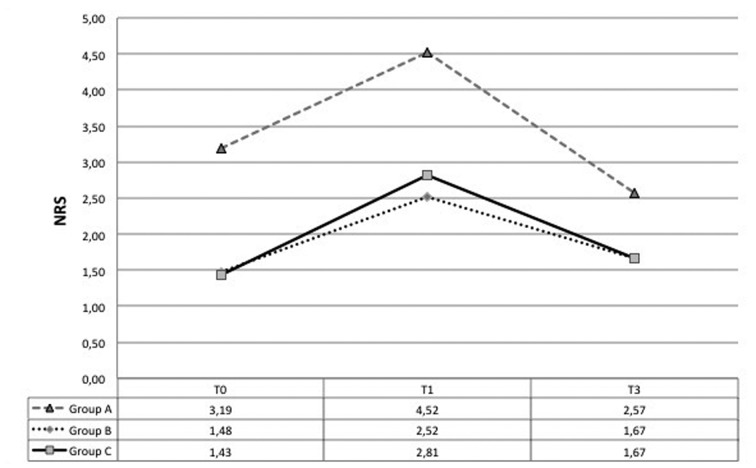
151 patients, who underwent to TKR, were assessed and divided into three homogeneous groups: group A (51 patients) in which both tourniquet and suction drainage have been applied (tourniquet has been release before wound closure); group B (50 patients) in which neither tourniquet nor suction drainage have been used; group C (50 patients) in which only tourniquet has been used. Perioperative intravenous tranexamic acid and post-operative low-molecular-weight heparin have been administered. Trend of haemoglobin values, transfusion rate, pain, ability to obtain 90 degrees of flexion and length of stay were analysed.
The average intra-operative blood loss was statistically higher in group B in comparison to other two groups. Haemoglobin values were lower in group A in comparison to group C in the third and fifth post-operative days. Patients in group A had higher transfusion rate, higher pain and had more difficulties in reaching a 90 degrees of knee flexion than the other two groups. There was one infection in group A. No differences in length of stay.
Suction drain seems to be associated to lower haemoglobin values, higher transfusion rate, higher pain and slower functional recovery. Short-term tourniquet does not influence post-operative bleeding and rehabilitation program.
全膝关节置换术(TKR)的快速康复方案被广泛应用。氨甲环酸已被证明可有效减少围手术期出血,且不增加血栓栓塞风险。本研究的目的是评估止血带和负压引流是否会影响TKR术后的围手术期失血和功能恢复。
对151例行TKR的患者进行评估并分为三组:A组(51例),应用止血带和负压引流(伤口缝合前松开止血带);B组(50例),未使用止血带和负压引流;C组(50例),仅使用止血带。围手术期给予静脉注射氨甲环酸和术后低分子量肝素。分析血红蛋白值变化趋势、输血率、疼痛程度、膝关节屈曲90度的能力及住院时间。
与其他两组相比,B组术中平均失血量在统计学上更高。术后第3天和第5天,A组血红蛋白值低于C组。A组患者输血率更高、疼痛更明显,且在膝关节屈曲达到90度时比其他两组更困难。A组有1例感染。住院时间无差异。
负压引流似乎与较低的血红蛋白值、较高的输血率、较高的疼痛程度和较慢的功能恢复相关。短期使用止血带不影响术后出血及康复进程。