Department of Entomology and Nematology, UCD Comprehensive Cancer Center, University of California Davis, One Shields Avenue, Davis, CA, 95616, USA.
Department of Entomology and Nematology, UCD Comprehensive Cancer Center, University of California Davis, One Shields Avenue, Davis, CA, 95616, USA.
Biochimie. 2019 Apr;159:59-65. doi: 10.1016/j.biochi.2019.01.020. Epub 2019 Feb 1.
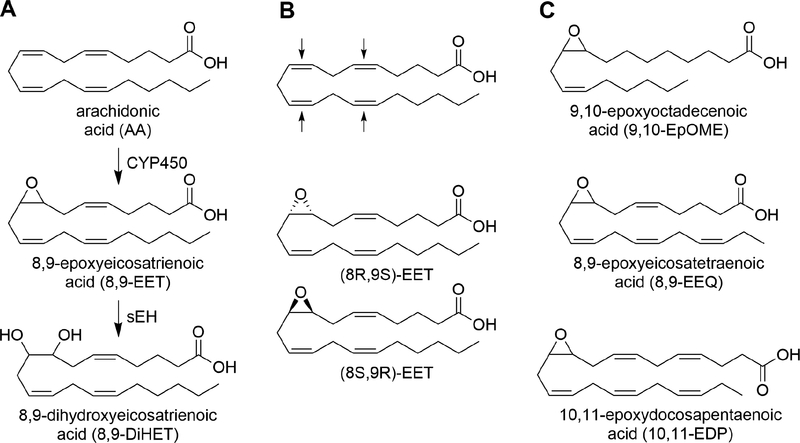
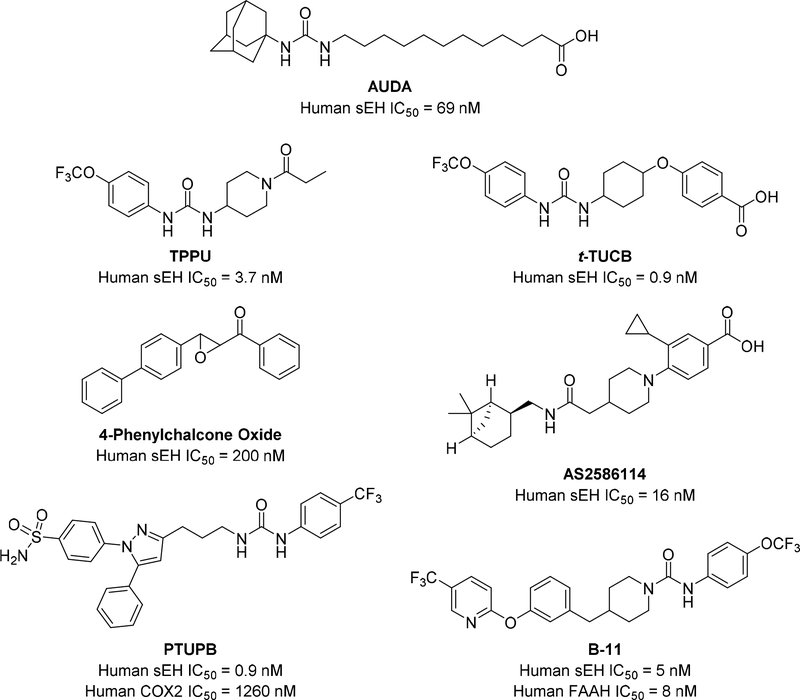
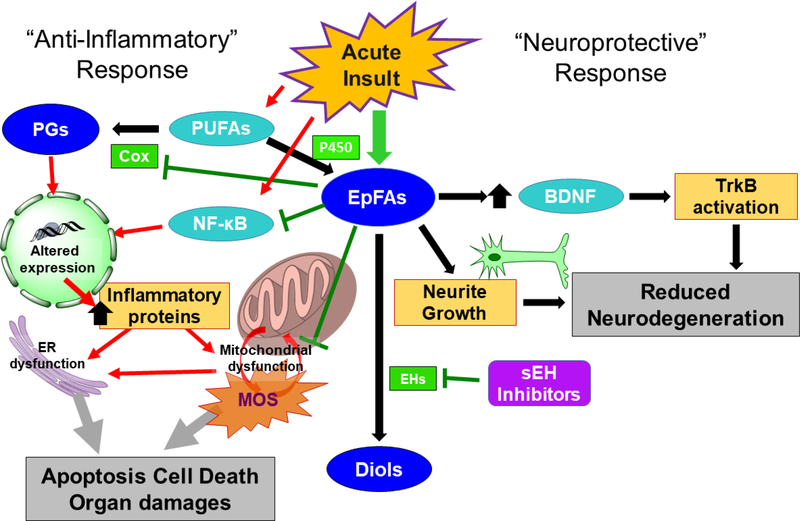
Neuroinflammation is a physiologic response aimed at protecting the central nervous system during injury. However, unresolved and chronic neuroinflammation can lead to long term damage and eventually neurologic disease including Parkinson's disease, Alzheimer's disease and dementia. Recently, enhancing the concentration of epoxyeicosatrienoic acids (EETs) through blocking their hydrolytic degradation by soluble epoxide hydrolase (sEH) has been applied towards reducing the long-term damage associated with central neurologic insults. Evidence suggests this protective effect is mediated, at least in part, through polarization of microglia to an anti-inflammatory phenotype that blocks the inflammatory actions of prostaglandins and promotes wound repair. This mini-review overviews the epidemiologic basis for using sEH inhibition towards neuroinflammatory disease and pharmacologic studies testing sEH inhibition in several neurologic diseases. Additionally, the combination of sEH inhibition with other eicosanoid signaling pathways is considered as an enhanced approach for developing potent neuroprotectants.
神经炎症是一种旨在保护中枢神经系统免受损伤的生理反应。然而,未解决的慢性神经炎症可导致长期损伤,并最终导致神经疾病,包括帕金森病、阿尔茨海默病和痴呆症。最近,通过抑制可溶型环氧合酶(sEH)水解降解来提高环氧二十碳三烯酸(EETs)的浓度,已被应用于减少与中枢神经损伤相关的长期损伤。有证据表明,这种保护作用至少部分是通过将小胶质细胞极化到抗炎表型来介导的,这种表型可以阻断前列腺素的炎症作用并促进伤口修复。本篇迷你综述概述了使用 sEH 抑制治疗神经炎症性疾病的流行病学基础,以及在几种神经疾病中测试 sEH 抑制的药理学研究。此外,sEH 抑制与其他类二十烷酸信号通路的联合被认为是开发有效神经保护剂的增强方法。