Chen Chih-Hao, Coyac Benjamin R, Arioka Masaki, Leahy Brian, Tulu U Serdar, Aghvami Maziar, Holst Stefan, Hoffmann Waldemar, Quarry Antony, Bahat Oded, Salmon Benjamin, Brunski John B, Helms Jill A
Division of Plastic and Reconstructive Surgery, Department of Surgery, Stanford University School of Medicine, Stanford, CA 94305, USA.
Craniofacial Research Center, Department of Plastic and Reconstructive Surgery, Chang Gung Memorial Hospital, Chang Gung University School of Medicine, Taoyuan 33305, Taiwan.
J Clin Med. 2019 Feb 1;8(2):170. doi: 10.3390/jcm8020170.
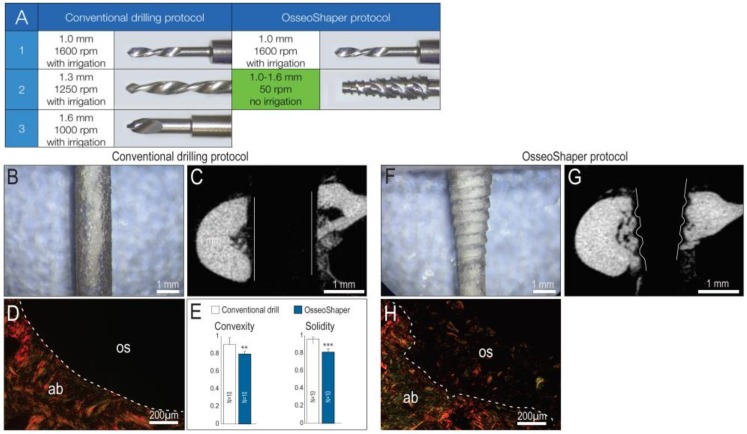
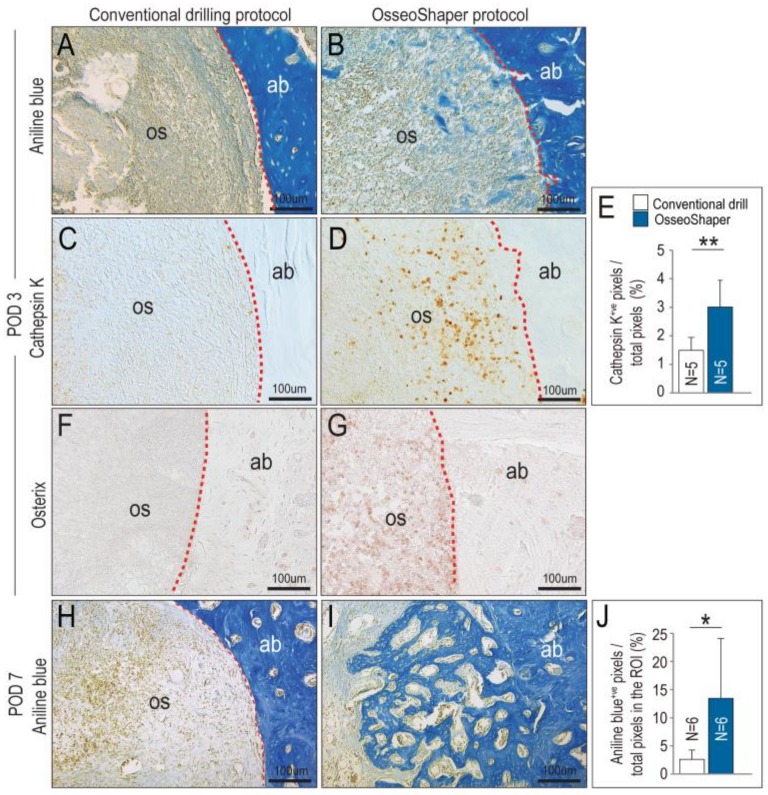
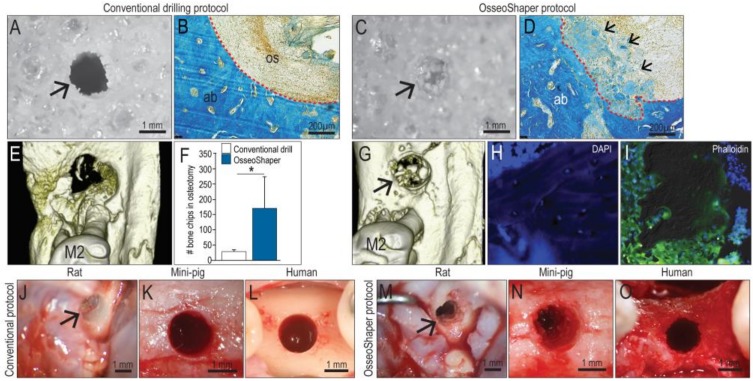
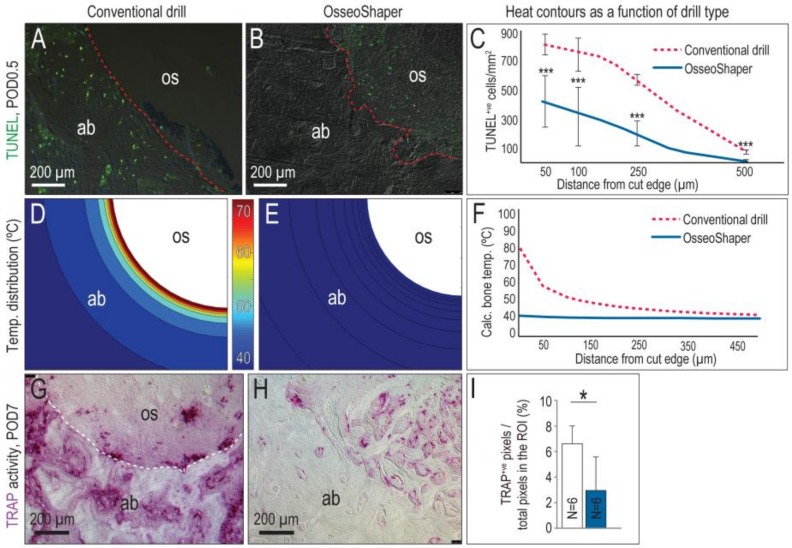
The preservation of bone viability at an osteotomy site is a critical variable for subsequent implant osseointegration. Recent biomechanical studies evaluating the consequences of site preparation led us to rethink the design of bone-cutting drills, especially those intended for implant site preparation. We present here a novel drill design that is designed to efficiently cut bone at a very low rotational velocity, obviating the need for irrigation as a coolant. The low-speed cutting produces little heat and, consequently, osteocyte viability is maintained. The lack of irrigation, coupled with the unique design of the cutting flutes, channels into the osteotomy autologous bone chips and osseous coagulum that have inherent osteogenic potential. Collectively, these features result in robust, new bone formation at rates significantly faster than those observed with conventional drilling protocols. These preclinical data have practical implications for the clinical preparation of osteotomies and alveolar bone reconstructive surgeries.
截骨部位骨活力的保存是后续种植体骨整合的关键变量。最近评估手术部位准备后果的生物力学研究促使我们重新思考骨切割钻的设计,尤其是那些用于种植体部位准备的钻。我们在此展示一种新颖的钻设计,其旨在以非常低的转速高效切割骨,从而无需使用冲洗液作为冷却剂。低速切割产生的热量极少,因此,骨细胞活力得以维持。无需冲洗,再加上切割槽的独特设计,会将具有内在成骨潜力的自体骨屑和骨凝块导入截骨部位。总体而言,这些特性导致强健的新骨形成,其速度明显快于传统钻孔方案所观察到的速度。这些临床前数据对截骨术的临床准备和牙槽骨重建手术具有实际意义。