Department of Animal Breeding and Genetics, Swedish University of Agricultural Sciences, Uppsala, Sweden.
School of Life and Environmental Sciences, University of Sydney, Sydney, Australia.
BMC Genomics. 2019 Feb 4;20(1):104. doi: 10.1186/s12864-019-5484-9.
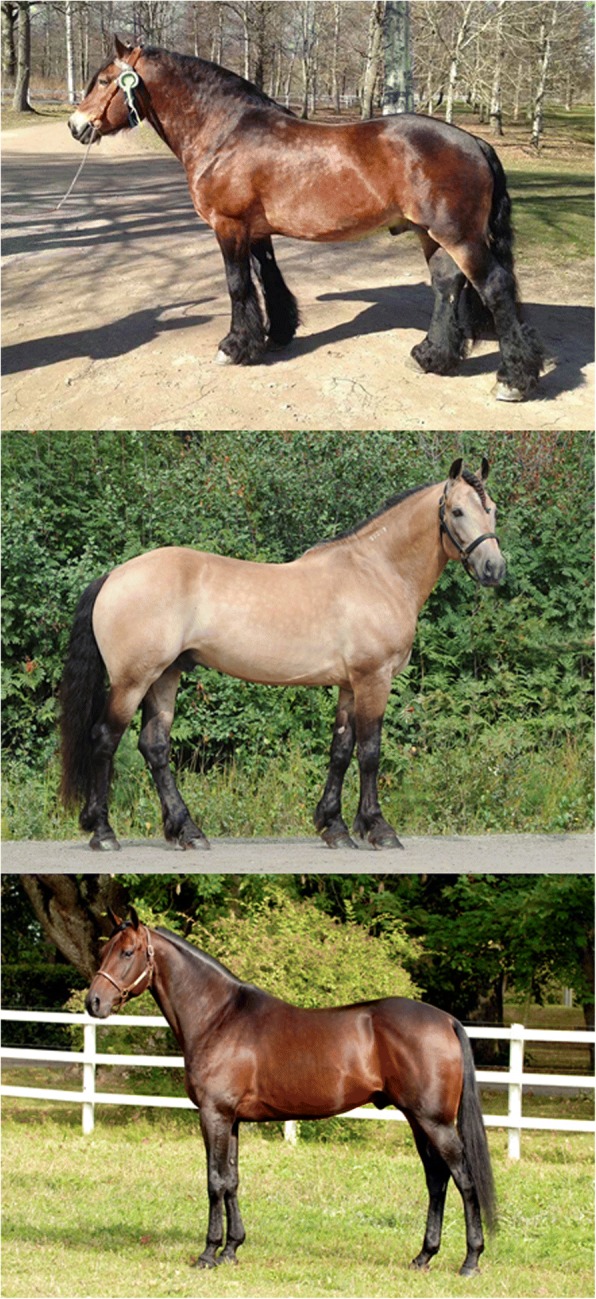
Horses have been strongly selected for speed, strength, and endurance-exercise traits since the onset of domestication. As a result, highly specialized horse breeds have developed with many modern horse breeds often representing closed populations with high phenotypic and genetic uniformity. However, a great deal of variation still exists between breeds, making the horse particularly well suited for genetic studies of athleticism. To identify genomic regions associated with athleticism as it pertains to trotting racing ability in the horse, the current study applies a pooled sequence analysis approach using a unique Nordic horse model.
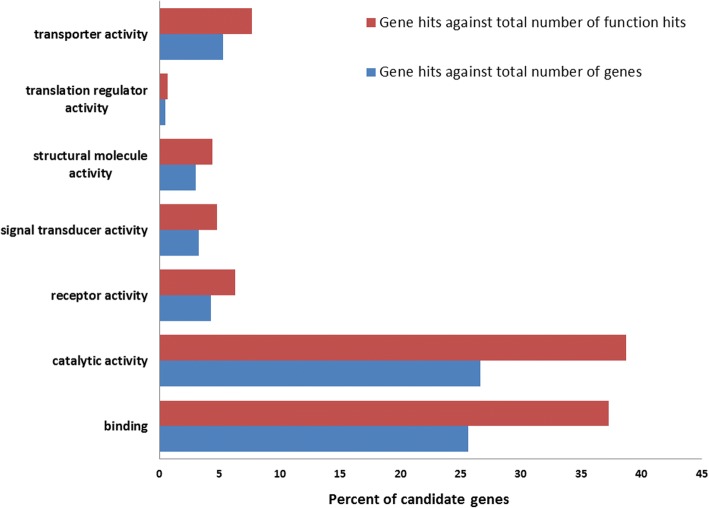
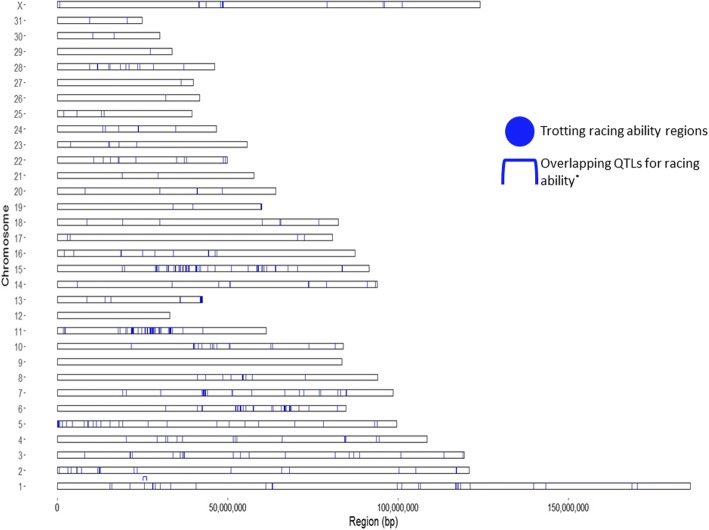
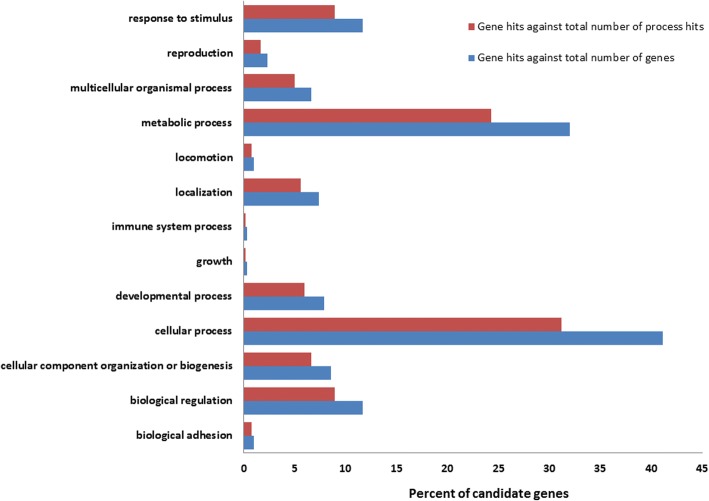
Pooled sequence data from three Nordic horse populations were used for F analysis. After strict filtering, F analysis yielded 580 differentiated regions for trotting racing ability. Candidate regions on equine chromosomes 7 and 11 contained the largest number of SNPs (n = 214 and 147, respectively). GO analyses identified multiple genes related to intelligence, energy metabolism, and skeletal development as potential candidate genes. However, only one candidate region for trotting racing ability overlapped a known racing ability QTL.
Not unexpected for genomic investigations of complex traits, the current study identified hundreds of candidate regions contributing to trotting racing ability in the horse. Likely resulting from the cumulative effects of many variants across the genome, racing ability continues to demonstrate its polygenic nature with candidate regions implicating genes influencing both musculature and neurological development.
自驯化开始以来,马就因其速度、力量和耐力等运动特质而受到强烈的选择。因此,许多现代马种已经发展成为高度专业化的品种,这些品种通常代表着具有高度表型和遗传同质性的封闭群体。然而,不同品种之间仍然存在着很大的差异,这使得马非常适合进行与运动能力相关的遗传学研究。为了确定与赛马运动能力相关的基因组区域,本研究应用了一种独特的北欧马模型进行了 pooled sequence 分析方法。
来自三个北欧马种群的 pooled sequence 数据用于 F 分析。经过严格筛选,F 分析得出了 580 个与赛马运动能力相关的分化区域。马染色体 7 和 11 上的候选区域包含最多的 SNP(分别为 214 和 147 个)。GO 分析确定了多个与智力、能量代谢和骨骼发育相关的基因作为潜在的候选基因。然而,只有一个与赛马运动能力相关的候选区域与已知的赛马能力 QTL 重叠。
正如对复杂性状的基因组研究所预期的那样,本研究确定了数百个与马的赛马运动能力相关的候选区域。可能是由于基因组中许多变体的累积效应,赛马能力继续表现出其多基因性质,候选区域涉及影响肌肉和神经系统发育的基因。