Department of Biomedicine and Prevention, University of Rome "Tor Vergata", Via Montpellier 1, 00133, Rome, Italy.
Department of Biology, University of Rome "Tor Vergata", Via della Ricerca Scientifica 1, 00133, Rome, Italy.
Cell Death Dis. 2019 Jan 18;10(2):53. doi: 10.1038/s41419-018-1279-1.
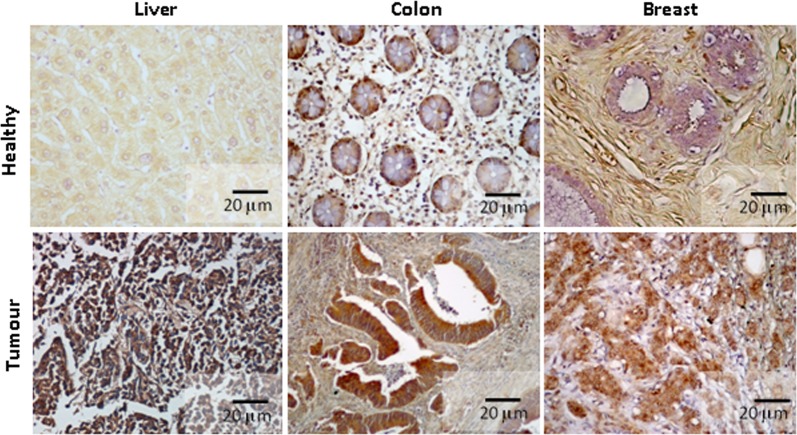
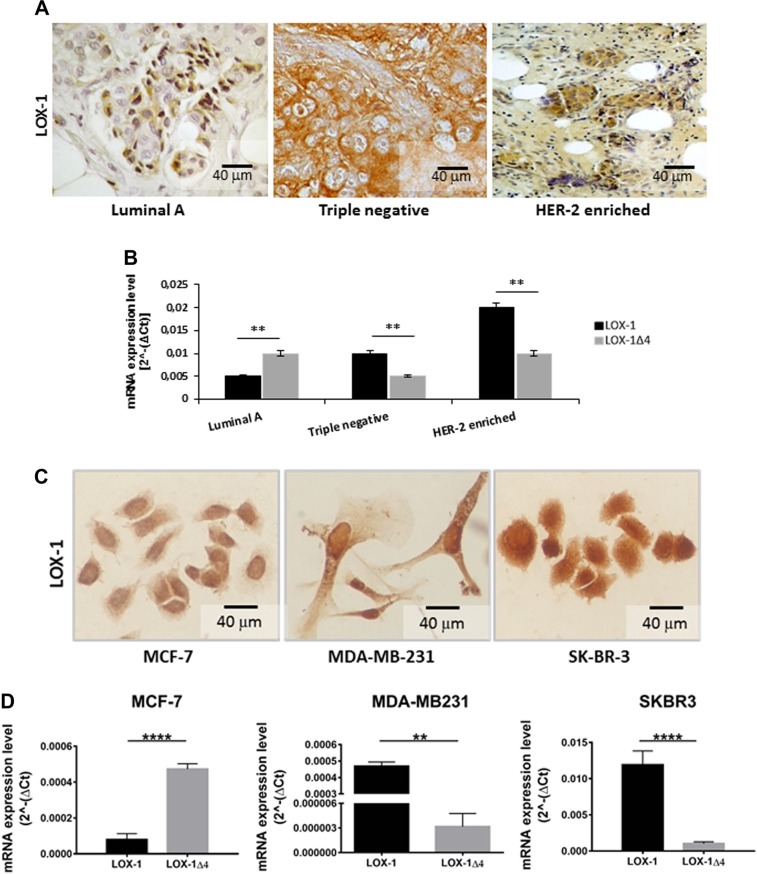
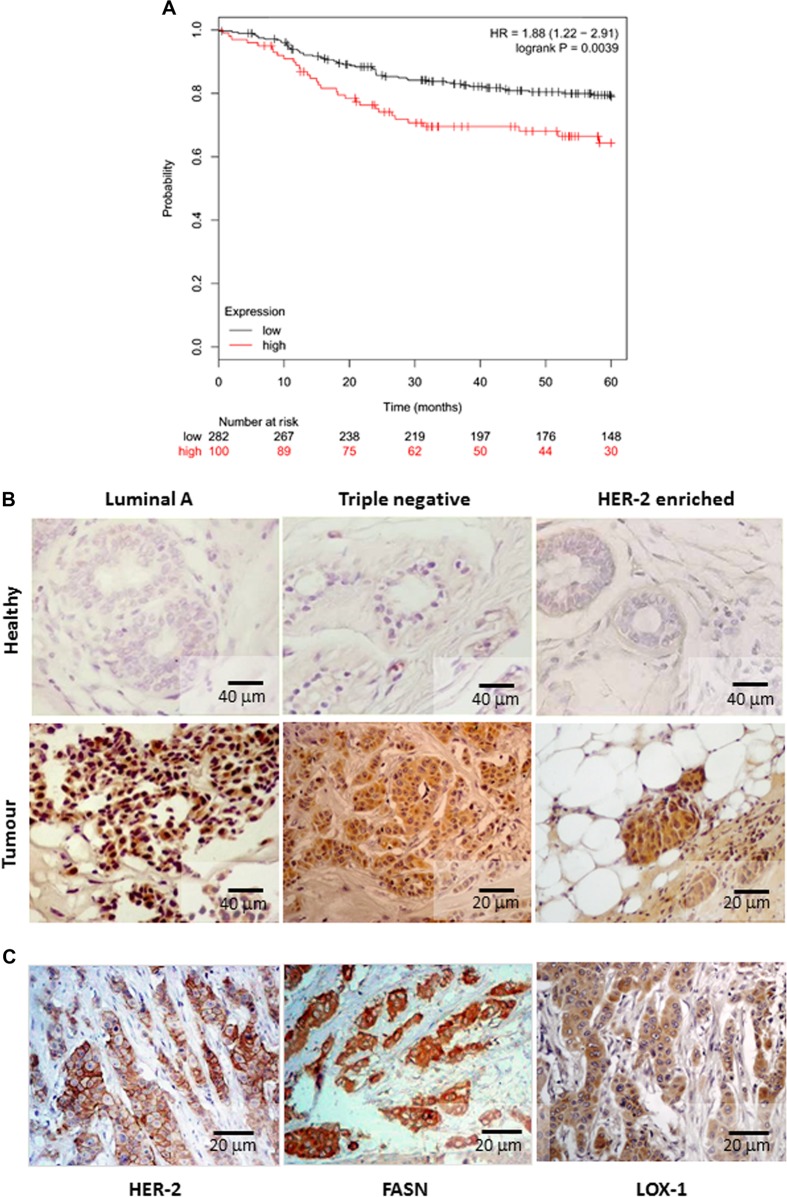
The identification of new predictive biomarkers and therapeutic target for tailored therapy in breast cancer onset and progression is an interesting challenge. OLR-1 gene encodes the cell membrane receptor LOX-1 (lectin-like oxidized low-density lipoprotein receptor). We have recently identified a novel alternative OLR-1 isoform, LOX-1Δ4, whose expression and functions are still not clarified. In the present paper, we demonstrated that LOX-1 is overexpressed in 70% of human breast cancer (n = 47) and positively correlated to the tumor stage and grade (p < 0.01). Observations on LOX-1 and its splice variant Δ4 pointed out a different expression pattern correlated to breast cancer phenotypes. Overexpressing LOX-1 and LOX-1Δ4 in vitro, we obtained a strong enhancement of proliferative rate and a downregulation of cell death-related proteins. In addition, we observed a strong modulation of histone H4 acetylation and Ku70, the limiting factor of DNA double-strand breaks repair machinery implied in apoptosis inhibition and drug resistance acquisition. Moreover, LOX-1Δ4 overexpression is able to increase proliferation in a non-tumorigenic epithelial cell line, MCF12-F, acting as an oncogene. Altogether, these results suggest that LOX-1 may acts as a molecular link among metabolism, inflammation and cancer, indicating its potential role as biomarker and new molecular target, representing an attractive and concrete opportunity to improve current strategies for breast cancer tailored therapy.
在乳腺癌发生和发展中,鉴定新的预测性生物标志物和治疗靶点以进行靶向治疗是一个有趣的挑战。OLR-1 基因编码细胞表面受体 LOX-1(凝集素样氧化型低密度脂蛋白受体)。我们最近鉴定了一种新的替代 OLR-1 异构体 LOX-1Δ4,其表达和功能尚不清楚。在本文中,我们证明 LOX-1 在 70%的人类乳腺癌(n=47)中过表达,并与肿瘤分期和分级呈正相关(p<0.01)。对 LOX-1 和其剪接变体Δ4 的观察表明,其表达模式与乳腺癌表型不同。在体外过表达 LOX-1 和 LOX-1Δ4 后,我们观察到增殖率显著增强,与细胞死亡相关的蛋白表达下调。此外,我们观察到组蛋白 H4 乙酰化和 Ku70 的强烈调节,后者是 DNA 双链断裂修复机制的限制因子,与细胞凋亡抑制和耐药性获得有关。此外,LOX-1Δ4 的过表达能够增强非致瘤上皮细胞系 MCF12-F 的增殖,发挥癌基因的作用。总之,这些结果表明 LOX-1 可能作为代谢、炎症和癌症之间的分子联系,表明其作为生物标志物和新的分子靶点的潜在作用,为改善当前针对乳腺癌的靶向治疗策略提供了有吸引力和具体的机会。