Division of Immunology and Rheumatology, Stanford University School of Medicine, Stanford, CA, USA.
Department of Biomedical Data Science, Stanford University School of Medicine, Stanford, CA, USA.
Nat Immunol. 2019 Mar;20(3):313-325. doi: 10.1038/s41590-018-0296-7. Epub 2019 Feb 4.
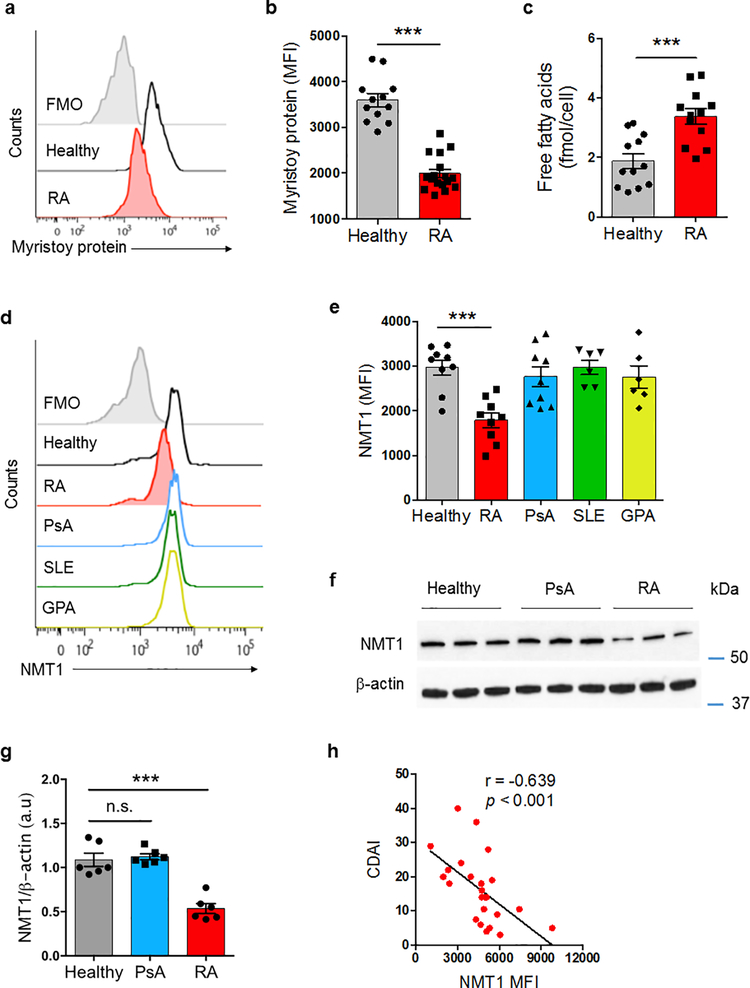
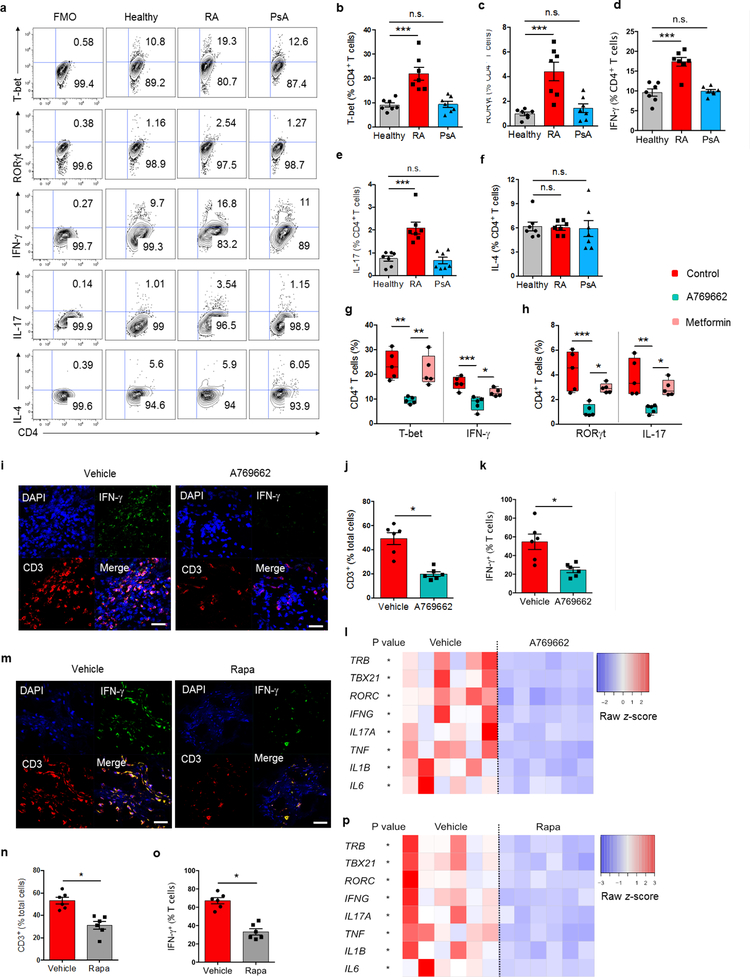
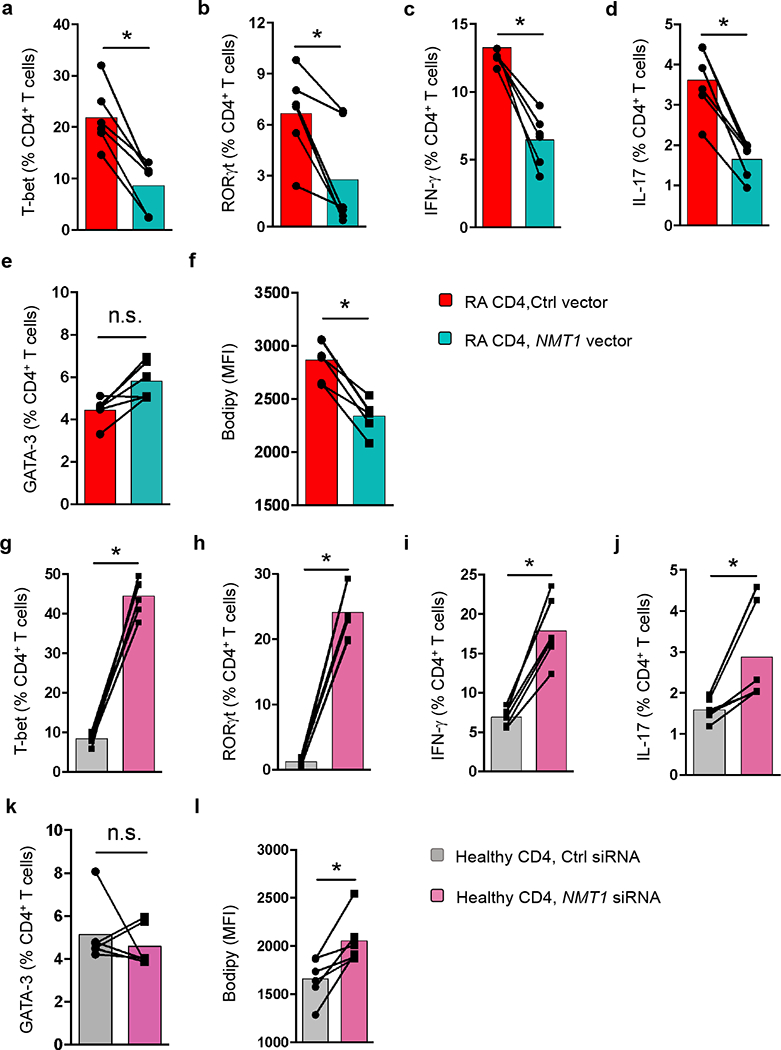
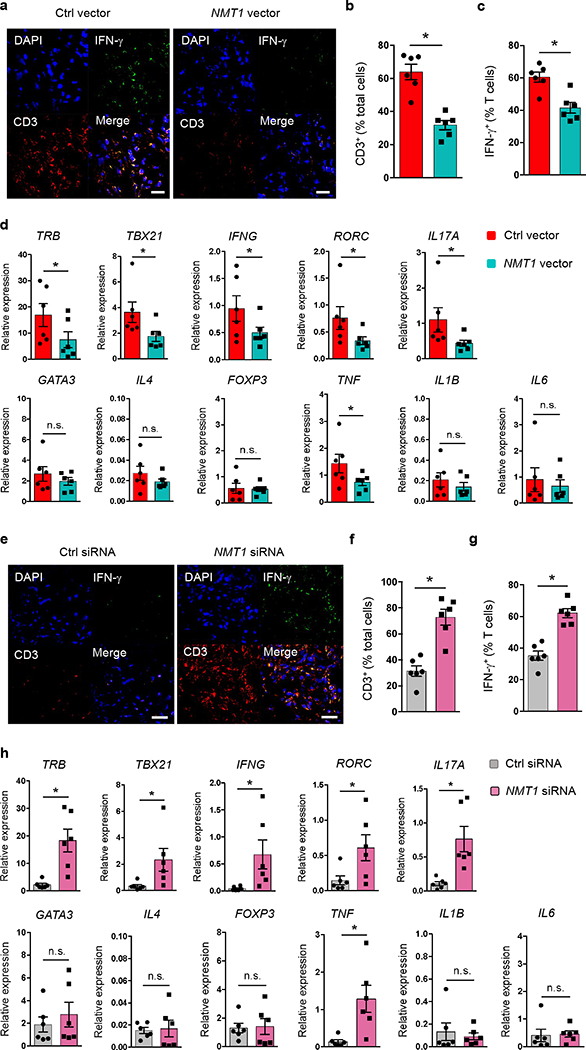
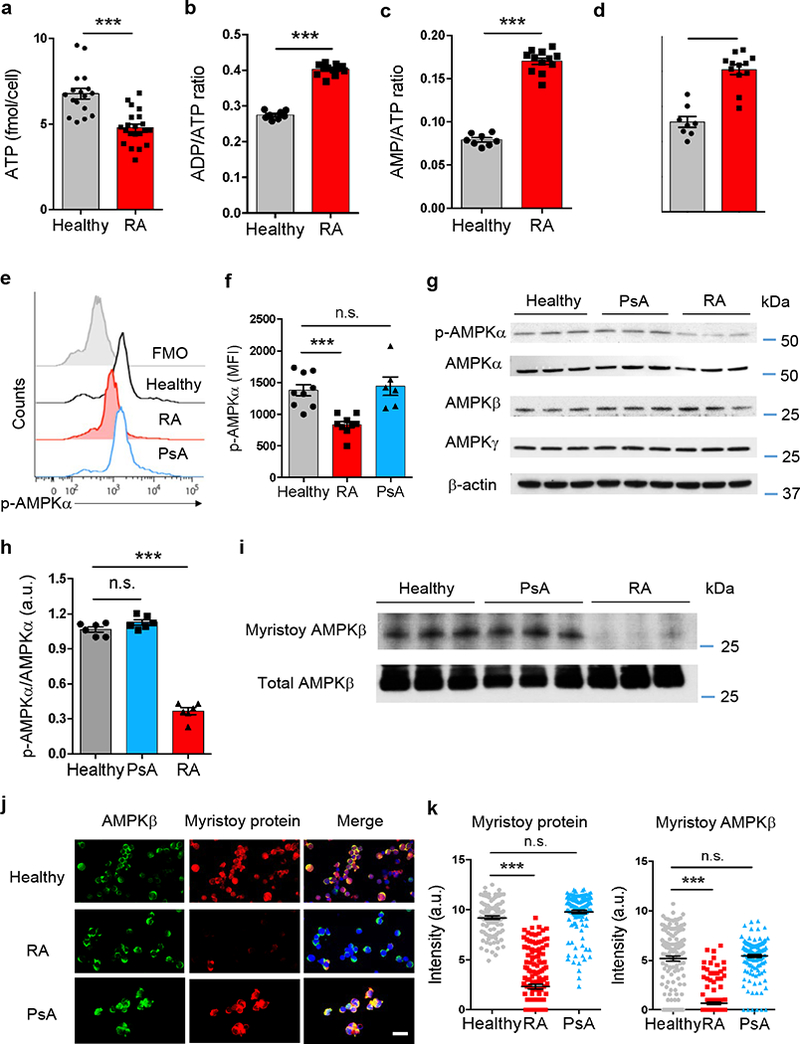
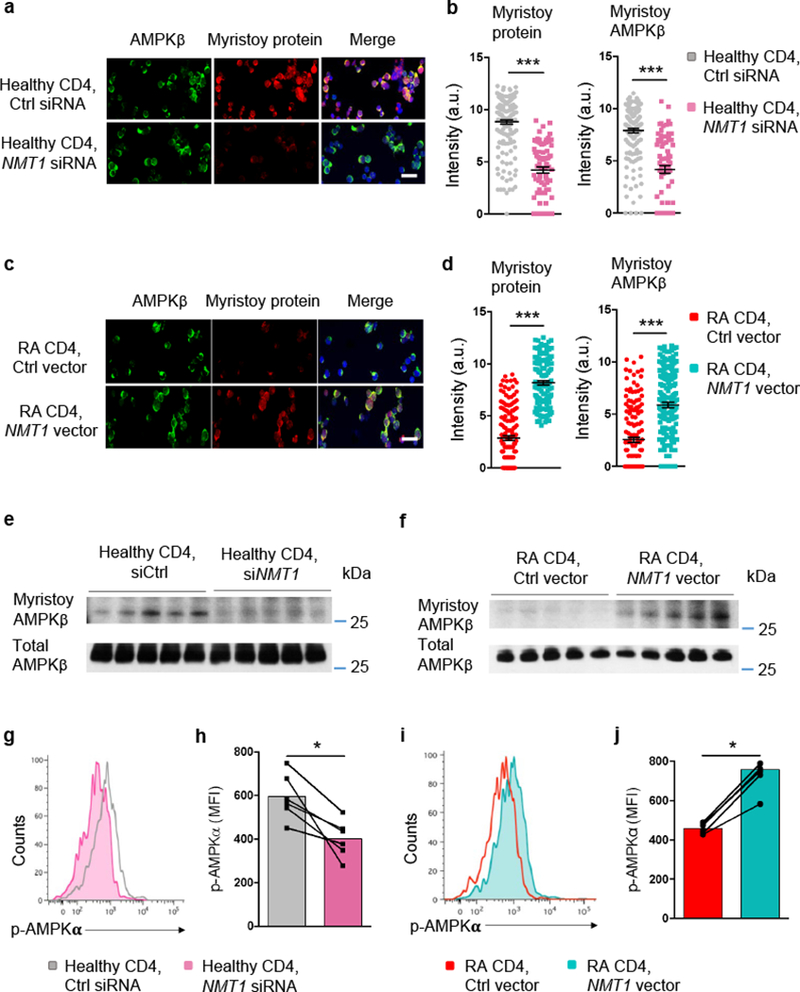
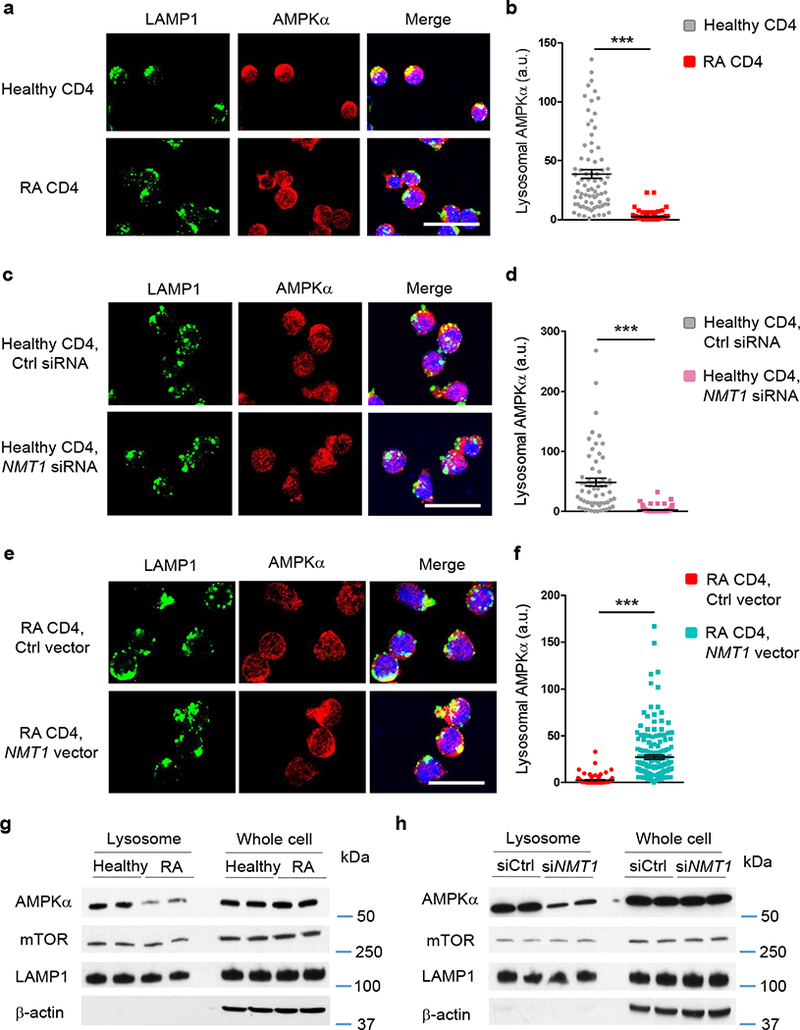
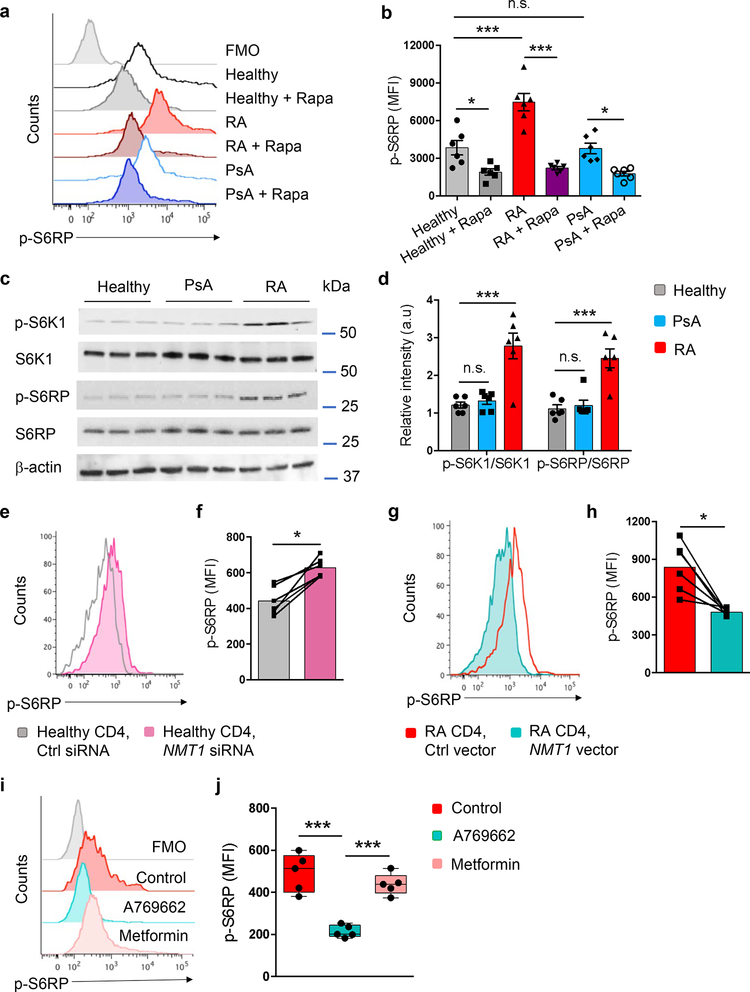
N-myristoyltransferase (NMT) attaches the fatty acid myristate to the N-terminal glycine of proteins to sort them into soluble and membrane-bound fractions. Function of the energy-sensing AMP-activated protein kinase, AMPK, is myristoylation dependent. In rheumatoid arthritis (RA), pathogenic T cells shift glucose away from adenosine tri-phosphate production toward synthetic and proliferative programs, promoting proliferation, cytokine production, and tissue invasion. We found that RA T cells had a defect in NMT1 function, which prevented AMPK activation and enabled unopposed mTORC1 signaling. Lack of the myristate lipid tail disrupted the lysosomal translocation and activation of AMPK. Instead, myristoylation-incompetent RA T cells hyperactivated the mTORC1 pathway and differentiated into pro-inflammatory T1 and T17 helper T cells. In vivo, NMT1 loss caused robust synovial tissue inflammation, whereas forced NMT1 overexpression rescued AMPK activation and suppressed synovitis. Thus, NMT1 has tissue-protective functions by facilitating lysosomal recruitment of AMPK and dampening mTORC1 signaling.
N-豆蔻酰转移酶(NMT)将豆蔻酸附着在蛋白质的 N 端甘氨酸上,将其分类为可溶性和膜结合部分。能量感应 AMP 激活蛋白激酶(AMPK)的功能依赖于豆蔻酰化。在类风湿关节炎(RA)中,致病性 T 细胞将葡萄糖从三磷酸腺苷(ATP)的产生转移到合成和增殖程序,促进增殖、细胞因子产生和组织侵袭。我们发现 RA T 细胞存在 NMT1 功能缺陷,这阻止了 AMPK 的激活,并使 mTORC1 信号通路不受抑制。缺乏豆蔻酰脂质尾破坏了 AMPK 的溶酶体易位和激活。相反,无豆蔻酰化能力的 RA T 细胞过度激活了 mTORC1 通路,并分化为促炎的 T1 和 T17 辅助 T 细胞。在体内,NMT1 的缺失导致了强烈的滑膜组织炎症,而强制过表达 NMT1 则挽救了 AMPK 的激活并抑制了滑膜炎。因此,NMT1 通过促进 AMPK 的溶酶体募集和抑制 mTORC1 信号通路发挥组织保护功能。