Ranger Manon, Tremblay Sophie, Chau Cecil M Y, Holsti Liisa, Grunau Ruth E, Goldowitz Daniel
School of Nursing, The University of British Columbia, Vancouver, BC, Canada.
BC Children's Hospital Research Institute, Vancouver, BC, Canada.
Front Psychol. 2019 Jan 21;9:2394. doi: 10.3389/fpsyg.2018.02394. eCollection 2018.
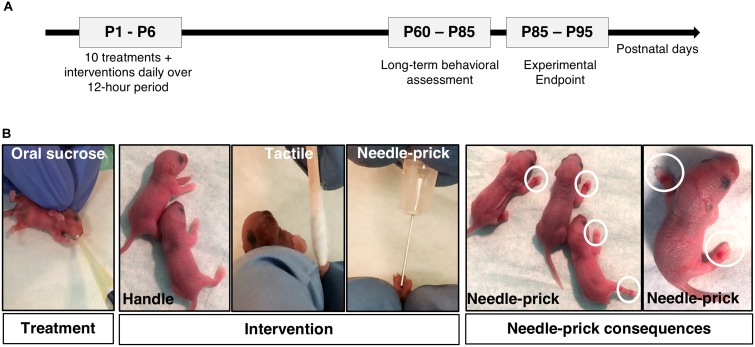
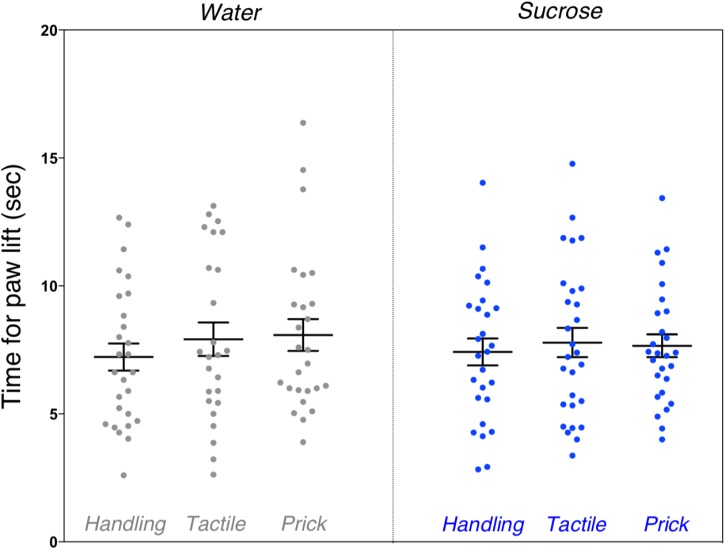
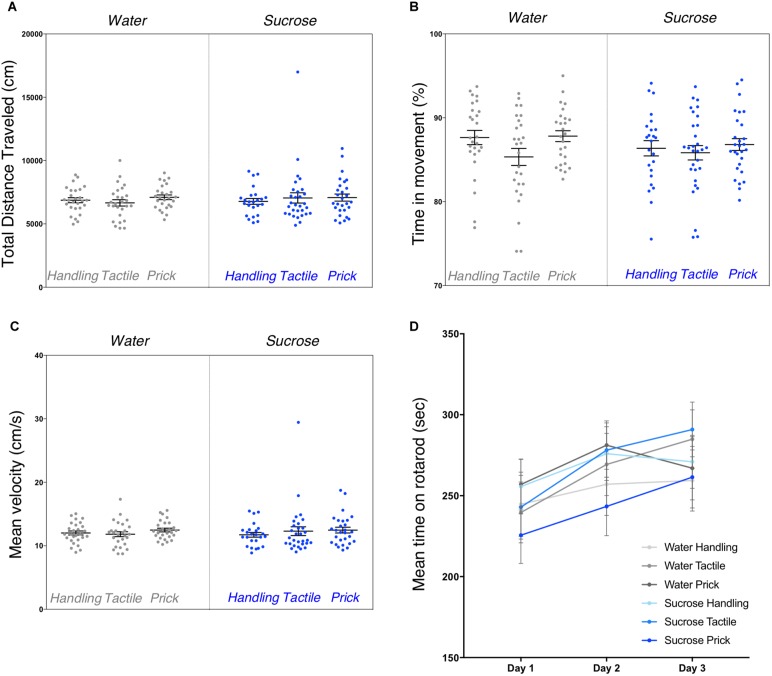
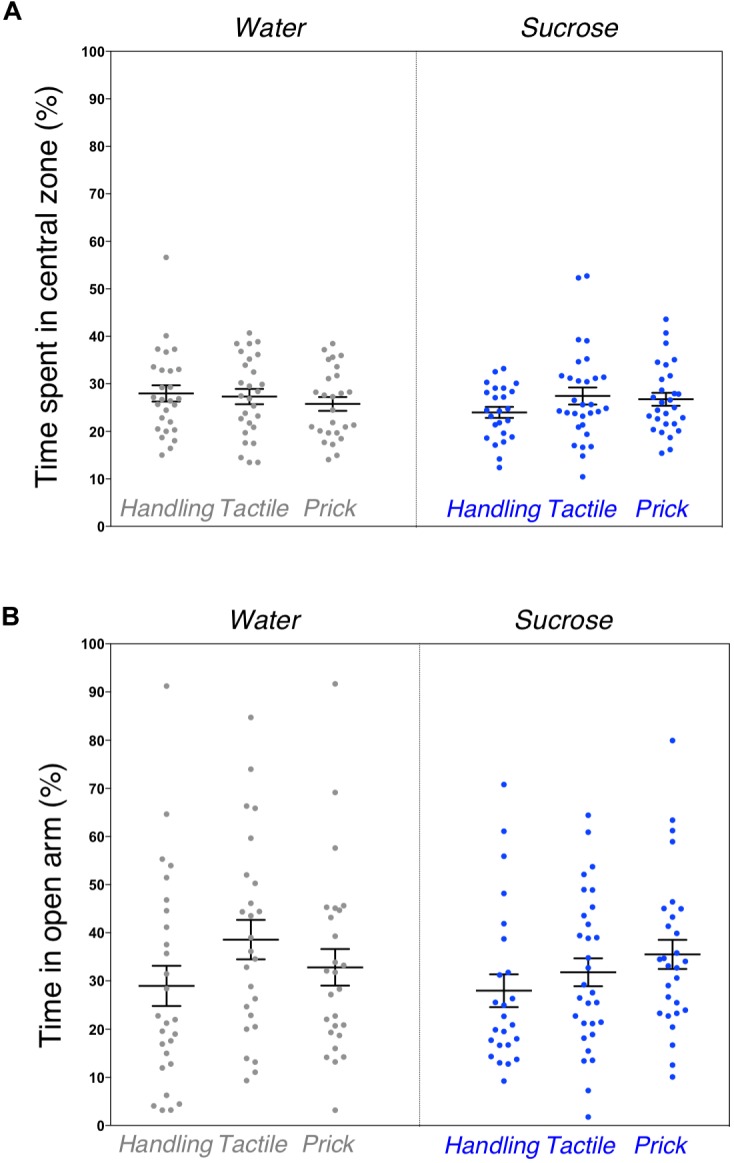
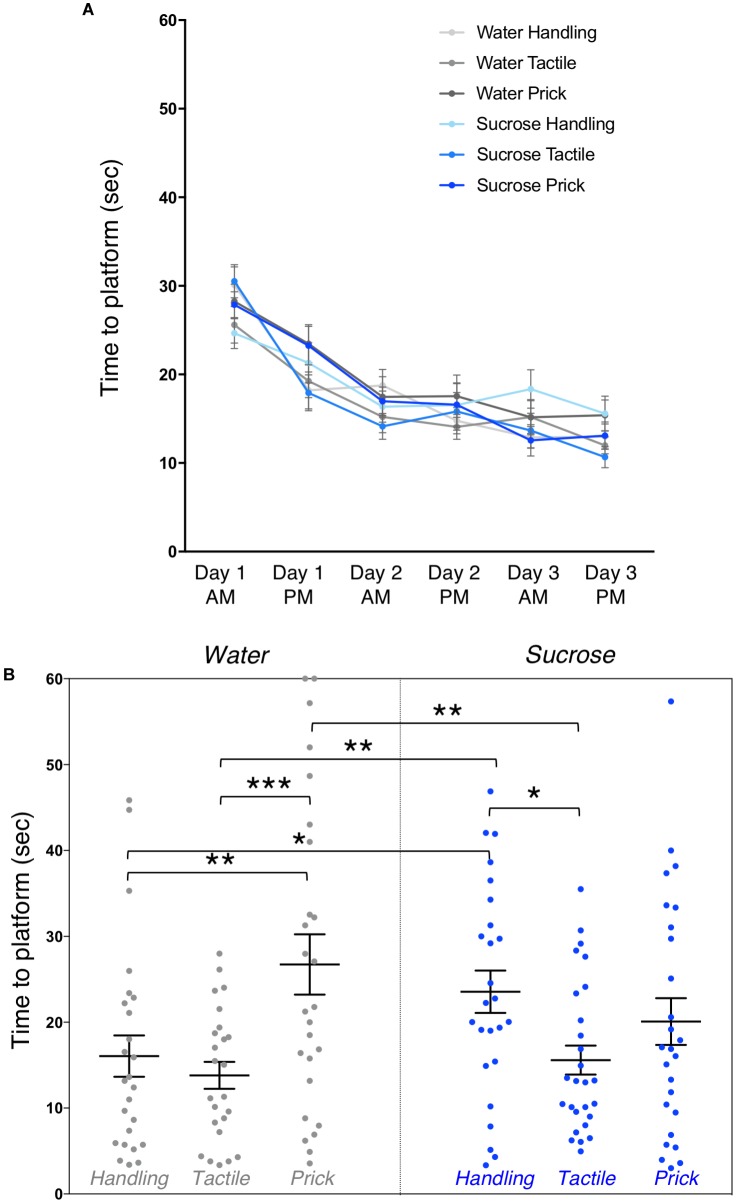
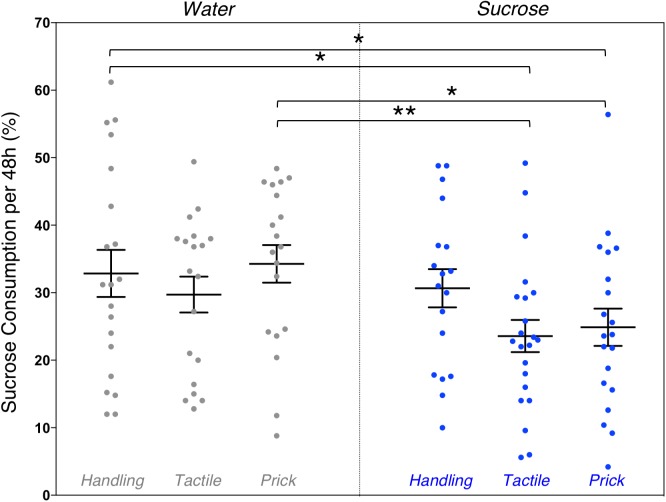
Sucrose is recommended for the treatment of pain during minor procedures in preterm infants in the neonatal intensive care unit (NICU) and is currently used worldwide as the standard of care. We recently reported that adult mice repetitively exposed to sucrose compared to water during the first week of life, irrespective of exposure to an intervention, had significantly smaller brain volumes in large white matter, cortical and subcortical structures (e.g., hippocampus, striatum, fimbria). These structures are important for stress regulation and memory formation. Here, we report the effects of repeated neonatal exposure to pain and sucrose on adult behavior in mice. Neonatal C57BL/6J mice ( = 160, 47% male) were randomly assigned to one of two treatments (sucrose, water) and one of three interventions (needle-prick, tactile, handling). Pups received 10 interventions daily from postnatal day 1 (P1) to P6. A single dose of 24% sucrose or water was given orally 2 min before each intervention. At adulthood (P60-85) mice underwent behavioral testing to assess spatial memory, anxiety, motor function, pain sensitivity, and sugar preference. We found that mice that had received sucrose and handling only, had poorer short-term memory in adulthood compared to water/handling controls ( < 0.05). When exposed to pain, mice treated with repetitive sucrose or water did not differ on memory performance ( = 0.1). A sugar preference test showed that adult mice that received sucrose before an intervention as pups consumed less sugar solution compared to controls or those that received water before pain ( < 0.05). There were no significant group differences in anxiety, motor, or pain sensitivity. In a mouse model that closely mimics NICU care, we show for the first time that memory in adulthood was poorer for mice exposed to pain during the first week of life, irrespective of sucrose treatment, suggesting that sucrose does not protect memory performance when administered for pain. In the absence of pain, early repetitive sucrose exposure induced poorer short-term memory, highlighting the importance of accurate pain assessment.
在新生儿重症监护病房(NICU)中,蔗糖被推荐用于治疗早产儿在进行小手术时的疼痛,目前在全球范围内被用作护理标准。我们最近报告称,在出生后的第一周,与接触水相比,成年小鼠反复接触蔗糖,无论是否接触干预措施,其大脑中白质、皮质和皮质下结构(如海马体、纹状体、伞)的体积都明显较小。这些结构对压力调节和记忆形成很重要。在此,我们报告新生儿反复接触疼痛和蔗糖对成年小鼠行为的影响。将新生C57BL/6J小鼠(n = 160,47%为雄性)随机分为两种处理(蔗糖、水)之一和三种干预措施(针刺、触觉、处理)之一。幼崽从出生后第1天(P1)到P6每天接受10次干预。在每次干预前2分钟口服单剂量24%的蔗糖或水。成年期(P60 - 85)时,对小鼠进行行为测试,以评估空间记忆、焦虑、运动功能、疼痛敏感性和糖偏好。我们发现,仅接受蔗糖和处理的小鼠在成年期的短期记忆比水/处理对照组差(P < 0.05)。当暴露于疼痛时,反复接受蔗糖或水处理的小鼠在记忆表现上没有差异(P = 0.1)。一项糖偏好测试表明,与对照组或在疼痛前接受水治疗的小鼠相比,幼崽期在干预前接受蔗糖的成年小鼠消耗的糖溶液较少(P < 0.05)。在焦虑、运动或疼痛敏感性方面没有显著的组间差异。在一个紧密模拟NICU护理的小鼠模型中,我们首次表明,出生后第一周接触疼痛的小鼠在成年期的记忆较差,无论蔗糖治疗情况如何,这表明在用于止痛时蔗糖并不能保护记忆表现。在没有疼痛的情况下,早期反复接触蔗糖会导致较差的短期记忆,突出了准确疼痛评估的重要性。