Hughes Veronica S, Siemann Dietmar W
University of Florida, Department of Radiation Oncology, UF Health Cancer Center, Gainesville, FL 32608, USA.
Oncotarget. 2019 Jan 4;10(2):184-197. doi: 10.18632/oncotarget.26546.
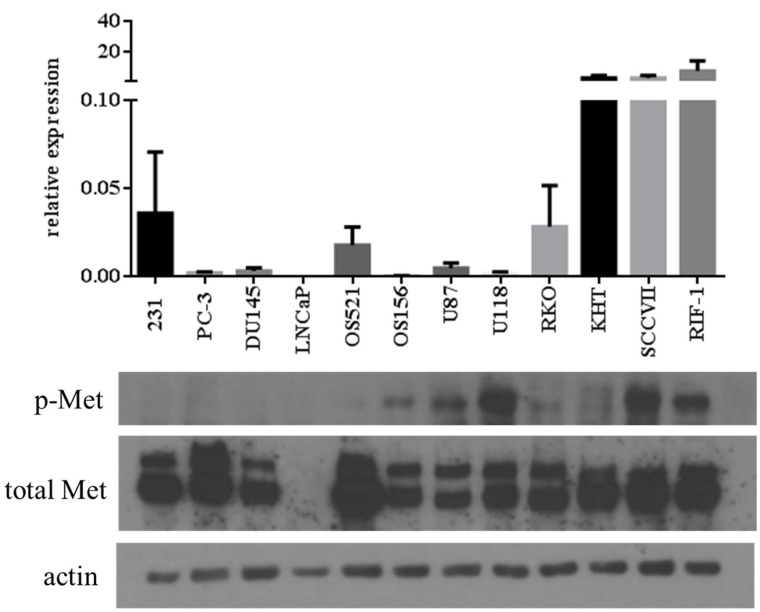
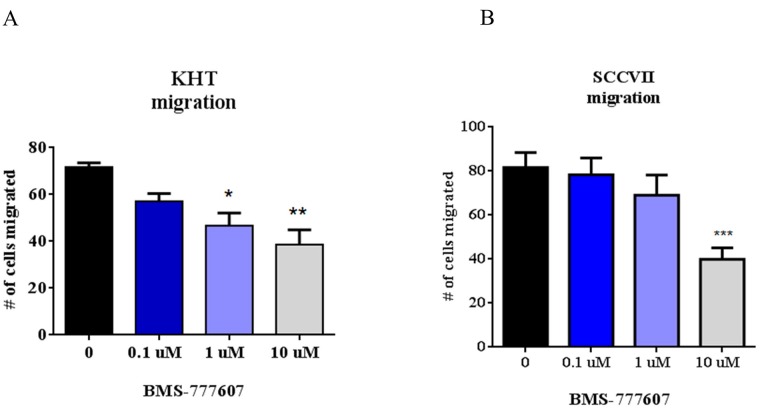
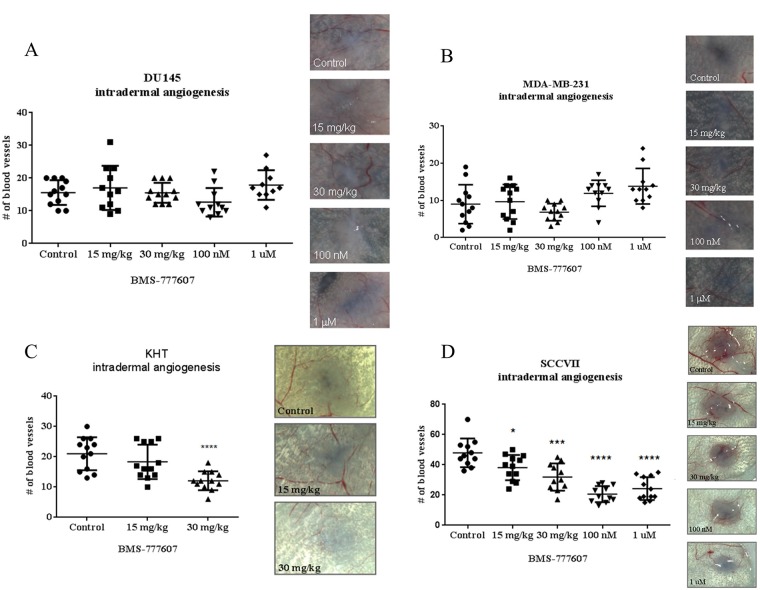
C-Met is a frequently overexpressed or amplified receptor tyrosine kinase involved in metastatic-related functions, including migration, invasion, cell survival, and angiogenesis. Because of its role in cancer progression and metastasis, many inhibitors have been developed to target this pathway. Unfortunately, most c-Met inhibitor clinical trials have failed to show significant improvement in survival of cancer patients. In these trials tumor type, protein overexpression, or gene amplification are the primary selection criteria for patient inclusion. Our data show that none of these criteria are associated with c-Met pathway activation. Hence, it is conceivable that the majority of c-Met inhibitor clinical trial failures are the consequence of a lack of appropriate patient selection. Further complicating matters, c-Met inhibitors are routinely tested in preclinical studies in the presence of high levels of exogenous Hepatocyte Growth Factor (HGF), its activating ligand. In our studies, several tumor cell lines showed sensitivity to a c-Met inhibitor at high HGF concentrations (50 ng/mL). However, when the tumor lines were tested at HGF levels typically detected in human serum (0.4 to 0.8 ng/mL), inhibitor activity was lost. Thus testing c-Met inhibitors at non-physiological concentrations of HGF may lead to incorrect predictions of drug efficacy .
C-Met是一种经常过度表达或扩增的受体酪氨酸激酶,参与包括迁移、侵袭、细胞存活和血管生成等与转移相关的功能。由于其在癌症进展和转移中的作用,人们已经开发了许多抑制剂来靶向这一信号通路。不幸的是,大多数c-Met抑制剂临床试验未能显示出癌症患者生存率的显著提高。在这些试验中,肿瘤类型、蛋白过度表达或基因扩增是患者纳入的主要选择标准。我们的数据表明,这些标准均与c-Met信号通路激活无关。因此,可以想象,大多数c-Met抑制剂临床试验失败是缺乏合适患者选择的结果。更复杂的是,c-Met抑制剂在临床前研究中通常是在高水平外源性肝细胞生长因子(HGF)(其激活配体)存在的情况下进行测试的。在我们的研究中,几种肿瘤细胞系在高HGF浓度(50 ng/mL)下对c-Met抑制剂表现出敏感性。然而,当在人血清中通常检测到的HGF水平(0.4至0.8 ng/mL)下对肿瘤系进行测试时,抑制剂活性丧失。因此,在非生理浓度的HGF下测试c-Met抑制剂可能会导致对药物疗效的错误预测。